Ten novels for the beach, the airport and the long trip: short and sunny, quick and tense, or built for a week with nothing else to do.
0/10 books read0%
A holiday book has a different job from a book for a winter evening. It has to start quickly, forgive being put down for a swim or a delayed flight, and still be waiting for you when you come back to it with a bit of sunburn. The best ones also borrow something from the place you are in: the sea, the road, a hotel with too many corridors.
Read more
The ten below fall into three kinds of trip. Some are short and easy to carry in your head, from a fisherman alone on open water to a thriller set under the Italian sun, where the sea and the sunshine are part of the story. Some are adventures with a sense of humour, mostly in space, with short chapters and a lot of jokes. And some are for the long haul: two road books, and two big warm novels for a week with nothing else to do.
The common thread is that none of them needs preparation. You do not have to know anything beforehand, and every book works on its own. Pick by mood rather than by order, and take one more than you think you need; a good holiday book tends to be finished sooner than expected.
Who it is for: Readers packing for a holiday who want a book that survives sand, delays and interruptions, whether that means a fast thriller, a funny space adventure or something big enough to last the whole trip.
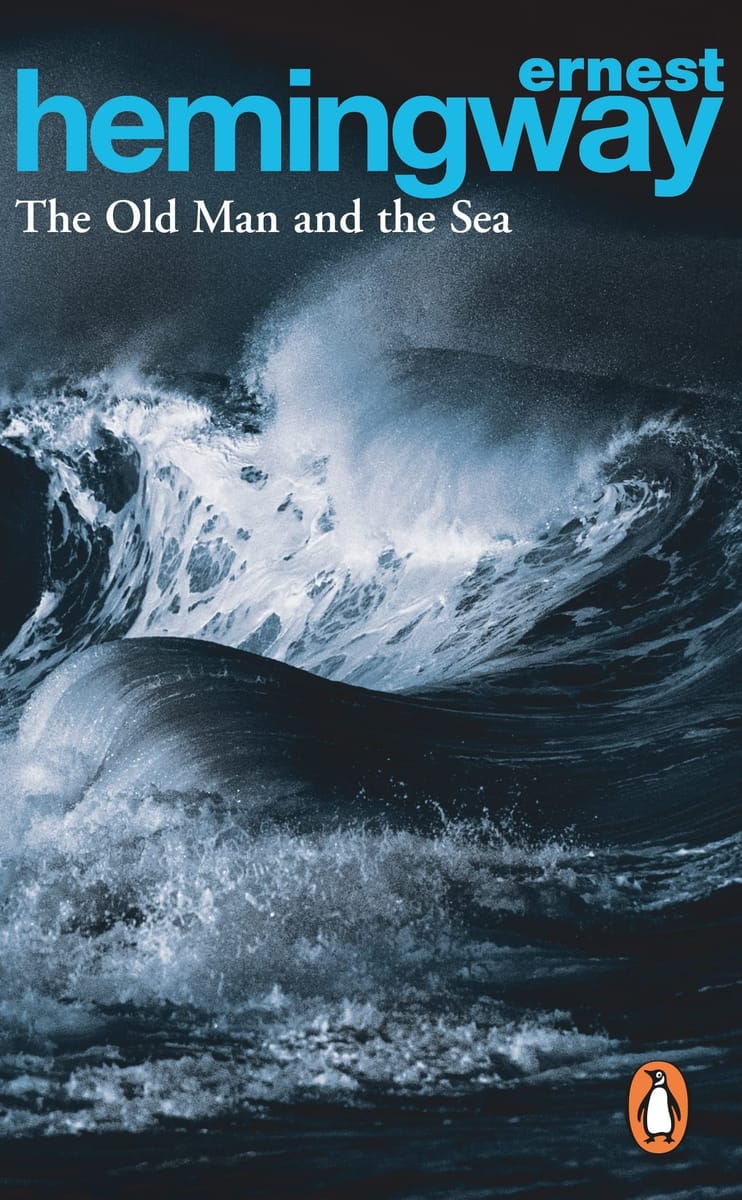
Hemingway's 1952 novella follows Santiago, an aging Cuban fisherman who has gone for days without catching a fish, and his epic struggle with a giant marlin far out on the water. Beside him, in memory and in spirit, is Manolin, the young boy who waits for him on shore; their quiet friendship is the counterweight to the loneliness of the sea.
Read more
The sentences are plain and spare, which makes the book easy to read even on a tired holiday afternoon. It is also one of the best choices for a coastline: almost the whole story takes place on open water, and it gains meaning with the sound of waves in your ears. A story about endurance and dignity, and short enough to finish in a single sitting.
Gillian Flynn's 2012 thriller starts on the morning of Amy's fifth wedding anniversary, when she disappears from the house she shares with her husband Nick. What follows is a dark portrait of a marriage.
Read more
The book alternates between Nick's account of the present and entries from Amy's diary, so the reader keeps changing their mind about whom to trust. Then, in the middle, a turn arrives that is among the most discussed in the thriller genre, and the second half reads like a different book. It is twisty, cleverly structured and short on dead moments, which is exactly what you want when you only have ten minutes before the next swim or the next boarding call. Expect to read it faster than you meant to.
Patricia Highsmith's 1955 thriller is set in Italy. Tom Ripley, a young man with few prospects, is sent abroad to bring Dickie Greenleaf, the son of a wealthy family, back to America.
Read more
But Tom becomes so absorbed in Dickie's life in an Italian seaside town that he begins to want it for himself, and then to want to be Dickie. The setting does half the work: Mediterranean sun, glamorous summer settings and a small coastal community where everyone has time on their hands. Against that glow, Ripley is a cold-blooded hero who makes every sunlit scene feel slightly dangerous. It is a thriller with real holiday atmosphere, ideal for a week when you want to be somewhere warm and slightly unsettled.
For:
Jennette McCurdy, Orhan Pamuk
Space and adventure with a sense of humour
Three books that trade tension for fun. They have short chapters, plenty of jokes and just enough science to feel clever.
Andy Weir's 2011 novel is about Mark Watney, an astronaut left alone on Mars. He has no one to talk to and no rescue in sight, so he does the only thing he can: he solves problems.
Read more
He grows potatoes, makes water, repairs an old spacecraft, and records all of it in a log full of jokes. The humour never lets up, the chapters are short, and the science is explained clearly enough that you do not need any background to enjoy it. That combination makes it a natural companion for travel. You can read a chapter while waiting for luggage, put it down, pick it up again hours later and be immediately back in the story. It is funny, tense and meticulously researched, and it finishes with real momentum.
In Weir's Project Hail Mary, a man wakes on a spaceship alone. He cannot even remember his own name.
Read more
Little by little he recovers why he is there and what danger is waiting for Earth, the memories returning in pieces as he works. Partway through the voyage he meets an unexpected companion, and that encounter turns the book into a story about friendship. It is bigger and more emotional than The Martian, though it keeps the same love of problem solving and the same humour, and it never loses its hope. It is a good choice for a long journey, because the questions pile up gently and the answers are worth waiting for. You may find yourself reading well past the point where you meant to stop.
Douglas Adams's comic novel was published in London on 12 October 1979 and opens a series of six books. It takes its title from a guidebook for hitchhikers in the story's own universe, a guide with the words Don't Panic printed in large letters on its cover.
Read more
As the book begins, Earth is demolished to make way for a highway project, and Arthur Dent escapes with his alien friend Ford Prefect, who turns out to be a researcher for the guide. What follows is a tour of the galaxy built on British humour and absurd logic, with towels playing a surprisingly important role. It is witty, short on lectures and ideal for a trip when your attention keeps being pulled away: every page can stand on its own.
For:
Shah Rukh Khan, Seth Rogen and 3 more
Roads, and books for a week with nothing else to do
Two journeys on wheels, then two warm and generous novels for the days when the trip is long and the schedule is empty.
Jack Kerouac wrote On the Road in 1951 and it was published in 1957, drawing on his own travels across America. It became the defining book of the Beat Generation.
Read more
The narrator, Sal Paradise, and his unmanageable friend Dean Moriarty cross the country again and again: jazz clubs, hitchhiking, conversations that last until morning, friends living for the moment amid poetry and rebellion. It is fast, uncontrolled and limitless, a journey you read at speed. The sentences pick up pace and so do the pages, which makes it a good match for any trip in which the road itself is the point. Take it on a train or a long drive, and notice how quickly the miles start to feel like part of the book.
Robert Pirsig's 1974 book follows a father and son on a motorcycle trip across America, and turns that trip into a philosophical inquiry. At its centre is the idea of quality, and it is regarded as one of the first books to take that idea seriously as a subject.
Read more
The title plays on Eugen Herrigel's Zen in the Art of Archery. It blends travel writing with a book of ideas, and it draws a line between mending an engine and mending a life. Since the road scenes keep the story moving, the philosophy arrives in small pieces between them. It is a cult classic about how we choose to live, and a good partner for a long trip where the miles give you time to think.
Amor Towles's 2016 novel begins after the revolution, when Count Rostov is sentenced to spend the rest of his life in Moscow's Hotel Metropol. Over the decades that follow, inside the hotel's walls, he settles into a small room in the attic, makes friends, works in the hotel restaurant and ends up raising a young girl.
Read more
It is gracious, clever and kind, and it shows that even a closed space can be a whole world. It is also long enough to settle into, which suits a holiday with plenty of idle days: it is the sort of book you keep beside the bed or on the balcony, reading a little at breakfast and a lot in the evening, and you are sorry when it ends.
Gabriel García Márquez's 1985 novel tells of a wait of more than half a century and a love that arrives late, in a city on the Caribbean coast. Florentino Ariza loved Fermina Daza when they were young.
Read more
When her husband dies, he declares himself to her again after fifty-one years, nine months and four days, and the book closes on a river journey. It is a long, ironic meditation on love and aging, but it is not cold: it is warm, humid and emotional, and its tropical air carries over to the reader. Take it somewhere hot, give it a week, and let it move at its own pace. It rewards a slow holiday more than any quick read.
For:
Dua Lipa, Oprah Winfrey and 1 more
Reading path
If you only have room for one book, choose by the kind of trip. For a beach week, take The Talented Mr. Ripley or Gone Girl; both keep you reading in short bursts and survive being dropped on a towel. For a flight or a train, The Martian is hard to beat: short chapters, constant jokes, and a good reason to look up from the page only when the cabin crew arrive.
For a long trip with real time on your hands, choose one of the big warm novels. A Gentleman in Moscow suits a hotel balcony, and Love in the Time of Cholera suits anywhere hot and slow. Pair either with The Old Man and the Sea if you want a short, calm book in between; it is almost entirely set at sea, so it suits a shoreline especially well.
Read more
If the journey itself is the point, read On the Road before you set out and Zen and the Art of Motorcycle Maintenance somewhere in the middle, when the miles have started to feel like thinking time. Leave Project Hail Mary for the way home, when you want something to carry you through the last long stretch and a story that ends on a hopeful note.
If you are travelling with someone who reads different things from you, trade books halfway: Hitchhiker's Guide is good for sharing because it breaks into short, quotable scenes, and Gone Girl is hard to hand over once you are in the middle.