Five novels that other novelists point to again and again: Anna Karenina, Little Women, The Tin Drum, And Then There Were None and Invisible Cities.
0/5 books read0%
Writers read differently from the rest of us. They notice how a sentence is built, how a family is made to feel real, how suspense is held back until the right moment. So when novelists name the same book more than once, it is worth listening.
Read more
The five books here come from different worlds. Two are the kind of book that opens a door in childhood or early adulthood, one a nineteenth-century family story and one a twentieth-century fable about war. Another is a detective puzzle that other masters of suspense admire. The last is a short, strange book about imaginary cities that younger novelists still carry around. None is a safe choice, and all five are very much alive.
Read them in any order. Together they make a quick tour of what fiction can do.
Who it is for: Readers who like to know what working writers read, and who want five books with proven staying power across very different kinds of fiction.
Tolstoy's 1877 novel braids two stories: Anna, a married aristocrat who falls into a passion that defies St. Petersburg high society, and Levin, a landowner looking for meaning in his land.
Read more
Orhan Pamuk told The Times it was his favourite novel, and he praised the care in every sentence and a composition that is both complex and clear. It is rare to see a crime writer and a Nobel laureate agree so completely.
Alcott's 1868 novel follows the four March sisters through the Civil War years while their father is away at the front: lovely Meg, rebellious Jo who wants to be a writer, shy Beth and proud little Amy. J.K. Rowling's favourite literary heroine is Jo March, and when she explains what Jo meant to a grumpy girl full of the ambition to write, she is describing her own childhood.
Read more
Maya Angelou also loved it, and felt she was sitting with the Marches in their living room and kitchen. Over a hundred and fifty years later, the secret is Jo: a girl fighting her family, her era and her own temper to find her voice.
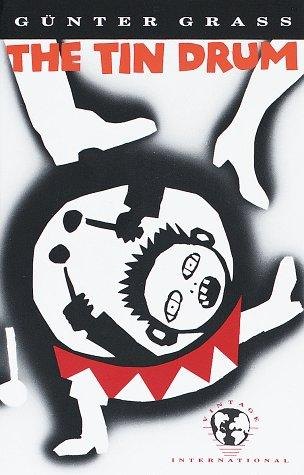
Oskar Matzerath decides at the age of three that he will not grow, and from the height of a dwarf, beating his tin drum, he watches the rise of Nazism in Danzig, the war and what came after. Günter Grass's novel appeared in 1959 and began the road that led him to the Nobel Prize in 1999.
Read more
Salman Rushdie tried to read it at university, could not finish, and the book waited on the shelf for ten years. The second time, it became one of his favourite novels of all time. The lesson is a comfort for every reader: sometimes a book plays its music only when you are ready.
For:
Salman Rushdie
Suspense and imagination
A puzzle that other masters of suspense admire, and a short book of imaginary cities that younger novelists keep in their pockets.
Ten strangers arrive on a remote island at the invitation of a host nobody sees. At the first evening a voice from a record accuses each of them of a crime in their past, and then, following the order of a nursery rhyme, the guests begin to die one by one.
Read more
Agatha Christie's novel was published in 1939. Stephen King recommended it in a short note: a lot of killing, not much blood, and a wonderful puzzle. The master of horror praising a bloodless book is a little joke, but his real point is that Christie builds suspense from doubt, not gore. For Rian Johnson, director of the Knives Out films, it is Christie's best.
Marco Polo describes to Kublai Khan, who can no longer see the edges of his empire, the cities he has visited: cities made of memories, desires, signs and the dead. Calvino's 1972 book is neither quite a novel nor quite a collection of stories; it is a maze built from short portraits of cities and conversations between two men.
Read more
For Matt Haig, author of The Midnight Library, it is the favourite book of all time. He says he has not read it cover to cover but dips in again and again, and that the cities are like Venice's feverish dreams. Orhan Pamuk also counts it among the books that shaped his work, and it is not hard to see why a writer of memory and melancholy would find something there.
For:
Matt Haig, Orhan Pamuk
Reading path
If you want to start where the writers start, begin with Anna Karenina and give it the time it deserves; it is long, but it rewards patience, and it makes an excellent anchor for a month of reading. If you would like something warmer and shorter in mind, Little Women is an easy first step, and then you can decide whether you want more of that world.
For a change of pace, read And Then There Were None in an evening, then take Invisible Cities in small doses, a few pages at a time, the way Matt Haig does. Save The Tin Drum for when you have energy: it is a big, strange, bold book, and Rushdie's own story is a good reason to give it a second chance if the first one does not take.