Books like Anna Karenina: love, marriage and society
What to read after Anna Karenina: Flaubert, Wharton, the Brontës, Austen, more Tolstoy, Turgenev, García Márquez and Kundera.
0/10 books read0%
Anna Karenina opens with one of the most quoted lines in fiction: happy families are all alike, but every unhappy family is unhappy in its own way. Tolstoy then spends the rest of the novel testing that idea. On one side is Anna, a married aristocrat whose passion for Count Vronsky puts her at odds with Russian high society. On the other is Levin, a landowner working his way, slowly and awkwardly, toward a family and a faith of his own. The book runs the two stories side by side and never tells you which one is the right life.
Read more
What most readers miss when they close it is not a love story as such. It is the feeling of watching a mind change from sentence to sentence, set against a society drawn so fully that every ballroom and racecourse seems to carry a moral weight. The novels below share at least one of those qualities. Some are about marriage and the price a society charges for breaking its rules. Some paint a whole age on a large canvas. A few move the same questions into other centuries and other countries.
The list is grouped in three parts, with a suggested reading order at the end. Nothing here needs to be read quickly, and none of the descriptions give away an ending.
Who it is for: Readers who have finished Anna Karenina and want other novels where love collides with marriage, family and the rules of a whole society.
Group 1: Marriage, passion and what society demands
The closest relatives of Anna's story. Each of these novels puts a woman, or a couple, inside a set of social rules and watches what happens when feeling pushes against them. The tone ranges from Flaubert's cool irony to Austen's wit and Brontë's storm.
Flaubert's novel follows Emma Bovary, a doctor's wife in provincial France who turns to romance and spending to escape boredom. It is the book most often set beside Anna Karenina, since both follow a married woman drawn toward passion and into the judgement of the people around her.
Read more
The difference is in the author's gaze. Tolstoy feels deeply for Anna; Flaubert holds Emma at a precise, almost clinical distance. Read together, the two novels show how differently realism can treat the same longing.
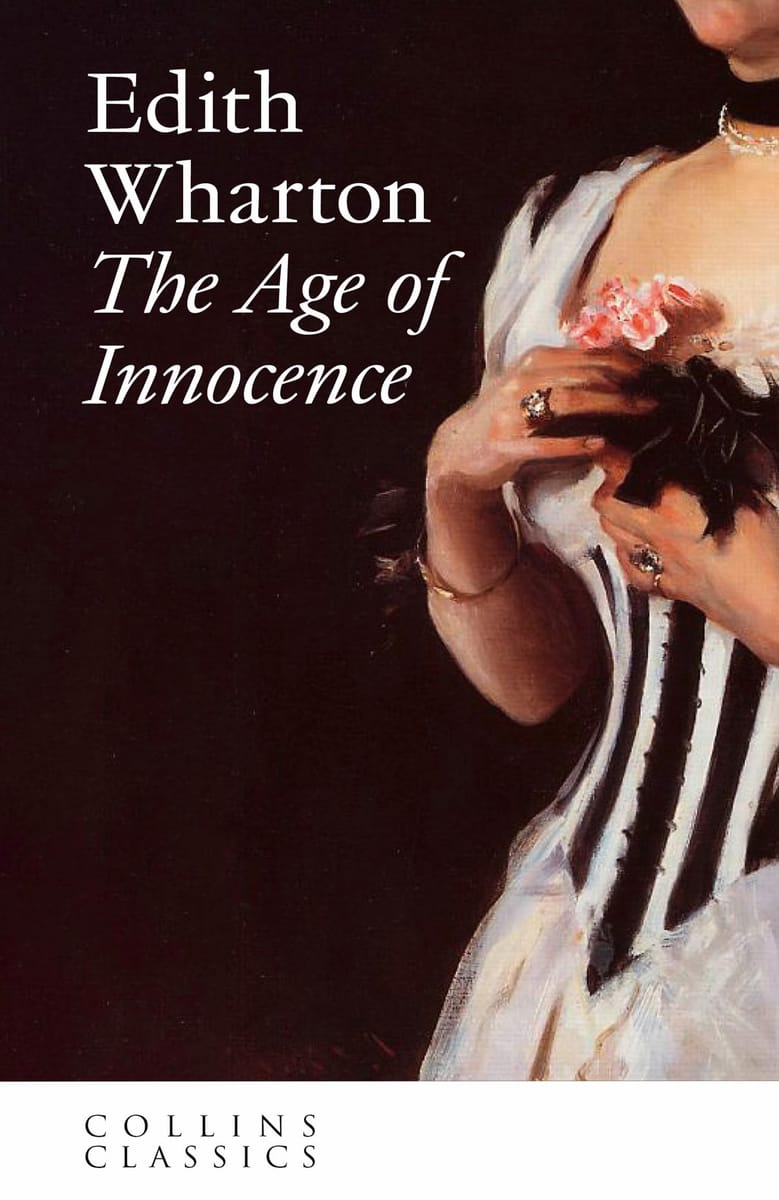
Edith Wharton moves the drama to Gilded Age New York, where a love is caught between desire and convention. The novel won the Pulitzer Prize.
Read more
Its society is quieter than Tolstoy's Petersburg but just as strict: a raised eyebrow at the opera can do the work of a duel. If the scenes in Anna Karenina where a single glance changes everything were your favourite parts, Wharton writes almost an entire book in that register.
A second Wharton, and a harder one. Lily Bart is a woman in New York high society struggling against the pressures of money and marriage, and the novel follows how narrow her choices really are.
Read more
Anna and Lily are very different women, but both live in worlds where a reputation is a kind of currency, and both books are honest about how quickly it can be spent.
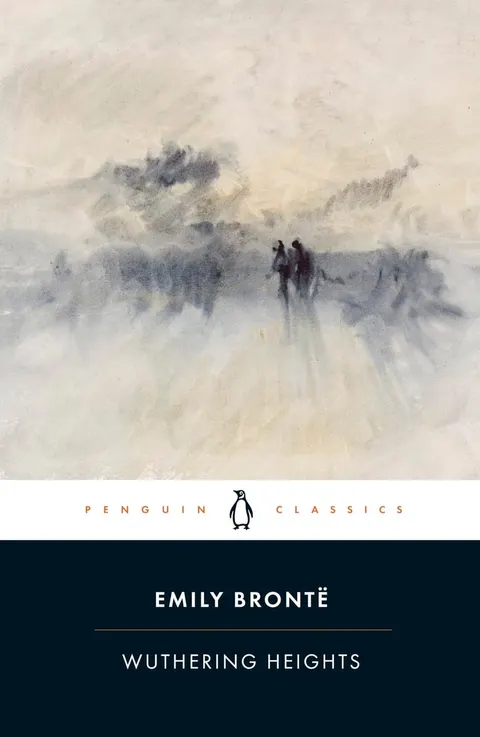
Emily Brontë's only novel, published in 1847 under the name Ellis Bell, tells of the passionate and destructive bond between Catherine Earnshaw and Heathcliff on the Yorkshire moors. Where Tolstoy treats love as something that happens inside a society, Brontë treats it almost as a force of nature that society cannot contain.
Read more
It is wilder, stranger and far less patient than Anna Karenina, which is exactly why it makes a good second book.
Jane Austen's 1813 comedy of manners follows Elizabeth Bennet and the proud Mr. Darcy as they get past their first impressions.
Read more
Anna Karenina shows how a marriage can come apart; Austen shows how one might be built when judgement and feeling learn to work together. The tone is light and sharp, a welcome change after Tolstoy's long and heavy chapters, but the attention to money, class and reputation is just as serious.
For:
Hillary Clinton, Emily Bader and 2 more
Group 2: A whole society on a wide canvas
For readers who loved Levin's half of the book as much as Anna's: the farms, the arguments about Russia's future, the sense that private life and public history are tangled together. Two of these are by Tolstoy himself.
Tolstoy's other great novel follows several aristocratic Russian families through the Napoleonic Wars. Where Anna Karenina is narrower and more intense, War and Peace is epic in scale, yet it carries the same way of seeing: a battle and a quiet domestic feeling can sit on the same page and seem equally important.
Read more
If you finished Anna and wanted more Tolstoy rather than more of its subject, start here.
A late Tolstoy novella, written between 1896 and 1904 and published in 1912, about the Avar rebel commander Hadji Murat. It is short, which makes it a good bridge if the length of the big novels is what you are wary of.
Read more
The setting is far from the Moscow salons, but the habit of showing every side of a conflict, and judging none of them cheaply, is the same Tolstoy.
Ivan Turgenev's novel of a generational clash between a nihilist student and his elders in nineteenth-century Russia. It shares the rural, argumentative background of Levin's chapters, with estates, dinners and long debates about how Russia should live, but here ideas rather than love sit at the centre.
Read more
It is short and direct, one of the easiest doors into the Russian novel.
For:
Chimamanda Ngozi Adichie
Group 3: Love and time in other places
Two twentieth-century novels that take Tolstoy's questions about love, commitment and choice and answer them in very different voices, one from the Caribbean coast and one from Prague.
Gabriel García Márquez's 1985 novel tells of Florentino Ariza, who falls in love with Fermina Daza as a young man and waits more than fifty years for a second chance. Anna's love runs toward tragedy at great speed; here love is postponed for decades and treated with a gentle irony.
Read more
The two books handle the relationship between love and time in opposite ways, and the contrast is part of the pleasure. Márquez's prose is warm and lyrical where Tolstoy's is clear and exact.
Milan Kundera's 1984 novel is about two women, two men and a dog, and their lives around the 1968 Prague Spring. In Anna Karenina a single decision carries enormous weight.
Read more
Kundera starts from the opposite idea: because we only live once, perhaps no choice weighs anything at all. The book is partly fiction and partly essay, and it turns love and fidelity into a philosophical experiment. It is a good last stop once you have read the classics above.
For:
Dua Lipa, Orhan Pamuk
Reading path
If you want the nearest thing to Anna Karenina, read Madame Bovary first. The comparison is so natural that it sharpens your memory of Tolstoy rather than replacing it. Follow it with The Age of Innocence, which carries the same tension into a different city and a quieter style.
If it was Tolstoy himself you fell for, go straight to War and Peace, and keep Hadji Murat for a weekend when you want something shorter. Fathers and Sons sits well between the two, as a reminder that Tolstoy's Russia had other great novelists.
Read more
If you need a lighter book next, Pride and Prejudice is the obvious choice. If you want something stronger instead, Wuthering Heights. Leave Love in the Time of Cholera and The Unbearable Lightness of Being for later, when the nineteenth century has settled and you are ready to see the same questions asked in a modern voice.