Best love stories: 15 romance novels from Austen to Rooney
Fifteen love stories worth your time, from Pride and Prejudice and Jane Eyre to Norwegian Wood and Normal People, with an order to read them in.
0/15 books read0%
A good love story is rarely only about two people. It is about everything standing between them: a family that expects a sensible marriage, a society that punishes the wrong kind of passion, a war, a class line, a secret, or simply the years. The novels below are the ones that understood this best. Some end happily, some do not, and a few leave the question open. All of them treat love as something serious enough to change a life.
Read more
The list moves through three rooms. The first holds the great nineteenth-century novels that set the pattern for everything after them: Austen's sharp comedy, the two Brontë sisters at full intensity, and the two most famous unhappy wives in fiction, Anna Karenina and Emma Bovary. The second room is the twentieth century, where love stories begin to look at memory, guilt and the gap between who we are and what we are allowed to want. The third holds novels from the last four decades, closer in voice and often quieter, where the drama happens in conversations, silences and missed chances.
There is no single right way to read romance, and this is not a ranking. If you want warmth and wit, start with Austen. If you want a storm, go to the Brontës. If you want something you can finish in an evening and still think about a month later, Annie Ernaux's Simple Passion is very short. A suggested reading order at the end gives three routes depending on what kind of reader you are.
One practical note: several of these books are long, and a few were written for readers with more patience than most of us have now. That is not a reason to skip them. Tolstoy and Flaubert built their love stories slowly because they wanted you to understand exactly how ordinary people slide into extraordinary situations. Give the first fifty pages a fair chance, and the pace stops feeling slow.
Who it is for: Readers who want a love story with real weight: novels where desire runs into family, money, class, history or time, and where the people stay with you after the last page.
Five nineteenth-century novels that most later love stories borrow from, knowingly or not. Two are comedies of manners with a romantic heart, two are Gothic and fierce, and two are tragedies of marriage. They are the foundation of the genre, and they are still the best place to start.
Austen wrote this when she was about twenty, and it still reads like the work of someone who noticed everything. Elizabeth Bennet is one of five daughters, and because the family estate can only pass down the male line, at least one of them needs to marry well.
Read more
Into this pressure walks the proud Mr Darcy, and the novel follows how two sharp, stubborn people learn that their first impressions were wrong. It is funny, quick and generous, and it has sold over twenty million copies for good reason.
For: Anyone new to classic fiction, and anyone who likes banter as much as longing.
While reading: Pay attention to the family around Elizabeth as well as the couple. The pressure to marry well is where much of the comedy and the tension comes from.
Next: Move to Jane Eyre for a heroine just as independent, in a darker and more passionate key.
Charlotte Brontë published this in 1847 under the pen name Currer Bell. Jane is an orphan who becomes a governess at Thornfield Hall and falls in love with its brooding master, Mr Rochester.
Read more
What made the book new was its voice: an intimate first-person account of a woman's moral and inner life, told with a psychological intensity that critics have traced forward to Proust and Joyce. Jane wants love, but not at the cost of her self-respect, and that tension drives the whole story.
For: Readers who want romance with a spine, and a heroine who refuses to be grateful for scraps.
While reading: The book follows Jane from childhood to adulthood. Stay with the early sections; they explain why she will not bend later.
Next: Read her sister Emily's Wuthering Heights next. The two books make a fascinating pair.
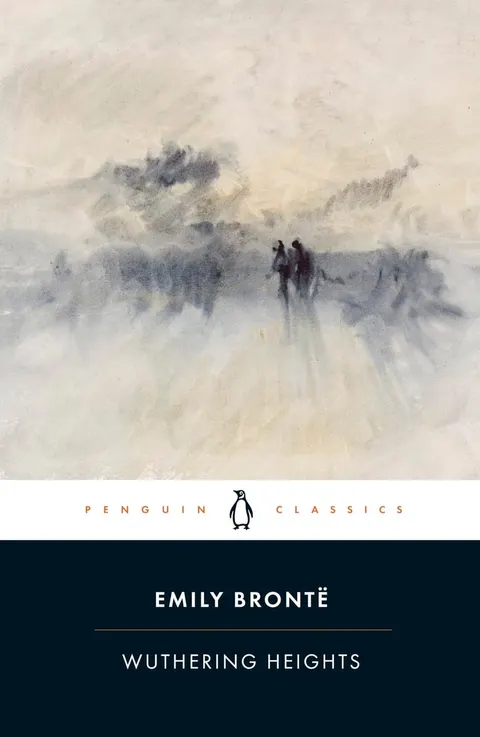
Emily Brontë's only novel, published in 1847 under the name Ellis Bell, is less a romance than a force of nature. It follows two landowning families on the Yorkshire moors, the Earnshaws and the Lintons, and their foster son Heathcliff, whose bond with Catherine Earnshaw is passionate and destructive at once.
Read more
Contemporary reviews were divided, and the book shocked readers with its cruelty. It is now counted among the greatest novels in English, precisely because it refuses to make love gentle.
For: Readers who like their love stories wild, dark and morally uncomfortable.
While reading: The story spans two families and more than one generation. Keep a small family tree handy as you read.
Next: If the Gothic atmosphere is what hooked you, jump ahead to Rebecca.
Tolstoy called this his first true novel. Anna, a married aristocrat in Saint Petersburg, falls for the cavalry officer Count Vronsky, and their affair scandalises society and sends them abroad in search of happiness.
Read more
Running alongside is the story of Levin, a landowner looking for meaning in work, faith and family. The contrast between the two plots is the point: one love tears a life apart, the other slowly builds one. Trains appear again and again, and Tolstoy sets it all against a Russia changing fast under Alexander II's reforms.
For: Readers ready for a long, absorbing novel about marriage, desire and moral choice.
While reading: Do not skip the Levin chapters. Many readers try to, and miss half of what the book is saying about love.
Next: Madame Bovary tells a similar story in a very different, cooler French style.
Flaubert's debut novel was put on trial for obscenity in 1857; after his acquittal it became a bestseller. Emma Bovary is a doctor's wife in provincial France who has read too many romantic novels and finds real life unbearably dull.
Read more
She looks to love affairs and spending to escape, and lives far beyond her means. Flaubert writes about her with a cool precision that made the book a landmark of literary realism. It is a love story about the idea of love, and about what happens when that idea meets ordinary days.
For: Readers who like a sharp, ironic eye and are interested in how fantasies shape real choices.
While reading: Watch how Flaubert uses objects, clothes and rooms. Much of Emma's inner life is told through things.
Next: Edith Wharton's The Age of Innocence shows the same pressure of convention, from the side of a man.
Orhan Pamuk, Zülfü Livaneli
Group 2: Twentieth-century love, memory and guilt
Five novels that keep the intensity of the classics but add something new: a stronger sense of history, memory and regret. Several are about love that cannot happen, or happens too late. They are also among the most adapted books on this list, so you may already know one of the films.
E. M. Forster's novel follows a young woman in the restrained culture of Edwardian England whose romantic awakening begins on a trip to Italy and continues back home. It is a romance and a gentle, funny critique of English manners at the turn of the century.
Read more
Set between Italy and England, it is lighter than most books here, and that lightness is part of its charm. The Modern Library placed it on its list of the hundred best English-language novels of the twentieth century.
For: Readers who want something warm and witty after the heavier classics.
While reading: Notice the contrast between the two settings. Italy and England stand for two ways of living, and the heroine has to choose between them.
Next: Wharton's The Age of Innocence is the darker cousin of this book.
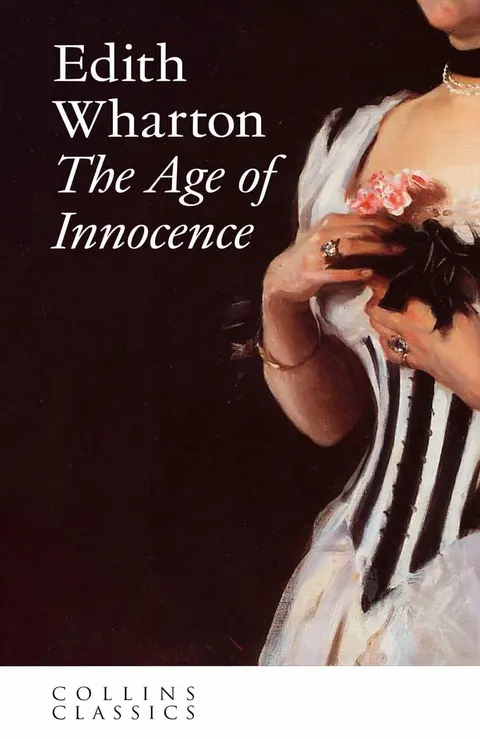
Set in the upper-class, Gilded Age New York of the 1870s, Wharton's novel is about a love caught between desire and convention. Wharton wrote it in her fifties, already an established author, and she treats the rules of that society as a force as strong as any villain.
Read more
The book won the 1921 Pulitzer Prize for Fiction, making Wharton the first woman to win it. It is a love story about restraint, and about what a person gives up to stay acceptable.
For: Readers who find unspoken feelings more powerful than declarations.
While reading: Read slowly. Wharton's sentences carry a lot of meaning in small gestures and glances.
Next: For another love shaped by social pressure, but in revolutionary Prague, try The Unbearable Lightness of Being.
Daphne du Maurier's 1938 Gothic novel begins with one of the most famous opening lines in English fiction: 'Last night, I dreamt I went to Manderley again.' A young, unnamed woman marries a wealthy widower on impulse and moves to his great house, where everyone, including the unsettling housekeeper Mrs Danvers, seems haunted by the memory of his first wife. It has never gone out of print, and Hitchcock's 1940 film won the Academy Award for Best Picture.
Read more
Romance, suspense and jealousy are tangled together until you cannot separate them.
For: Readers who want a love story with the tension of a thriller.
While reading: The narrator never tells you her own name. Notice how that shapes the way she sees herself next to Rebecca.
Next: Atonement is another English novel built around a secret, written with the same command of suspense.
Milan Kundera's novel is about two women, two men and a dog, and their lives around the 1968 Prague Spring. It was finished in 1982 but first appeared in French translation in 1984, before the Czech original was published.
Read more
Its title already tells you it is a novel of ideas as much as of events. The relationships at its centre are complicated and honest, and history keeps pressing in on them; a film adaptation followed in 1988.
For: Readers who enjoy ideas inside their fiction and are curious about love under political pressure.
While reading: Read it with a little knowledge of 1968 Czechoslovakia. Even a short summary of the Prague Spring makes the background much clearer.
Next: Love in the Time of Cholera offers another long view of love, with more warmth and comedy.
Ian McEwan's 2001 novel moves through three periods: an English country house in 1935, the Second World War in England and France, and the present day. At its centre is a mistake made by a girl from an upper-class family, half innocent and half not, that ruins two people's lives.
Read more
The rest of the book follows her adult life in its shadow, and becomes a reflection on what writing can and cannot repair. It was shortlisted for the Booker Prize and adapted into an Academy Award-winning film.
For: Readers who like a beautifully constructed novel with a love story at its heart and a question about truth underneath.
While reading: The opening part, set in 1935, is slow and detailed on purpose. Small moments there will matter later.
Next: Never Let Me Go shares its quiet, devastating English tone.
Sarah Paulson
Group 3: Modern love from closer voices
Five novels from the 1980s onward, from Colombia, Japan, England, Ireland and France. They are more intimate and often more fragmentary than the classics. Love here is tangled up with memory, growing up, mortality and, in Ernaux's case, pure obsession.
Florentino Ariza falls in love with Fermina Daza as a young man, and then waits more than fifty years for a second chance. García Márquez, who later won the Nobel Prize, published the novel in Spanish in 1985, and Edith Grossman's English translation followed in 1988.
Read more
It is a long, ironic meditation on love and ageing, by turns comic and tender. Few novels take the idea of lifelong devotion this seriously while also laughing at it a little.
For: Readers who want a sweeping, patient love story and do not need the lovers to be young.
While reading: The novel covers more than half a century. Give it time; its patience is the point.
Next: Norwegian Wood is a very different kind of remembering, quieter and sadder.
Murakami's 1987 novel is a nostalgic story of loss. Toru Watanabe looks back on his student years in late-1960s Tokyo, when the campus was full of protests he found hollow, and on two very different women: the fragile, troubled Naoko and the outgoing, lively Midori.
Read more
It is Murakami's most realistic book, with none of his usual strangeness, and it made him a star in Japan, so much so that he left the country for a while. Many readers find it the best entry point to his work.
For: Readers who like quiet, melancholy coming-of-age stories.
While reading: It is a story of loss and grief, told gently. Expect melancholy rather than romance in the usual sense.
Next: Sally Rooney's Normal People is a natural next step: another story of two young people who keep finding and losing each other.
Kazuo Ishiguro's 2005 novel is set in an alternative England of the 1990s and follows students at an elite boarding school. The truth about their lives emerges slowly.
Read more
The book is about friendship, memory and what it means to be human, and a love story runs through it with real tenderness. It was shortlisted for the Booker Prize and Time named it the best novel of 2005. Go in knowing as little as possible.
For: Readers who like restrained, elegant prose and a story whose full shape only gradually becomes clear.
While reading: Do not read reviews or the film description first. Part of the book's power is in what it reveals and when.
Next: Atonement, if you have not read it yet, has the same quiet English sadness.
Sally Rooney's second novel, published by Faber & Faber in 2018, is a coming-of-age story about two young people who keep drifting together and apart. It became a bestseller in the United States and in China, where its coming-of-age theme found a large young audience, and its television adaptation was widely praised.
Read more
Several publications ranked it among the best books of the 2010s.
For: Readers in their late teens and twenties, and anyone who remembers being that age clearly.
While reading: Read it at your own age, whatever that is. Younger readers see themselves in it; older readers see who they used to be.
Next: Simple Passion strips a love affair down even further, to a single obsession.
Annie Ernaux's short, unsparing account of an all-consuming affair with a married man. Ernaux, who drew on her own life, writes it plainly, without decoration or self-pity, which makes it more intense, not less.
Read more
It is short enough to be read in one sitting, and it says more about obsession than many novels ten times its length.
For: Readers who want something short, honest and adult, and who have ever lost themselves in someone.
While reading: Read it in one go if you can. Its force comes from staying inside one state of mind.
Next: Go back to Madame Bovary and notice how differently two French writers, a century and a half apart, write about the same hunger.
Olivia Rodrigo
Reading path
If you are new to classic fiction, start with Pride and Prejudice. It is the most welcoming book here and it teaches you how to read the others: patiently, with an eye for what people say and what they hide. Follow it with Jane Eyre and Wuthering Heights, ideally close together, so you can feel how differently two sisters wrote about passion in the same year.
If you already know the classics and want something modern, begin with Norwegian Wood or Normal People, then read Never Let Me Go and Atonement. These four make a strong run of novels about memory and missed chances, and none of them needs any background. Finish with Simple Passion as a short, sharp coda.
Read more
If you have a long holiday or a slow month ahead, take on one of the big Russians or Latin Americans: Anna Karenina or Love in the Time of Cholera. Pair it with something short in between, such as Rebecca or A Room with a View, so the long book does not become a chore. The Age of Innocence and The Unbearable Lightness of Being fit well after Anna Karenina, because all three look at love caught inside the rules of a society.
Whatever route you take, leave a little time between books. Love stories echo each other, and you will notice more if you let the last one settle before you start the next.