Best historical fiction: 13 novels from 1100s to 1960s
Thirteen of the best historical novels, arranged by period, from The Pillars of the Earth and Hamnet to Beloved and A Gentleman in Moscow.
0/13 books read0%
Historical fiction does something a history book cannot. A historian has to stay with the evidence; a novelist can walk into the room where the evidence is silent and imagine what it felt like to be there. The best historical novels use that freedom carefully. They do not rewrite the past to suit the present, but they let you live inside it for a few hundred pages, among people who did not know how their story would end.
Read more
The thirteen novels below are arranged in rough chronological order of their settings, from a cathedral building site in twelfth-century England to a civil war in 1960s Nigeria. That makes the list work as a kind of journey: you can read straight through and watch Europe, the Americas and Africa change around the characters. Or you can jump to the period that interests you most.
The list mixes eras of writing as well as eras of setting. Walter Scott's Waverley, from 1814, is often regarded as one of the first historical novels in the Western tradition, and Dumas and Dickens wrote theirs a generation later. Others are recent: Matrix appeared in 2021, Hamnet in 2020. Reading old and new side by side shows how much the form has changed, from adventure and grand panorama to intimate, inward stories about grief, faith and survival.
Some of these books are also controversial, or deal with very painful history. Gone with the Wind remains a contested reference point in writing about the American South; Beloved and Schindler's List confront slavery and the Holocaust directly. They are included because they are among the most important historical novels ever written, and each one rewards a reader who comes to it with care.
Who it is for: Readers who want to travel in time through fiction: people who love a big, immersive story and are curious about how ordinary lives looked inside great historical events.
Two novels set in twelfth-century England, one sprawling and popular, one strange and poetic. Between them they show the full range of what medieval fiction can be.
Ken Follett was known for thrillers before he published this 1989 novel about the building of a cathedral in the fictional town of Kingsbridge. It is set in the twelfth century, mostly during the civil war known as the Anarchy, and it follows the slow rise of Gothic architecture out of the older Romanesque style alongside the fortunes of the priory and the village.
Read more
It became his best-selling book, was chosen for Oprah's Book Club, and began a series of Kingsbridge novels set in later centuries.
For: Readers who want a huge, immersive story they can live inside for weeks.
While reading: It is long, but the plot moves fast. Let the architecture details wash over you if they are not your thing.
Next: Matrix stays in twelfth-century England but moves from the building site to the cloister.
Lauren Groff's 2021 novel imagines the life of Marie de France, sent at seventeen to England to become prioress of a poor abbey whose nuns are close to starvation and sick with disease. Groff turns this into a strange, poetic fictional biography of a twelfth-century mystic who transforms the abbey's fortunes.
Read more
Reviewers praised its prose and its sense of events from the Crusades to the papal interdict of 1208, though some historians of medieval women found it too full of clichés about the period. It is the first of a planned triptych.
For: Readers who like literary, sensual prose and stories about women's power.
While reading: Do not expect a conventional plot. Read it for its sentences and its atmosphere.
Next: Hamnet is another short, intense novel that gives voice to a woman history barely recorded.
Ezra Klein
Period 2: Early modern worlds
Three novels set between the late sixteenth and eighteenth centuries: Shakespeare's family, a mythic Ottoman Empire, and the Jacobite rising in Scotland. They are very different in style, from intimate to allegorical to adventurous.
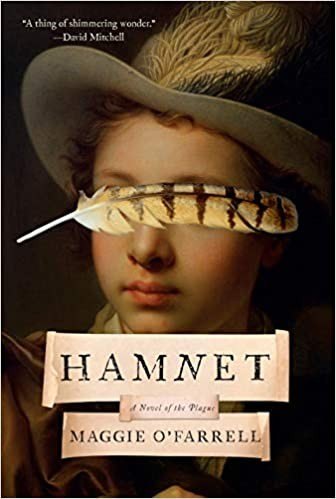
Maggie O'Farrell's 2020 novel is a fictional account of Hamnet, the son of William Shakespeare and Agnes Hathaway, who died at the age of eleven in 1596, and it focuses on his parents' grief. It won the Women's Prize for Fiction and the fiction prize at the National Book Critics Circle Awards, and O'Farrell later co-adapted it for the screen with Chloé Zhao.
Read more
For: Readers who like quiet, emotionally powerful novels about family and loss.
While reading: It is about the death of a child. Go in knowing that, and give yourself time after the last chapter.
Next: The Palace of Dreams shifts from private grief to the machinery of a state.
Ismail Kadare's 1981 novel is set in the Ottoman Empire, but in a deliberately vague, mythic past meant to stand for the modern totalitarian state. Its hero, Mark-Alem, a young Albanian related to the powerful Köprülü family, rises quickly inside a sinister ministry that collects and interprets the dreams of the empire's subjects, hunting for the 'master-dreams' that foretell the fate of the Sultan.
Read more
In communist Albania the book was banned two weeks after publication, by which time it had already sold out.
For: Readers who like Kafka or Orwell and are curious about historical settings used as allegory.
While reading: Read it as both history and fable. The Ottoman setting is real, but the target is any state that wants to control minds.
Next: Waverley is a very different kind of historical novel: one of the first, and full of adventure.
Walter Scott was already a famous poet when he published this novel anonymously in 1814, and it is often regarded as one of the first historical novels in the Western tradition. Edward Waverley, a young English gentleman, is commissioned into a Scottish regiment just before the Jacobite rising of 1745, and finds himself torn between loyalty to the Crown and admiration for the romantic cause of the exiled prince Charles Edward Stuart.
Read more
Scott's later novels were published as 'by the author of Waverley', which is how the whole series got its name.
For: Readers curious about where historical fiction began, and fans of adventure and divided loyalties.
While reading: It is slower than modern novels. Read it as a window onto how the genre began, and let its pace set yours.
Next: A Tale of Two Cities moves to another revolution, in France.
George R. R. Martin
Period 3: Revolutions and the nineteenth century
Four novels from the French Revolution to the American Civil War and its aftermath. Two are classic nineteenth-century adventures; two are twentieth-century novels about the American South that sit in uneasy conversation with each other.
Dickens's 1859 novel is set in London and Paris before and during the French Revolution. It tells the story of Doctor Manette, released after eighteen years in the Bastille to live in London with the daughter he had never met, and of the people around them as the Revolution and the Terror approach.
Read more
It is Dickens's best-known historical novel and one of the best-selling novels of all time, built around a love triangle and one of literature's most famous acts of sacrifice.
For: Readers new to Dickens who want a shorter, more tightly plotted book than his usual.
While reading: Several storylines run in parallel at first. Keep going; the threads come together.
Next: The Count of Monte Cristo picks up France a generation later.
Alexandre Dumas's adventure novel, serialised from 1844 to 1846, is set between 1815 and 1839, beginning on the day Napoleon left exile on Elba. Edmond Dantès, a young sailor, is falsely accused of treason and imprisoned in the Château d'If, where a fellow prisoner educates him and tells him of a hidden treasure.
Read more
Escaping, he reinvents himself as the wealthy Count of Monte Cristo and sets out on a long, calculated revenge. It is a story of hope, justice, vengeance and mercy, and it has never gone out of print.
For: Anyone who wants pure storytelling pleasure on a grand scale.
While reading: Choose a complete, unabridged translation. The book is long, but cutting it loses much of what makes it great.
Next: Gone with the Wind offers another huge, popular story, set in the American South.
Margaret Mitchell's 1936 novel is set in Clayton County and Atlanta, Georgia, during the Civil War and Reconstruction. It follows Scarlett O'Hara, the spoiled eldest daughter of a plantation owner, who uses every means she has to climb out of poverty after Sherman's March to the Sea.
Read more
It won the Pulitzer Prize, was the top American fiction bestseller of 1936 and 1937, and became a famous 1939 film. It is also a controversial reference point for later writers of the South, and its view of the past deserves to be read critically.
For: Readers who want a sweeping saga with an unforgettable, difficult heroine.
While reading: Notice whose point of view the story takes, and whose it leaves out. Reading Beloved next makes the contrast sharp.
Next: Beloved tells the history of the same century from the perspective of the enslaved.
Toni Morrison's 1987 novel is set after the American Civil War. Sethe, a formerly enslaved mother, lives with her past in a Cincinnati home haunted by a malevolent spirit.
Read more
Morrison set out to depict the limits enslaved women faced and the inner lives of the formerly enslaved, which literature had largely ignored. It won the Pulitzer Prize for Fiction, and a New York Times survey of writers and critics ranked it the best work of American fiction from 1981 to 2006.
For: Readers ready for a demanding, haunting novel about slavery and memory.
While reading: Sethe's past is revealed gradually. Do not worry if things are unclear at first; the book is meant to unfold slowly.
Next: Move to the twentieth century with A Gentleman in Moscow.
Emma Watson, Shonda Rhimes and 2 more
Period 4: The twentieth century
Four novels set in Soviet Moscow, Nazi-occupied Poland and France, and civil-war Nigeria. Two are based closely on real people and events; all four are about how individuals keep their humanity when history turns against them.
Amor Towles's 2016 novel follows Count Alexander Rostov, who returns to Russia after the 1917 revolution and is sentenced to house arrest in Moscow's Hotel Metropol. The chapters follow a clever structure, set one day after his arrest, then two days, five days, ten days, and so on, doubling outward and then coming back.
Read more
Decades of Soviet history pass outside the hotel while the Count builds a life inside it. It is elegant and warm, a story of dignity and change.
For: Readers who want a charming, hopeful book that still takes history seriously.
While reading: Enjoy the details of hotel life; small things set up later moments.
Next: Schindler's List turns to one of the darkest chapters of the same century.
Thomas Keneally's 1982 novel, first published as Schindler's Ark, tells the story of Oskar Schindler, a member of the Nazi Party who saved the lives of 1,200 Jews during the Holocaust. It follows real people and events, adding dialogue and scenes where the record is silent.
Read more
It won the Booker Prize and became the basis of Steven Spielberg's 1993 film. Few books show so clearly how one compromised person can still choose to do good.
For: Readers who want to understand the Holocaust through a true and unexpected story.
While reading: Remember that almost everyone in it was real. That knowledge changes how each scene reads.
Next: The Nightingale shows the war from occupied France and the lives of two sisters.
Kristin Hannah's 2015 novel follows two sisters in France during the Second World War as they try to survive and resist the German occupation. It was inspired by the story of Andrée de Jongh, a Belgian woman who helped downed Allied pilots escape Nazi territory.
Read more
It became a major bestseller, published in forty-five languages with more than four and a half million copies sold.
For: Readers who want an emotional, page-turning story about women in wartime.
While reading: The two sisters make very different choices. Notice how the book refuses to make either one simply right.
Next: Half of a Yellow Sun moves to Africa and another war.
Chimamanda Ngozi Adichie's 2006 novel is set in 1960s Nigeria. It follows Ugwu, a teenage houseboy from a village; his employer Odenigbo, a mathematics professor with revolutionary views; and Olanna, the woman Odenigbo loves.
Read more
When the Nigerian Civil War breaks out, their lives are thrown into chaos. The novel looks at the legacy of British colonialism and the tension between artificial borders and deep ethnic identities such as the Igbo. It won the Women's Prize for Fiction in 2007.
For: Readers who want history from a part of the world that rarely appears in lists like this.
While reading: Look up the basic facts of the Biafran War before you start; the novel assumes some background.
Next: Go back to The Pillars of the Earth if you have not read it, and see how much the form has changed in between.
Dua Lipa
Reading path
If you are new to historical fiction, start with The Count of Monte Cristo or The Pillars of the Earth. Both are long but move fast, and they show what the genre does best: a gripping plot set firmly in a real time and place. If you want something shorter, A Gentleman in Moscow or The Nightingale are excellent first choices.
If you prefer literary fiction, try Hamnet, then Matrix, then Beloved. These three are more inward and poetic, and they focus on lives that official history barely recorded. The Palace of Dreams fits this route too, especially if you like allegory.
Read more
Reading in chronological order is also rewarding. Start with The Pillars of the Earth and Matrix, then Hamnet and Waverley, then A Tale of Two Cities and The Count of Monte Cristo, then Gone with the Wind and Beloved, and finish with the four twentieth-century novels. It takes months, but you will finish with a real sense of how the past fits together.
Whatever route you choose, read Gone with the Wind and Beloved close together if you read either. They describe the same century from opposite sides, and the conversation between them is one of the most important in American literature.