Classic novels to start with: twelve for new readers
Twelve classic novels for readers new to the canon, from Austen and Brontë to Harper Lee, Dickens, Shelley, Dostoevsky and Tolstoy.
0/12 books read0%
The word classic can be intimidating. It suggests homework, long sentences and a feeling that you ought to enjoy the book more than you do. In practice, the novels that last tend to last because readers keep finding pleasure in them, and many of the best known are far more approachable than their reputation suggests.
Read more
The difficulty for a new reader is not whether to read classics but which ones to try first. A poor first choice can put you off for years, while a good one can open a whole shelf. The twelve novels below are chosen with that risk in mind. They are widely read, they are rewarding, and they sit at different levels of difficulty so that you can climb gradually rather than begin at the top.
The list is organised into three groups. The first contains warm, character-driven novels about families, love and independence, which are among the easiest classics to fall into. The second gathers shorter books, several of them American, that can be finished in a few days and still carry real weight. The third includes the more ambitious works, from the Victorian drama of Dickens and the gothic imagination of Shelley to two of the great Russian novels, which are best saved for when you are ready for a longer commitment.
Nothing here requires special knowledge. You do not need to know the period, the author or the history in advance. A good classic explains itself as it goes, and the pleasure of reading one comes from entering another time through a story that still works. Start where your curiosity leads, and let the reading order at the end guide you if you would like a path.
Who it is for: Readers who want to begin reading classic novels and would like a sensible order that builds from the most welcoming books to the most demanding.
Four novels about love, family and independence, from a comedy of manners to a moorland tragedy. They are among the most readable classics, with strong characters and clear emotional stakes. If you want to be reminded why people love old novels, begin here. Each of the four is also a book that readers return to more than once, and each can be enjoyed on a first read without any background knowledge at all.
Austen's comedy of manners follows Elizabeth Bennet and the proud Mr. Darcy as they overcome first impressions.
Read more
Witty, romantic and endlessly rereadable. Hillary Clinton, Tim O'Reilly and Emily Bader have it on their shelves. It is a frequent first choice for new readers of classics because its humour keeps it light.
For: Readers who want a witty, romantic novel with a lot of charm.
While reading: Pay attention to the dialogue, which carries much of the humour.
Next: Jane Eyre offers a more intense, passionate kind of romance.
Charlotte Brontë's novel follows an orphaned governess who finds independence and love at Thornfield Hall. A passionate, defiant story that still feels modern.
Read more
Alice Walker, Shonda Rhimes and Kazuo Ishiguro have it on their shelves. Its first-person voice makes it direct and easy to follow.
For: Readers who like a determined, independent narrator.
While reading: Let the narrator's voice carry you; it is the book's greatest strength.
Next: Wuthering Heights is a darker, wilder companion.
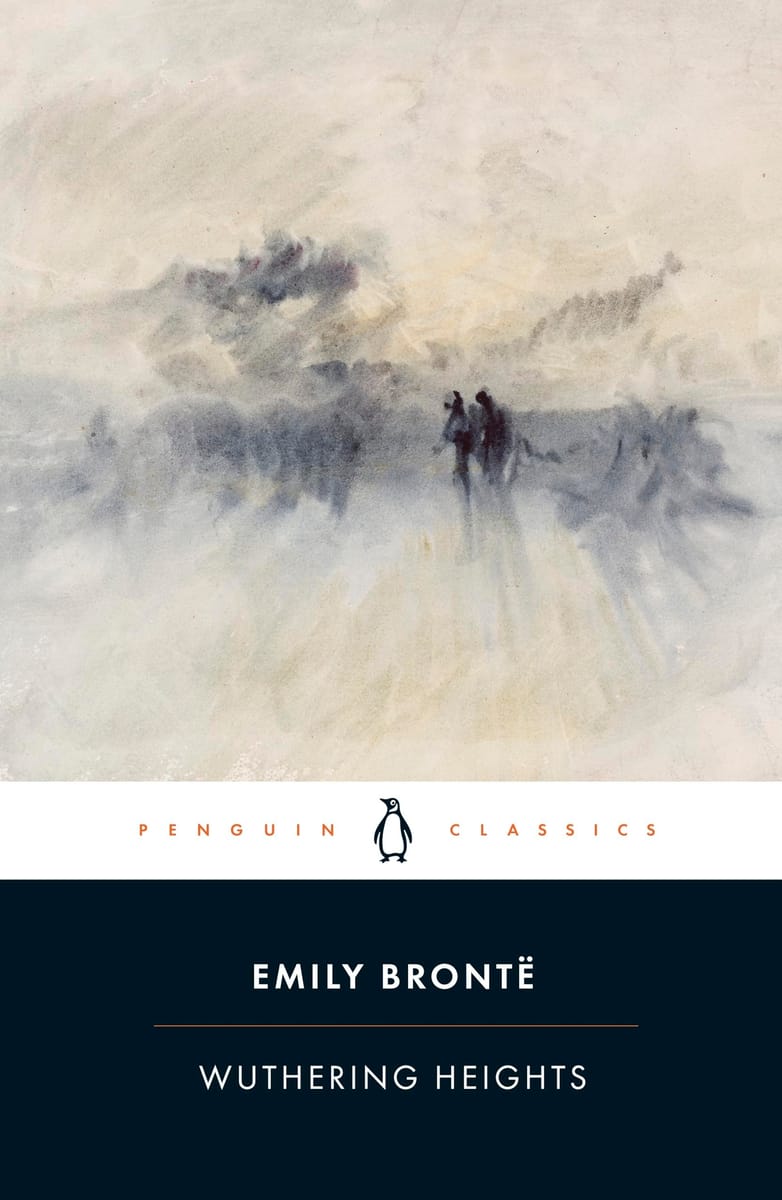
Emily Brontë's novel of the passionate, destructive bond between Catherine Earnshaw and Heathcliff on the Yorkshire moors. It is a stormier book than Jane Eyre.
Read more
Chelsea Handler, Chloë Grace Moretz, Felicity Jones and Maggie Rogers have it on their shelves.
For: Readers who want intensity and atmosphere over comfort.
While reading: It is a bleaker book than its romance reputation suggests; go in expecting drama.
Next: Little Women returns to a gentler, warmer world.
Alcott's novel follows the four March sisters growing up in Civil War New England. A warm, enduring story of family and ambition.
Read more
Hillary Clinton, J.K. Rowling, Shonda Rhimes, Florence Pugh and Timothée Chalamet have it on their shelves. It is easy to read in short stretches and easy to love.
For: Readers who want a family story about growing up and having ambitions.
While reading: It is episodic, so it suits reading a chapter or two at a time.
Next: To Kill a Mockingbird shifts to a story of conscience in a small town.
Florence Pugh, Timothée Chalamet and 6 more
Group 2: Short and powerful
Four shorter books, three of them American, which can be read in a few days. Brevity does not mean lightness: each carries a clear idea and a distinctive voice. These are good choices when you want to finish a classic and feel the satisfaction of having done so. A short book also lets you test an author before committing to a longer one, which is a sensible way to find the writers you will want to read more of.
Harper Lee's novel of a small Alabama town, seen through the eyes of a young girl whose father defends a Black man falsely accused of rape. A landmark of American fiction about conscience and injustice.
Read more
Dua Lipa, Taylor Swift, Benedict Cumberbatch, James Clear and Shane Parrish have it on their shelves.
For: Readers who want a moving, accessible novel about doing the right thing.
While reading: The child narrator keeps the language clear and the pace steady.
Next: The Catcher in the Rye gives another American narrator, very different in tone.
Holden Caulfield, expelled from his prep school, wanders New York for a few days before going home. Salinger's novel of teenage alienation is one of the best-known American books of the twentieth century.
Read more
Sarah Jessica Parker, Jennifer Lawrence and Larry King have it on their shelves.
For: Readers who like a distinctive narrative voice and a short book.
While reading: Let the voice carry you rather than waiting for a plot.
Next: The Old Man and the Sea is even more compact.
Jennifer Lawrence, Sarah Jessica Parker and 1 more
Dickens's ghost story about Ebenezer Scrooge, who is visited on Christmas Eve by three spirits. Larry King and George Saunders have it on their shelves.
Read more
It is brief and shapely, and it gives new readers a quick taste of Dickens before they attempt his longer books.
For: Readers who want to try Dickens in a short, well-known story.
While reading: It reads well aloud, and it suits the winter evenings it was written for.
Next: A Tale of Two Cities is Dickens at greater length and scale.
Larry King, George Saunders
Group 3: Ambitious and rewarding
Four novels that ask for more time and attention, and repay both. One is a Victorian drama set against revolution, one is a gothic story that raises questions about creation, and two are among the great Russian novels. Read these once the earlier groups have given you confidence.
Dickens's novel of the French Revolution, set between a quiet London and a Paris on the edge of terror. It follows a doomed love triangle and one of literature's best-known acts of sacrifice.
Read more
Christopher Hitchens, Maya Angelou, Graham Norton, Zülfü Livaneli and Mahatma Gandhi have it on their shelves.
For: Readers who want a historical novel with a strong plot and a famous ending.
While reading: It is tightly plotted, so keep track of the characters early on.
Next: Frankenstein offers another classic story built around a single big idea.
Victor Frankenstein, a young scientist, creates a living being from dead matter and abandons it in horror. Shelley's novel asks what creators owe the things they make.
Read more
Glenn Beck, Phoebe Waller-Bridge, Kazuo Ishiguro and Malala Yousafzai have it on their shelves.
For: Readers who like a classic with ideas that feel current.
While reading: Come to it as a novel of questions rather than a monster story.
Next: Crime and Punishment is another novel built on moral questions.
A destitute former student in St Petersburg murders a pawnbroker and is tormented by guilt as a detective closes in. Dostoevsky's psychological novel asks whether any end can justify a crime.
Read more
PewDiePie, Esther Perel, Timothée Chalamet, Larry King and Zülfü Livaneli have it on their shelves.
For: Readers ready for a serious, psychologically intense novel.
While reading: Take your time with the long scenes of thought; they are the book's heart.
Next: Anna Karenina is the next step into the Russian novel.
Timothée Chalamet, Benedict Cumberbatch and 4 more
Tolstoy's novel of a married aristocrat whose passion for Count Vronsky defies Russian high society, set beside the parallel story of the landowner Levin. A defining novel of love, family and moral choice.
Read more
Oprah Winfrey, Peter Thiel, Orhan Pamuk, Jennifer Lawrence and Carly Rae Jepsen have it on their shelves.
For: Readers who want to spend serious time with a large, humane novel.
While reading: Settle in for a long read; the two storylines reward patience.
Next: Return to any earlier favourite, or choose another Austen or Dickens.
Jennifer Lawrence, Peter Thiel and 6 more
Reading path
If you are new to classics, begin with Pride and Prejudice or Little Women. Both are warm, funny and easy to enter, and both reward a relaxed pace. If you would rather start with something very short, The Old Man and the Sea or A Christmas Carol will give you a classic in a sitting. After one of these, you will know whether you enjoy the older style of storytelling.
The next step is a book with stronger emotion or higher stakes. Jane Eyre and To Kill a Mockingbird are both moving, readable and well suited to a second choice. The Catcher in the Rye offers a very different voice, and Wuthering Heights is a good option for readers who want something darker. By this point you will have read four or five classics and will be ready for something longer.
Read more
Save the biggest books for last. A Tale of Two Cities and Frankenstein are good bridges, since each combines a strong story with a clear central idea. Crime and Punishment then makes a strong introduction to Russian fiction, followed by Anna Karenina when you have the time and appetite for a long novel. If the order feels too strict, ignore it: a classic that you want to read is always a better choice than one that you feel you should. And if a book stalls halfway, put it down without guilt and try another from a different group; the right classic at the wrong moment is still the wrong classic, and you can always return to it later.