Skip to content

Menu

My shelf

okai

Log a book

The Little Prince

Classics · 16 min · 20 books

Books for high school students: 20 to read before college

Twenty books for high school readers, from The Little Prince and Animal Farm to 1984, Frankenstein and Born a Crime, grouped by length and theme.

0/20 books read0%

High school is when reading either becomes a habit for life or turns into a chore you abandon the moment the last exam is over. Very often the difference is not the student but the books. A classic handed over with no context can feel like homework from another century. The same book, picked up at the right moment and for the right reason, can be the first one that makes a teenager stay up late.

Read more

This list is built around that idea. It gathers twenty books that high school readers keep coming back to, most of them classics that appear on school reading lists, and a few true stories that belong beside them. They are grouped by what they ask of you. The first group is short and can be finished in a weekend. The second is about growing up, fairness and the people around you. The third is made of three famous warnings about the future. The fourth takes on the biggest questions a person can ask, and the last is three true stories of people who lived through the worst and wrote about it.

None of these books is here because it is good for you in the way vegetables are good for you. They are here because they are about things teenagers already think about: who to trust, what is fair, how much freedom anyone really has, what to do with a life. Many of them are about young people: Holden Caulfield, the girl who narrates To Kill a Mockingbird and the boys of Lord of the Flies are all still growing up.

There is also some reassurance in who else reads them. These books are not only school texts. Taylor Swift and Dua Lipa list To Kill a Mockingbird, Timothée Chalamet lists both Nineteen Eighty-Four and Crime and Punishment, Malala Yousafzai lists Frankenstein and The Alchemist, and RM of BTS lists The Metamorphosis. A book that a pop star, an actor and a Nobel Peace Prize winner keep on their shelves is a book worth a try.

A practical note before you begin: you do not have to read all twenty, and you certainly do not have to read them in order. Start with whatever group matches your mood or your school year, finish one book properly rather than three halfway, and come back for more when you are ready. The reading order at the end suggests one simple path.

Who it is for: Students aged roughly fourteen to eighteen, and the parents and teachers looking for books that will actually be read, not just assigned.
Short answer

Group 1: Short books to start with

Five short books, each one readable in a few evenings. They are the best way to prove to yourself that classics are not automatically long or difficult. Several of them are fables, simple on the surface and surprisingly deep underneath, which makes them good to reread a few years later.

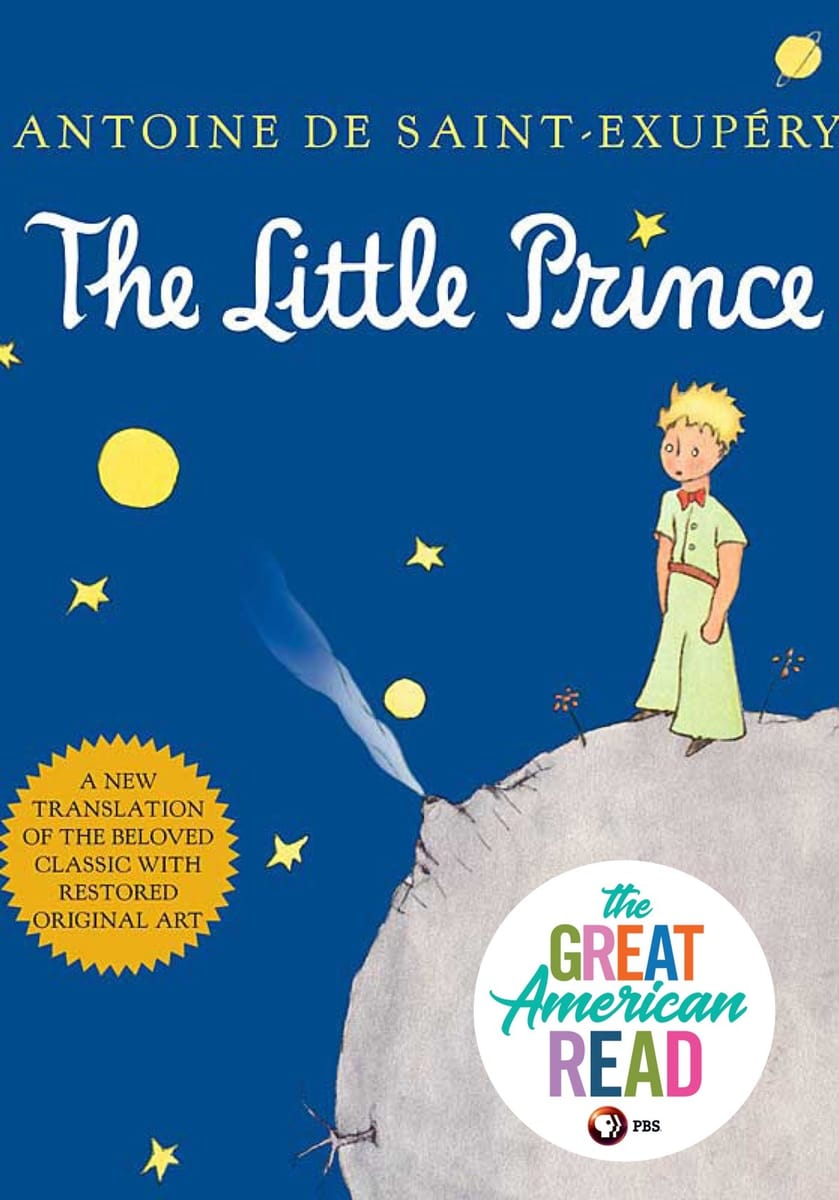
1. The Little Prince

Antoine de Saint-Exupery · 1943

A pilot stranded in the desert meets a small prince who has travelled from a distant asteroid. Saint-Exupéry's fable looks like a children's book, with drawings and a gentle tone, but it is really about love, loss and seeing what is essential, and it tends to mean something different every time you read it.

Read more

It is the kind of book teenagers sometimes dismiss as too young and then rediscover. Emma Watson and Charlize Theron are among its readers.

For: Anyone who wants an easy first step, or who thinks they have outgrown it.

While reading: Pay attention to the grown-ups the prince meets. Each one is a portrait of a certain kind of adult.

Next: The Alchemist is another short fable about a journey and what it teaches.

Emma Watson, Charlize Theron and 2 more

2. The Old Man and the Sea

Ernest Hemingway · 1952

Hemingway's novella tells of an aging Cuban fisherman and his long struggle with a giant marlin. The language is deliberately plain, which makes it a good book for students still building confidence in English, but the story is about endurance and dignity, and it has a way of staying with readers.

Read more

It is also a useful first look at a style that changed how many writers wrote. PewDiePie and Cillian Murphy both list it.

For: Readers who like quiet, physical stories with one main character.

While reading: Notice how often things are repeated. Hemingway uses repetition to build tension.

Next: Try The Stranger for another short, spare book with a very different mood.

PewDiePie, Lex Fridman and 3 more

3. The Metamorphosis

Franz Kafka · 1915

Kafka's novella opens with a travelling salesman waking up to find he has been transformed into an enormous insect. What follows is not a horror story but a bleak, darkly comic study of alienation and family: how the people closest to him react, and what they really valued about him.

Read more

It is short enough to read in one sitting, RM of BTS, Lex Fridman and PewDiePie all list it.

For: Readers who feel misunderstood at home, or who like strange stories with a straight face.

While reading: Ask yourself who changes more in the story, the man or his family.

Next: Animal Farm is another short book that uses an impossible situation to say something true.

PewDiePie, Lex Fridman and 2 more

4. Animal Farm

George Orwell · 1945

George Orwell's 1945 satirical fable follows the animals of Manor Farm as they overthrow their human master, only for the revolution to be betrayed under the rule of the pigs. It is the clearest introduction to political satire there is: funny at first, then chilling, and short enough to finish in an afternoon.

Read more

Students who read it usually find that they start noticing its slogans and tricks in the real world. Lex Fridman and the writer David Perell both list it.

For: Readers interested in politics, power and how propaganda works.

While reading: Keep track of the slogans the animals live by and how they quietly change.

Next: Nineteen Eighty-Four, in Group 3, is Orwell's longer and darker vision of the same danger.

Lex Fridman

5. The Stranger

Albert Camus

Albert Camus's 1942 novel follows Meursault, a man in French Algeria who seems unmoved by his mother's death and who becomes caught up in a neighbour's violent dispute that ends with a fatal confrontation on a beach. It is told in a flat first-person voice that refuses to show the feelings everyone expects.

Read more

That refusal is what makes it such a good book to argue about in class. It is also published in English as The Outsider, and this edition is a newer American translation. The novelist Emma Cline lists it.

For: Older students curious about philosophy and existentialism.

While reading: The book has two parts. Compare how Meursault is seen in each.

Next: Crime and Punishment, in Group 4, is the opposite case: a man consumed by conscience.

Kaia Gerber

Group 2: Growing up, fairness and other people

Five American novels that sit at the centre of many school reading lists for good reason. They are about young people trying to make sense of an adult world that is often unfair, and about the communities that shape them. Each one is a good book to talk about with someone else after you finish.

6. To Kill a Mockingbird

Harper Lee · 1960

Harper Lee's novel is set in a small Alabama town and seen through the eyes of a young girl whose father defends a Black man falsely accused of rape. It is a landmark of American fiction about conscience and injustice, but it is also funny, warm and full of childhood detail, which is why so many people remember it fondly long after school.

Read more

Taylor Swift, Dua Lipa, Paul Mescal and Benedict Cumberbatch are among its readers.

For: Every high school reader; it is one of the best first serious novels there is.

While reading: Notice the gap between what the young narrator sees and what the reader understands.

Next: Their Eyes Were Watching God gives another view of the American South, from a woman's perspective.

Taylor Swift, Dua Lipa and 3 more

7. The Catcher in the Rye

J. D. Salinger · 1951

Holden Caulfield, expelled from his prep school, wanders New York for a few days before going home. Salinger's novel of teenage alienation is one of the best-known American books of the twentieth century, and Holden's voice, angry, funny and lonely, still sounds like a real teenager.

Read more

Some readers love him and some find him exhausting; both reactions are part of the experience. Jennifer Lawrence and Sarah Jessica Parker both list it.

For: Readers who feel out of step with everyone around them.

While reading: Do not take everything Holden says at face value. He is not always honest, even with himself.

Next: The Great Gatsby is another short New York-area novel about longing and appearances.

Jennifer Lawrence, Sarah Jessica Parker and 1 more

8. Lord of the Flies

William Golding · 1954

William Golding's novel follows a group of schoolboys stranded on an island who slowly descend into savagery. It begins like an adventure story, with no adults and total freedom, and turns into a fable about what holds people together.

Read more

It is one of the most discussed school texts for a reason: it gives you a lot to argue about. Golding later received the Nobel Prize in Literature. The author Douglas Murray lists it.

For: Readers who like survival stories and big questions about human nature.

While reading: Watch the objects and rules the boys depend on. They carry much of the story's meaning.

Next: Move on to the dystopias in Group 3, which ask what happens to whole societies.

Douglas Murray

9. The Great Gatsby

F. Scott Fitzgerald · 1925

F. Scott Fitzgerald's 1925 novel is set in the Jazz Age on Long Island, near New York City. It is narrated by Nick Carraway and follows his dealings with Jay Gatsby, a mysterious millionaire obsessed with reuniting with his former love, Daisy Buchanan.

Read more

It is short, but almost every sentence does more than one thing, so it rewards slow reading. It is a book about wanting, money and the stories people tell about themselves. This is the edition authorised by Fitzgerald's family.

For: Readers who like beautiful sentences and stories about ambition.

While reading: Ask how much you trust Nick. He says he is fair, but he is part of the story.

Next: If you liked its style, look for other short novels in the guide to books you can read in a day.

Margaret Qualley

10. Their Eyes Were Watching God

Zora Neale Hurston · 1937

Zora Neale Hurston's novel follows Janie Crawford's search for love and selfhood in early twentieth-century Florida. It is a landmark of the Harlem Renaissance, and its mix of storytelling and dialogue gives it a voice unlike anything else on most school lists.

Read more

It is a story about a woman insisting on her own life, which makes it a natural companion to the other books in this group. Shonda Rhimes, Jennifer Lopez and Timothée Chalamet all list it.

For: Readers who want a strong central character and a different kind of American voice.

While reading: The dialogue is written in dialect. Reading a few passages aloud makes it much easier.

Next: Born a Crime, in Group 5, is a true story of growing up under a system built on race.

Timothée Chalamet, Jennifer Lopez and 1 more

Group 3: Three warnings about the future

The three dystopias that almost every student meets at some point. Each one imagines a different way a society can lose its freedom: through fear, through the destruction of books, and through comfort. Reading all three in a row is one of the best ways to start thinking seriously about the world you live in.

11. Nineteen Eighty-Four

George Orwell · 1949

Orwell's dystopian classic imagines a totalitarian state of constant surveillance, doublethink and rewritten history. It gave the world Big Brother and a whole vocabulary for talking about propaganda, and it keeps finding new readers because each generation recognises something in it.

Read more

It is longer and darker than Animal Farm, so it works best after it. Timothée Chalamet, Kit Harington and RM are among its many readers, along with Yuval Noah Harari.

For: Readers who want the most famous dystopia of all, and who can handle a bleak book.

While reading: Pay attention to the language of the Party. The way words are controlled is central to the book.

Next: Read Brave New World next to compare a world of fear with a world of pleasure.

Callum Turner, Timothée Chalamet and 11 more

12. Fahrenheit 451

Ray Bradbury · 1953

Ray Bradbury's 1953 dystopia imagines a society in which books are outlawed and firemen burn them. It follows Guy Montag, a fireman who turns against his job and sets out to save literature.

Read more

It is the shortest and most direct of the three dystopias here, and its central question, what happens when people stop reading and thinking for themselves, is especially sharp for a generation that grew up with screens. The esports player Faker lists it.

For: Readers who love books, or who want a fast-moving first dystopia.

While reading: Notice what has replaced books in people's homes. That detail matters as much as the fires.

Next: Nineteen Eighty-Four is the natural next step if you want something heavier.

Faker

13. Brave New World

Aldous Huxley · 1932

Aldous Huxley's dystopia imagines a World State that keeps its citizens content through engineered pleasure and conditioning. It is often read as a counterpoint to Orwell: no one here is tortured into obedience, because everyone is too comfortable to resist.

Read more

That idea makes it feel unsettlingly relevant. It is a good book for a class debate about which vision is closer to our world. Its readers include Yuval Noah Harari, Jordan Peterson and Winston Churchill.

For: Readers who have read 1984 and want the other side of the argument.

While reading: Ask yourself, as you read, which parts of this world you would actually enjoy. That is the trap.

Next: Frankenstein, in Group 4, is the ancestor of all these stories about science and control.

Callum Turner, Winston Churchill and 3 more

Group 4: The biggest questions

Four books that ask what a person owes to others, whether an end can justify a crime, and what a life is for. They range from a nineteenth-century Gothic novel to a modern fable, and they are among the books most likely to change how a young reader thinks.

14. Frankenstein

Mary Shelley · 1818

Victor Frankenstein, a young scientist, creates a living being from dead matter and abandons it in horror. Mary Shelley's 1818 novel asks what creators owe the things they make, a question that matters more than ever.

Read more

Malala Yousafzai, Phoebe Waller-Bridge and Kazuo Ishiguro all list it.

For: Readers interested in science, ethics or horror, or in all three.

While reading: Read it with the films out of your mind. The novel is far more about responsibility than about monsters.

Next: Crime and Punishment is another novel about a young man whose idea goes terribly wrong.

Glenn Beck, Malala Yousafzai and 2 more

15. Crime and Punishment

Fyodor Dostoevsky

A destitute former student in St Petersburg murders a pawnbroker and is tormented by guilt as a detective closes in. Dostoevsky's psychological novel asks whether any end can justify a crime, and it reads more like a thriller than its reputation suggests, because we know who did it from the start and the suspense is all inside his head.

Read more

It is long, so it is best for older students or a summer. Timothée Chalamet and Benedict Cumberbatch both list it.

For: Ambitious readers who want one big Russian novel before college.

While reading: Russian characters have several names each. A list of the main ones on a bookmark helps a lot.

Next: The guide to where to start with Dostoevsky is the next step if it grips you.

Timothée Chalamet, Benedict Cumberbatch and 4 more

16. Siddhartha

Hermann Hesse · 1922

Hermann Hesse's spare novel follows a young man in ancient India who leaves comfort behind to search for enlightenment. It is short and lyrical, and its central idea, that experience is the only real teacher, speaks directly to readers about to leave home for the first time.

Read more

It is one of the most widely shared books among well-known readers: Harry Styles, Emma Watson, Naval Ravikant and Phil Jackson all list it.

For: Readers at a turning point who want a calm, thoughtful book.

While reading: Do not rush it. The short chapters are meant to be read slowly, almost like a meditation.

Next: Man's Search for Meaning, in Group 5, approaches the same question from real life.

Harry Styles, Emma Watson and 8 more

17. The Alchemist

Paulo Coelho · 1988

Santiago, an Andalusian shepherd boy, travels towards Egypt in search of treasure and learns to listen to his heart. Paulo Coelho's fable has become one of the best-selling books in the world, and its message about following your own path is easy to carry around.

Read more

Some readers find it simple; others find it is exactly what they needed to hear at sixteen. Its readers include Malala Yousafzai, Will Smith, Lil Nas X and Suga of BTS.

For: Readers who want something hopeful and quick to read.

While reading: Treat it as a fable, not a realistic novel. The characters stand for ideas.

Next: The Little Prince, in Group 1, is a good companion if you have not read it yet.

Will Smith, Fran Drescher and 7 more

Group 5: True stories

Three books that are not novels but belong on any high school list. Two are accounts of surviving the Nazi camps and one is a funny, sharp memoir of growing up under apartheid. They show how much a single honest life story can teach, and they pair naturally with the fiction above.

18. Man's Search for Meaning

Viktor E. Frankl · 1946

The psychiatrist Viktor Frankl recounts his years in Nazi concentration camps and the conviction that carried him through: that people can endure almost anything if they find a reason to live. The second half sets out logotherapy, his approach to finding meaning.

Read more

It is short and very direct, and many people describe it as one of the books they wish they had read younger. It is among the most widely shared books of all, listed by Harry Styles, Emma Watson, Simon Sinek and many others.

For: Older students facing big decisions, and anyone going through a hard time.

While reading: The first half is the story, the second the theory. You can stop after the first and return later.

Next: Night is a younger survivor's account of the same period.

Harry Styles, Emma Watson and 13 more

19. Night

Elie Wiesel

Elie Wiesel's account of surviving the Nazi death camps as a teenager. The book begins in Sighet, in Transylvania, and follows Eliezer, a fifteen-year-old Orthodox Jewish boy, and his father after their community is deported, through Auschwitz and Buchenwald in 1944 and 1945.

Read more

Because the narrator is the same age as many high school readers, it is one of the most powerful books a student can read about the Holocaust. This edition is a new translation by his wife, Marion Wiesel. Oprah Winfrey lists it.

For: Students studying the Second World War, and anyone ready for a serious book.

While reading: It is short but heavy. Leave yourself time to think after each section.

Next: Man's Search for Meaning, if you have not read it, shows what one survivor drew from the experience.

Oprah Winfrey

20. Born a Crime

Trevor Noah · 2016

Trevor Noah's 2016 memoir covers his childhood in apartheid-era South Africa. He was born to a Xhosa mother and a white Swiss-German father at a time when their relationship was illegal, and he was raised mainly by his mother in Soweto.

Read more

He gets by on wit and a gift for languages in a world of racial classification and poverty. It is funny, sharp and moving, and it ends this list on a lighter note without avoiding anything serious. Bill Gates and Melinda Gates both list it.

For: Readers who want a true story that is as entertaining as it is important.

While reading: The chapters are almost self-contained, so it is easy to read a few at a time.

Next: For more lives told well, see the guide to memoirs worth reading.

Bill Gates, Melinda Gates and 1 more

Reading path

If you are not yet sure you like reading, start with Group 1. Read The Little Prince or The Old Man and the Sea first, then Animal Farm. Three short books finished will do more for your confidence than one long book abandoned.

Next, choose one novel from Group 2. To Kill a Mockingbird is the safest first choice; The Catcher in the Rye is the one to pick if you want a voice that sounds like a real teenager. Then read the three dystopias in Group 3 one after another, starting with Fahrenheit 451, then Nineteen Eighty-Four, then Brave New World, so you can compare their visions.

Read more

Save Crime and Punishment and Frankenstein for a summer or for your final year, when you have time for a longer book. Read the true stories in Group 5 whenever you are ready; Man's Search for Meaning and Night are short but deserve your full attention.

A good rhythm is one book a month during the school year and two or three in the summer. At that pace you would finish all twenty in under two years, and you would arrive at college already having read the books many of your future classmates only know by name.

17 November 2026

Keep reading

All