Where to start with dystopian fiction and sci-fi: 14 books
A three-step way into dystopia and science fiction: short, easy openers, then the essential classics, then the big worlds of Herbert, Asimov, Le Guin and Liu.
0/13 books read0%
Dystopian fiction and science fiction are close neighbours. Both imagine a world that is not ours, and both use it to look harder at the one we live in. Dystopias usually point at a danger: a state that watches everyone, a society that has traded freedom for comfort, a culture that has stopped reading. Science fiction more broadly can be grim, funny or hopeful, and it ranges from a single stranded astronaut to empires that last thousands of years.
Read more
The hardest part for a new reader is the starting point. Begin with a thousand-page saga and you may give up; begin only with the famous classics and you may decide the whole genre is gloomy. The fourteen books below are arranged in three steps. The first are short and quick to finish. The second are the classics that the rest of the genre keeps answering. The third open onto huge worlds and are best saved until you know you love this kind of book.
If you already know you want more books in the line of Orwell or Huxley specifically, there are separate guides to books like Nineteen Eighty-Four and books like Brave New World. This one is wider: a map of the whole territory, with dystopias and science fiction side by side, so you can see which kind suits you.
Who it is for: New readers of dystopia and science fiction who want a clear path from short, approachable books to the genre's largest worlds.
Five books that can each be read in a few days. Two are dystopias, one is a post-apocalyptic journey, and two show that science fiction can be very funny. Start with whichever matches your mood.
George Orwell's 1945 satirical fable, in which the animals of Manor Farm overthrow their human master, only for the revolution to be betrayed under the rule of the pigs. It is the shortest book here and one of the clearest pictures in all literature of how power corrupts an ideal.
Read more
Reading it first also prepares you for Nineteen Eighty-Four. Lex Fridman has it on his shelf.
For: Anyone who wants to start with something short and sharp.
While reading: Watch how the farm's rules change, one small step at a time.
Ray Bradbury's 1953 dystopia is set in a world where books are outlawed and firemen burn them. It follows Guy Montag as he turns against his job and sets out to save literature.
Read more
It is compact and vivid, and its fear of a culture that stops thinking is easy to recognise.
For: Book lovers and readers who want a fast, emotional dystopia.
While reading: Notice what the people around Montag do instead of reading.
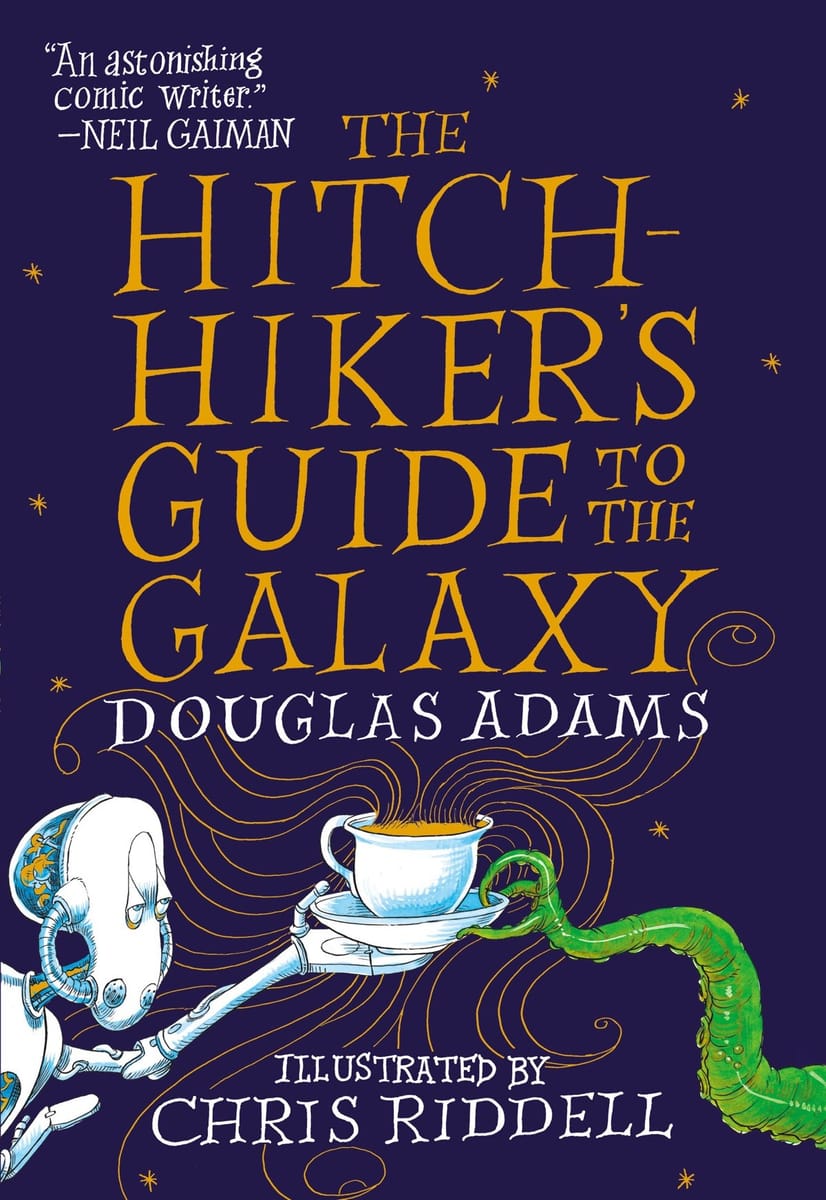
Next: For something lighter, switch to The Hitchhiker's Guide to the Galaxy.
Douglas Adams's comic science fiction follows Arthur Dent, who is whisked off Earth moments before it is demolished. It is absurd, witty and full of towels, and it is the best proof that this genre does not have to be grim.
Read more
Tim Ferriss, Richard Branson and Seth Rogen have it on their shelves.
For: Readers who want to laugh while they find their way into science fiction.
While reading: Do not try to make sense of everything; the jokes are the plot.
Next: The Martian combines humour with real science.
Andy Weir's novel follows an astronaut stranded on Mars who has to science his way home. It is funny, tense and meticulously researched, and it shows science fiction at its most optimistic: one person, a problem and a lot of ingenuity.
Read more
Andrej Karpathy and Tom Hanks are among its readers.
For: Readers who like problem-solving and a strong narrator.
While reading: The technical details are part of the fun; skim them if they slow you down.
Next: The Road shows the opposite mood: a ruined Earth.
Cormac McCarthy's Pulitzer-winning novel follows a father and son walking across a ruined, ash-covered America. It is brutal and tender in equal measure.
Read more
There is little explanation of how the world ended; the book is about what love looks like when almost everything else is gone. Oprah Winfrey and Charlize Theron have it on their shelves.
For: Readers ready for something bleak but deeply moving.
While reading: It is quick to read but heavy to carry; give yourself a pause afterwards.
Next: Step 2 brings the essential classics.
Dua Lipa, Charlize Theron and 3 more
Step 2: The essential classics
The books the rest of the genre keeps answering. Two mid-century dystopias, one feminist dystopia from the 1980s, and two quieter novels about what it means to be human.
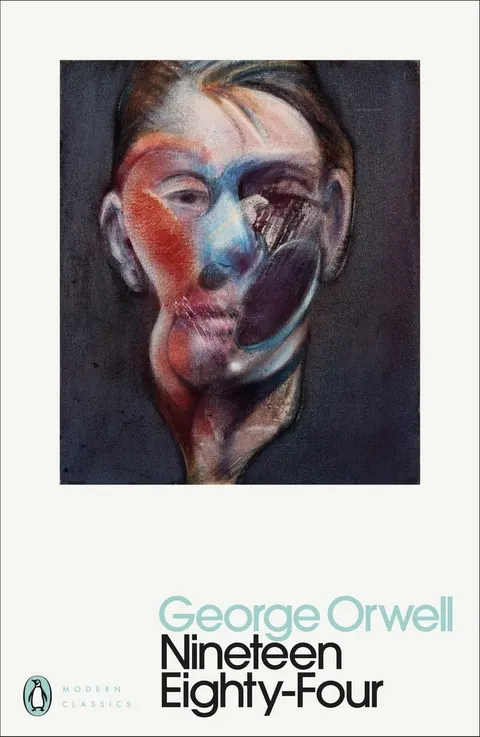
Orwell's dystopian classic imagines a totalitarian state of constant surveillance, doublethink and rewritten history. It is the source of Big Brother and a book that keeps finding new readers.
Read more
After Animal Farm, it shows the same concerns at full scale and with real fear. Noam Chomsky, Yuval Noah Harari and Timothée Chalamet have it on their shelves.
For: Every new reader of dystopia, sooner or later.
While reading: Pay attention to language: much of the book is about how words control thought.
Next: Read Brave New World next; the two are often compared.
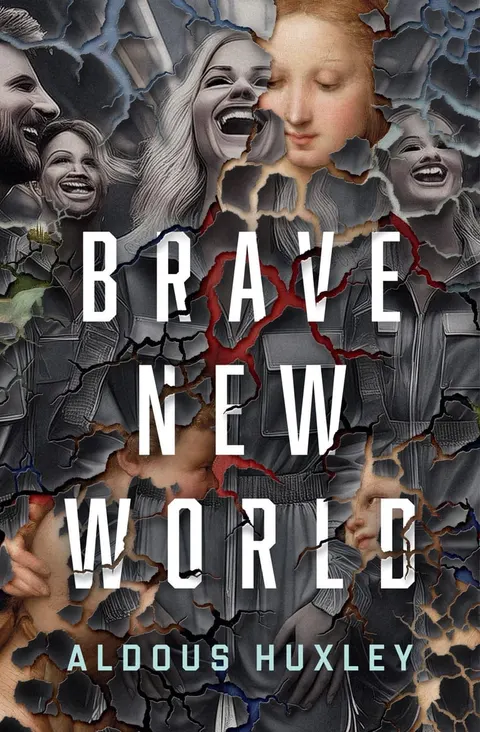
Aldous Huxley's dystopia imagines a World State that keeps its citizens content through engineered pleasure and conditioning. It is a chilling counterpoint to Orwell: where Nineteen Eighty-Four controls people through fear, this world controls them through comfort.
Read more
Yuval Noah Harari and Jordan Peterson are among its readers.
For: Readers who want to compare the two great visions of control.
While reading: Ask, as you go, which parts of this world already feel familiar.
Next: The Handmaid's Tale brings the genre into the late twentieth century.
Margaret Atwood's 1985 dystopia is set in the Republic of Gilead, a totalitarian state that has overthrown the United States, and is told by a woman called Offred. It belongs beside Orwell and Huxley, but it is more intimate than either, told from inside one woman's life.
Read more
Elisabeth Moss and Dua Lipa have it on their shelves.
For: Readers who want a dystopia told through personal experience.
While reading: Notice how often Offred returns to memories of her earlier life.
Next: Klara and the Sun is a gentler, more recent turn.
Klara, an Artificial Friend, observes the world from a shop window and is later chosen to watch over a sick girl. Kazuo Ishiguro's novel is a quiet story about love and what it means to be human.
Read more
It shows how much recent science fiction is less about technology than about feeling. Bill Gates and Dua Lipa are among its readers.
For: Readers who prefer emotion and atmosphere over action.
While reading: Klara's way of seeing is the point; read slowly.
Next: Flowers for Algernon asks a similar question in a different way.
Until he was thirty-two, Charlie Gordon lived in a mental twilight, outpaced even by a white mouse named Algernon, until a remarkable operation changed everything. It is a deeply human book, and its central experiment raises hard questions about intelligence and dignity.
Read more
Andrej Karpathy and PewDiePie have it on their shelves.
For: Readers who want a science fiction novel that is mainly about a person.
While reading: Keep Algernon in mind; the mouse matters more than it first seems.
Next: Step 3 opens the genre's biggest worlds.
PewDiePie, Andrej Karpathy
Step 3: Big worlds
Four novels that build entire civilisations. They are longer and slower, and each one opens onto a series or a larger universe. Save them for when the first two steps have convinced you.
Frank Herbert's epic follows Paul Atreides on the desert planet Arrakis, the only source of the most valuable substance in the universe. It is a landmark of ecological and political science fiction and the most famous world in the genre.
Read more
Andrej Karpathy, Elon Musk, Zendaya and Florence Pugh are among its readers.
For: Readers ready for a long, immersive novel about power, religion and ecology.
While reading: The first chapters are full of new terms; give them a little patience and they settle.
Next: Foundation offers a different kind of scale.
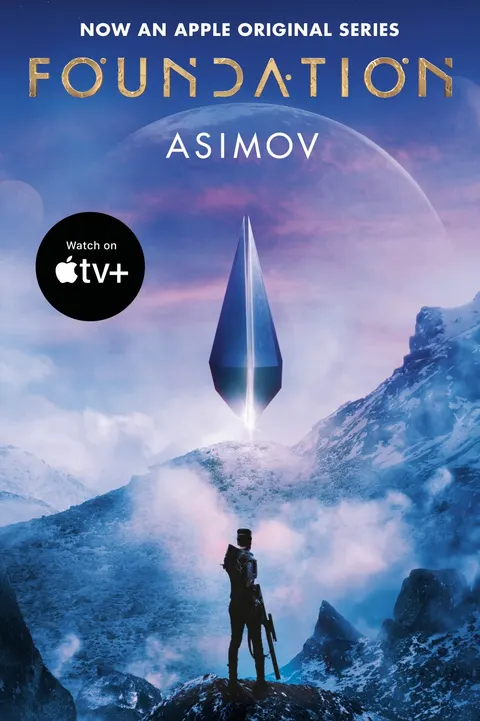
The first novel of Isaac Asimov's Foundation series, which began as short stories and novellas. It thinks in centuries rather than lifetimes and treats whole civilisations as its subject.
Read more
Because it grew from shorter pieces, it reads in distinct episodes, which makes it easier to pick up than its reputation suggests. Andrej Karpathy and Elon Musk have it on their shelves.
For: Readers who like ideas and history more than action.
While reading: Think of it as linked stories, each a step in a much longer history.
Next: The Left Hand of Darkness explores a world from the inside.
Cixin Liu's novel begins during China's Cultural Revolution and follows scientists who make contact with an alien civilisation. It is the first book of the Remembrance of Earth's Past trilogy, read in English in Ken Liu's translation, and it has introduced a whole new audience to idea-driven science fiction.
Read more
Naval Ravikant, Mark Zuckerberg and Rosamund Pike are among its readers.
For: Readers who like hard science and very large stakes.
While reading: The opening history matters; it pays off later.
Next: If it grips you, the rest of the trilogy follows.
Mark Zuckerberg, Bryan Johnson and 3 more
Reading path
If you have never read in this genre, start with Animal Farm and Fahrenheit 451. Both are short, both are classics, and together they show what a dystopia does. If you want to begin on a lighter note, swap one of them for The Hitchhiker's Guide to the Galaxy or The Martian.
Then read Nineteen Eighty-Four and Brave New World close together; they make most sense side by side. Add The Handmaid's Tale to see how the tradition continued, and Klara and the Sun or Flowers for Algernon when you want something quieter.
Read more
Only then move to the big worlds. Dune and The Three-Body Problem are the most gripping; Foundation and The Left Hand of Darkness are the most thoughtful. Each can lead into a series, so treat the first volume as a test and decide afterwards whether to continue.