Books like 1984: dystopias and warnings worth reading next
Ten books to read after Nineteen Eighty-Four: Orwell's other work, classic dystopias, and nonfiction on propaganda, belief and control.
0/10 books read0%
Nineteen Eighty-Four is one of those books that outlives its last page. Orwell imagines a totalitarian state of constant surveillance, doublethink and rewritten history, and it gave the language Big Brother. It is also a book that keeps finding new readers, which is part of why so many people finish it and immediately ask the same question: what should I read next?
Read more
The answer depends on what stayed with you. Some readers come away haunted by the idea of a state that controls the past. Others remember the sense of a single person pressed by an enormous system. Others still keep thinking about language and attention, and how easily both can be shaped. Each of those threads leads to different books, and none of them is a mere imitation of Orwell.
This list takes three routes. The first stays close to Orwell himself and to the great dystopias of the twentieth century. The second follows the dystopian tradition into more recent fiction, including books written for younger readers and a satire of the digital age. The third leaves fiction behind for nonfiction that examines how societies get to the places these novels describe: through belief, through entertainment, through the experience of ideology and of life under it.
Ten books are enough to cover those routes without repeating one another. They are not ranked, and you do not need to read them all. Pick the route that matches what you were left thinking about, and use the reading order at the end if you would rather have a single path laid out for you. One thing worth saying at the start: these books reward being read in company with each other. A novel that seems extreme on its own often looks more precise beside another, and the differences between Orwell, Huxley and Atwood teach as much as their similarities do.
Who it is for: Readers who finished Nineteen Eighty-Four and want more dystopian fiction, or the real-world writing that sits behind it.
The books closest to Nineteen Eighty-Four in spirit and in time. Two are by Orwell himself, and one is the novel most often placed beside his as a counterpart. Together they show how differently a single writer, or a single era, can imagine the same danger.
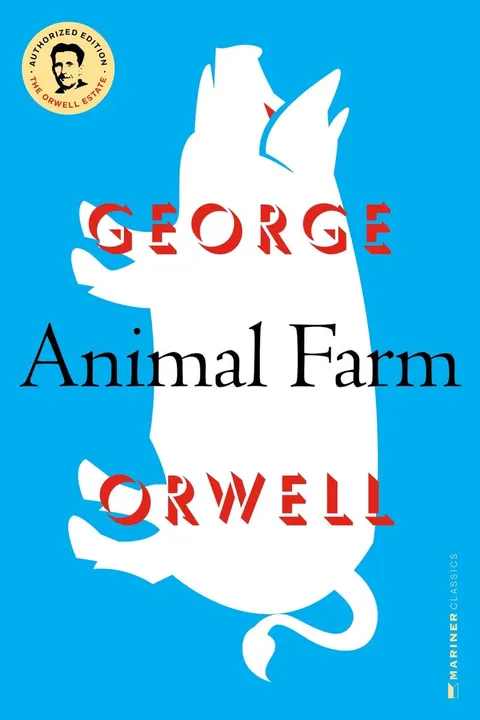
George Orwell's 1945 satirical fable in which the animals of Manor Farm overthrow their human master, only for the revolution to be betrayed under the rule of the pigs. It is the shortest way into Orwell's thinking and the most natural companion to Nineteen Eighty-Four.
Read more
Lex Fridman and David Perell have it on their shelves. Its fable form makes it quick to read, though the ideas are no less serious for being told through animals.
For: Anyone who wants more Orwell in a smaller, sharper package.
While reading: It can be read in a single sitting, which makes it a good first step.
Next: Brave New World offers a very different vision of control.
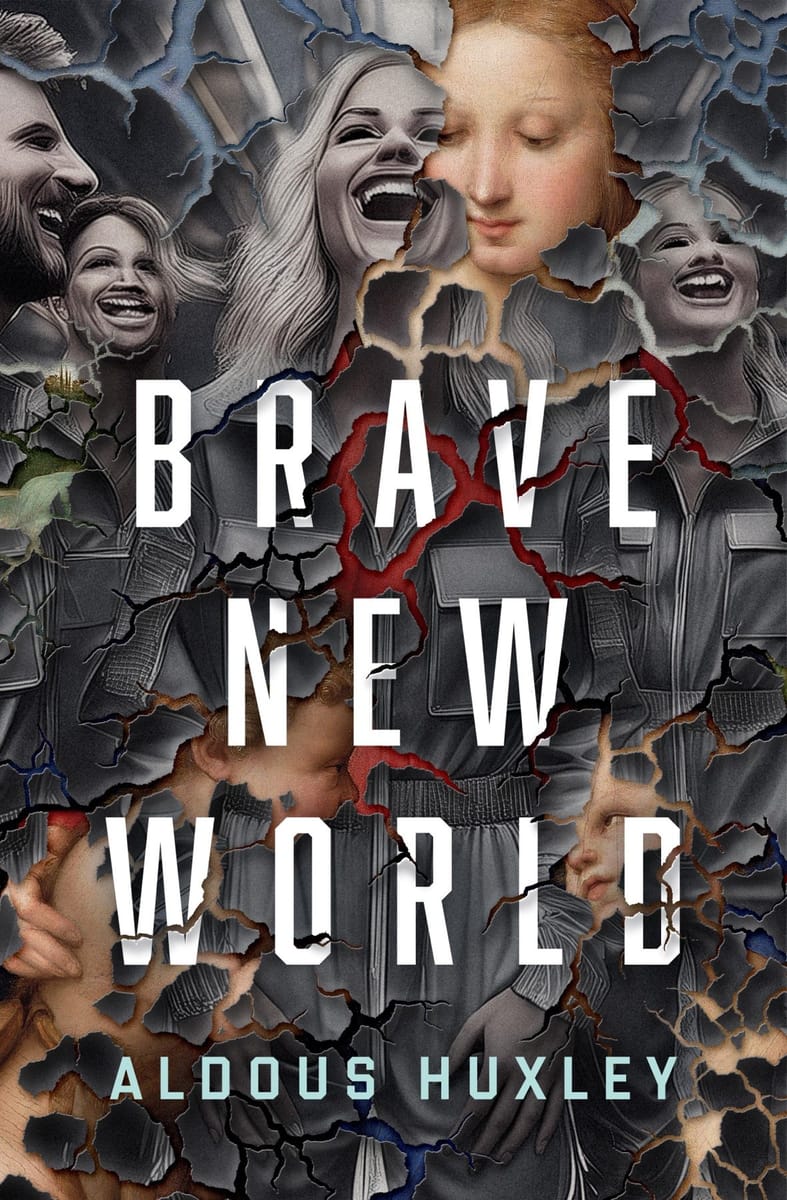
Huxley's dystopia imagines a World State that keeps its citizens content through engineered pleasure and conditioning. It is a chilling counterpoint to Orwell, and still unsettlingly relevant.
Read more
Where Orwell fears control through pain, Huxley explores control through comfort. PewDiePie, Jordan Peterson, Winston Churchill, Yuval Noah Harari and Callum Turner are among those who have it on their shelves.
For: Readers who want the other great twentieth-century dystopia, built on pleasure rather than fear.
While reading: Read it with Orwell fresh in mind and notice how the two books disagree.
Next: The Handmaid's Tale returns to a more openly coercive state.
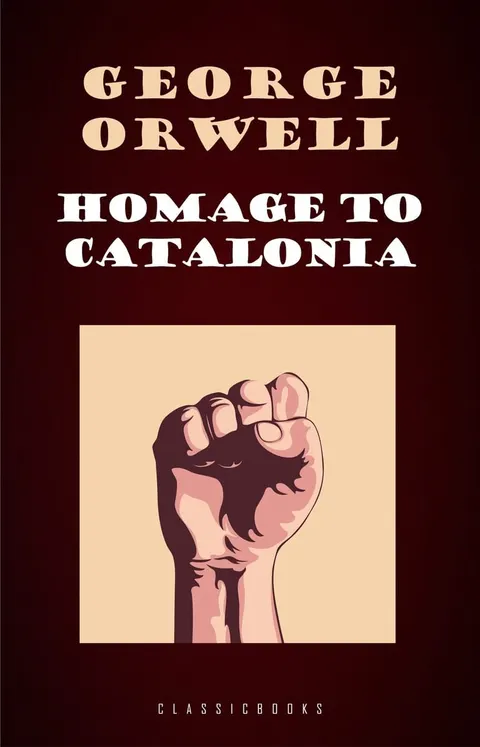
Orwell recounts his time fighting with a militia in the Spanish Civil War. It is a firsthand account of idealism, betrayal and political infighting, and it is the nonfiction counterpart to the fiction that made him famous.
Read more
Marc Andreessen and Ben Shapiro have it on their shelves. Readers who want to see where Orwell's concerns came from will find them here in plain reportage.
For: Readers curious about the real experiences behind Orwell's later fiction.
While reading: It is a memoir, so expect a personal voice rather than a plotted story.
Next: One Day in the Life of Ivan Denisovich offers another firsthand view of a harsh system.
Ben Shapiro, Marc Andreessen
Group 2: Later dystopias, old and new
Four novels written after Orwell, each applying the dystopian form to a different fear. One looks at a theocratic state, one at a community that has removed pain, one at young people forced into a contest, and one at a technology company that has abolished privacy.
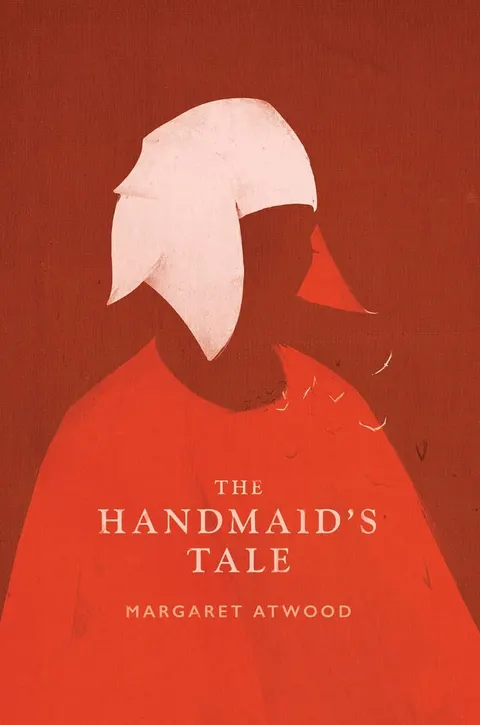
Margaret Atwood's 1985 dystopia, set in the Republic of Gilead, a totalitarian state that has overthrown the United States, told by a woman called Offred. The first-person voice makes it more intimate than Orwell's book, but the sense of a world rebuilt around control is the same.
Read more
Dua Lipa, Emma Watson and Jack Edwards have it on their shelves.
For: Readers who want a dystopia told from inside, through a single narrator.
While reading: The narrator's voice carries the book, so let it set the pace.
Next: The Giver approaches a similar idea from a very different direction.
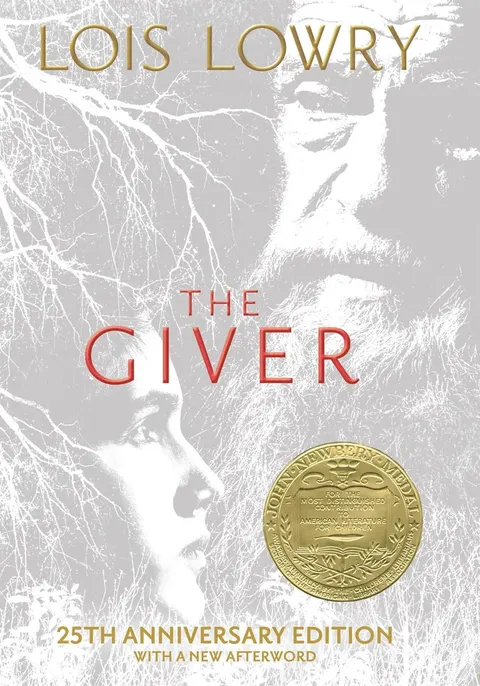
In a seemingly perfect community without pain or choice, a boy named Jonas is selected to carry its memories. Lois Lowry's dystopian novel for young readers is short and approachable, and it pairs well with Orwell because it also concerns memory and what a society chooses to forget.
Read more
Taylor Swift and Bella Hadid have it on their shelves.
For: Readers who want a quick, thoughtful dystopia, or who are introducing the genre to younger people.
While reading: It is brief, so it works well between longer books.
Next: The Hunger Games takes a younger protagonist into a harsher world.
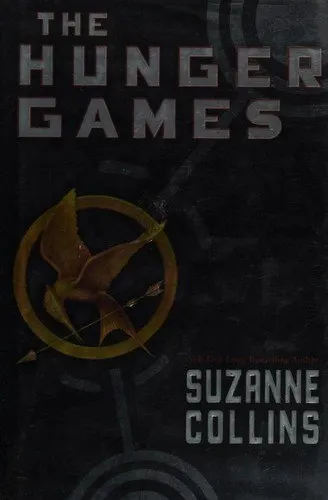
The Hunger Games is the young adult dystopian series for which Suzanne Collins, an American author and television writer, is best known. As a first book in a popular series, it brings the dystopian tradition to a wide audience.
Read more
Taylor Swift, Iga Świątek and Jack Edwards have it on their shelves.
For: Readers who want a fast, widely loved dystopia with series momentum.
While reading: It begins a series, so you can decide whether to carry on.
Next: The Circle moves the genre to the world of technology.
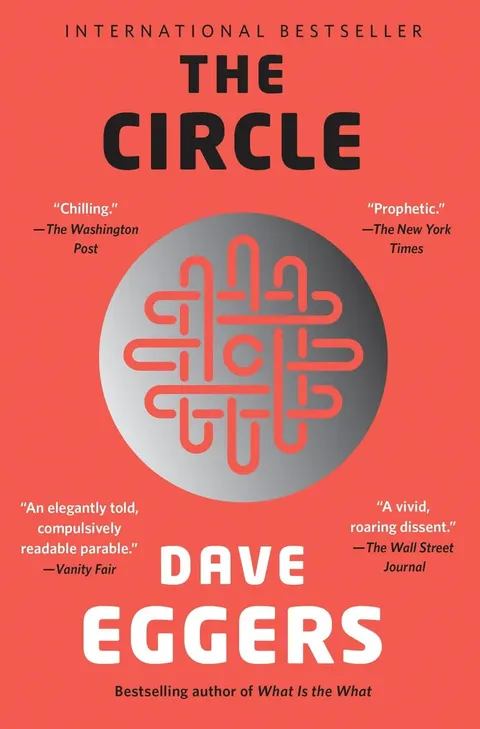
A young woman joins a powerful tech and social media company and is drawn into its culture of total transparency. Eggers's novel is a satire of privacy in the digital age, and readers of Nineteen Eighty-Four will recognise the question it asks about watching and being watched.
Read more
Jay Shetty and David Perell have it on their shelves.
For: Readers who want a dystopia set in a recognisably contemporary workplace.
While reading: It is a satire, so expect irony as much as menace.
Next: Amusing Ourselves to Death makes a related argument in nonfiction.
Jay Shetty
Group 3: Nonfiction on belief, media and life under a system
Three books that move from imagined worlds to real ones. One studies why people join mass movements, one examines public discourse in the age of show business, and one records a single day in a Soviet labor camp. They give the novels above a factual and psychological backdrop.
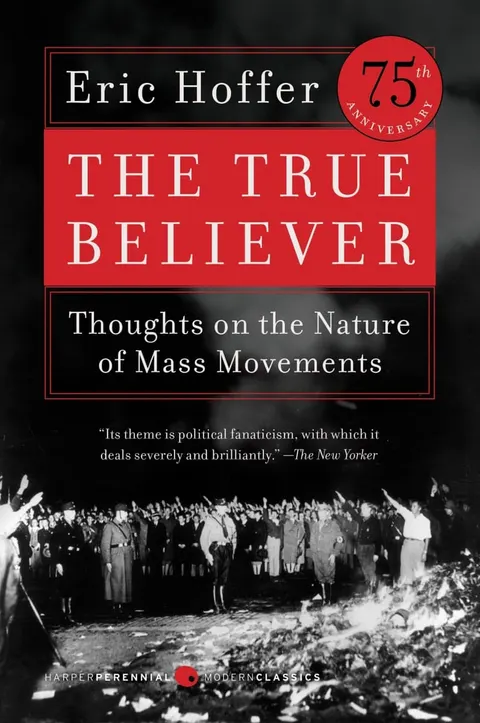
Hoffer's study of why people join mass movements, arguing that fanatics of very different causes share a similar psychology. It is a short, aphoristic classic of social thought, and it helps explain the kind of devotion that the regimes in dystopian novels depend on.
Read more
Marc Andreessen, Eric Weinstein, Seth Godin and Mark Cuban have it on their shelves.
For: Readers who want to understand the psychology behind the movements in dystopian fiction.
While reading: It is short and made of compact observations, so it suits slow reading.
Next: Amusing Ourselves to Death looks at a different kind of influence.
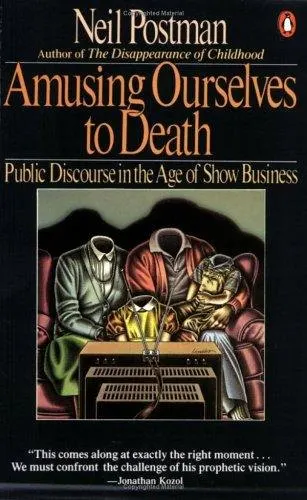
Amusing Ourselves to Death: Public Discourse in the Age of Show Business (1985) is by the sociologist and media scholar Neil Postman. His son Andrew reissued it in a 20th anniversary edition in 2005.
Read more
Its title and approach make it a natural companion to Huxley's Brave New World, and readers who responded to the idea of control through entertainment will find it relevant. Patrick Collison and David Perell have it on their shelves.
For: Readers interested in how media shapes public conversation.
While reading: Read it after Brave New World to see the two arguments side by side.
Next: One Day in the Life of Ivan Denisovich gives a concrete picture of a harsh system.
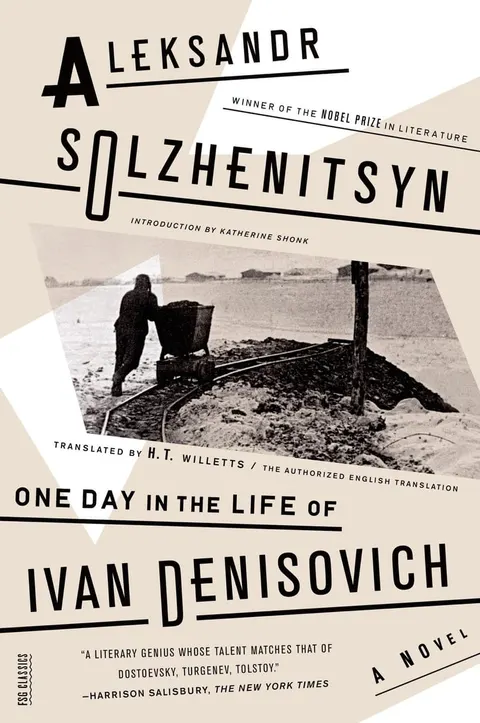
A single day in a Soviet labor camp as lived by the prisoner Ivan Denisovich Shukhov. Solzhenitsyn's short novel was published in the USSR in 1962 and made him famous.
Read more
It is sober and compact, and it offers a view of life inside a system that Orwell could only imagine. Christopher Hitchens and Winston Churchill have it on their shelves.
For: Readers who want a grounded, human-scale account of life under pressure.
While reading: It is short, but it asks for attention; read it without distraction.
Next: Return to Orwell or to any of the novels above with a clearer sense of the reality behind them.
Winston Churchill, Christopher Hitchens and 1 more
Reading path
If you have just finished Nineteen Eighty-Four and want to stay with Orwell, start with Animal Farm. It is short, it is by the same writer, and it will take an evening. Then read Brave New World, because the contrast between the two is more interesting than either book on its own. After those three, you will have a firm grasp of what the classic dystopian form can do.
From there, choose by interest. If you were drawn to the personal, first-person side of Orwell's book, read The Handmaid's Tale and then The Giver. If you were more interested in technology and surveillance, move to The Circle. The Hunger Games is a good option when you want something faster and more story-driven, and it can be dropped in at any point as a change of pace.
Read more
Keep the nonfiction for when you want to understand the background. The True Believer and Amusing Ourselves to Death work well as a pair, one about conviction and the other about entertainment. Homage to Catalonia and One Day in the Life of Ivan Denisovich are best read as a final stage, once the fiction has raised the questions and you want to see how real people lived with them. There is no obligation to read in this order, but it moves from the most accessible books to the most demanding. If time is short, a compact set of four would be Animal Farm, Brave New World, The Handmaid's Tale and Amusing Ourselves to Death, which together cover the state, pleasure, personal voice and media in about the same space as two long novels.
 Lex Fridman