After The Hunger Games: the two sequels, then Divergent, The Giver and the dystopian classics that shaped the genre, with a reading order.
0/7 books read0%
The Hunger Games is the young adult series Suzanne Collins is best known for, and its pull is easy to feel. A single televised contest becomes a lens on a whole country: who has power, who pays for it, and what it costs to refuse. Once the first book ends, the question is rarely whether to keep reading but where.
Read more
There are two honest answers. The first is to stay in Panem and read Catching Fire and Mockingjay, which carry the story to its end. The second is to step back and look at the books that walked this ground earlier, from schoolboys on an island to a society that burns its books. The Hunger Games sits at the end of a long line of stories about controlled societies, and reading a few of its ancestors makes it feel richer, not smaller.
The list below follows that shape. First come the two sequels. Then two novels written with younger readers in mind, which share the series' sense of a teenager facing a rigged world. Last are the adult classics of the form, each sharper and stranger than you might expect. Read in this order, they make a gradual climb from fast and gripping to slow and unsettling.
Who it is for: Readers who finished The Hunger Games, or watched the films, and want either the rest of Katniss's story or other novels about young people pushed up against a ruthless system.
The most direct path. The two sequels change the scale of the story from one arena to a whole nation, and they are best read close together so the threads stay clear.
Group 2: Young heroes in divided worlds
Two novels that share the series' starting point: a young person discovering that the society around them is built on a choice they were never allowed to make.
Veronica Roth's novel is set in a divided Chicago where a sixteen-year-old girl must choose a faction. The idea of a society sorted into fixed groups will feel familiar after the districts of Panem, and the book moves quickly.
Read more
It is a natural next series for readers who want the same pace and a heroine tested by a system she did not design.
For: Readers who loved the speed and the arena sections of The Hunger Games.
While reading: Compare the factions with the districts: both promise order and both demand loyalty.
Next: Try The Giver for a quieter, more unsettling take on a planned society.
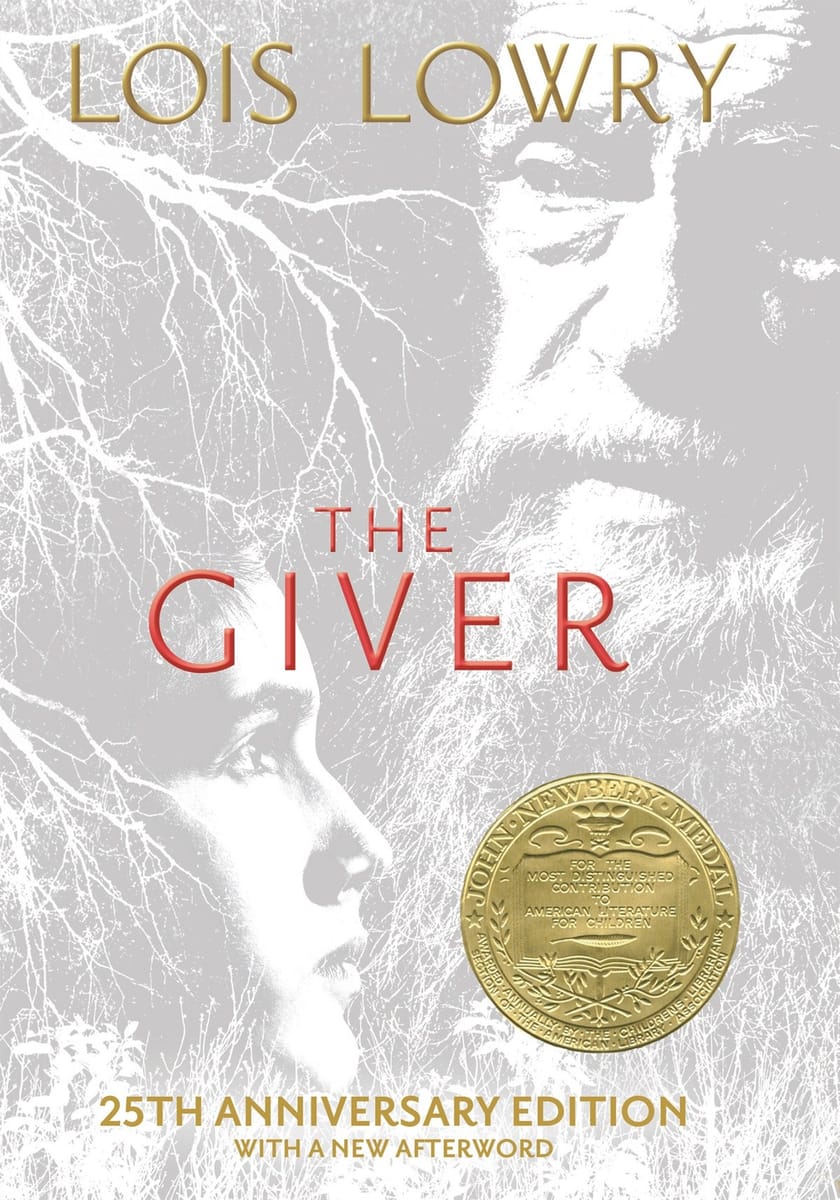
Lois Lowry's novel takes place in a seemingly perfect community without pain or choice, where a boy named Jonas is selected to carry its memories. It is shorter and calmer than The Hunger Games, but the slow reveal of what has been given up for comfort is just as disturbing.
Read more
It works as a bridge between young adult fiction and the classics further down this list.
For: Readers who want something gentler on the surface but just as sharp underneath.
While reading: Pay attention to what the community has removed from daily life, and why.
Next: Move on to Lord of the Flies for the opposite situation: no rules at all.
Taylor Swift, Bella Hadid and 1 more
Group 3: The classics behind the genre
The books that defined the dystopian novel. They are written for adults and move more slowly, but each one shows a different way a society can turn against its own people, and traces of all of them can be felt in Panem.
William Golding's novel follows schoolboys stranded on an island who descend into savagery. Where The Hunger Games shows children forced to fight by a cruel state, Golding asks what children do when there is no state at all.
Read more
The two books make an uncomfortable and illuminating pair.
For: Readers interested in the arena's question of what people become under pressure.
While reading: Track how the boys' early rules start to slip, and who benefits when they do.
Next: Read Fahrenheit 451 next for a society that controls people through what they are allowed to know.
Ray Bradbury's 1953 novel imagines a world where books are outlawed and firemen burn them. Guy Montag turns against his job and sets out to save literature.
Read more
Like Collins, Bradbury is interested in how entertainment and spectacle can keep a population quiet, and the book is short enough to read in a weekend.
For: Readers who noticed the role of television and spectacle in Panem.
While reading: Notice how Montag's world fills people's time, and compare it with the Capitol's taste for spectacle.
Next: Continue with Brave New World, which pushes the idea of a contented population further.
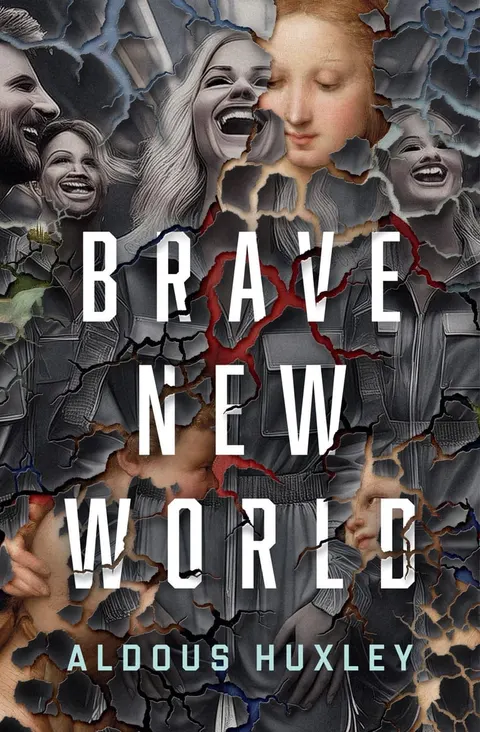
Aldous Huxley imagines a World State that keeps its citizens content through engineered pleasure and conditioning. There is no arena and little open violence, which is exactly what makes it chilling.
Read more
The Capitol's comfortable, distracted citizens owe something to this vision.
For: Readers who found the Capitol's citizens more frightening than its soldiers.
While reading: Ask what the World State takes away from people without them ever noticing.
Next: Read Nineteen Eighty-Four as its harsher counterpoint.
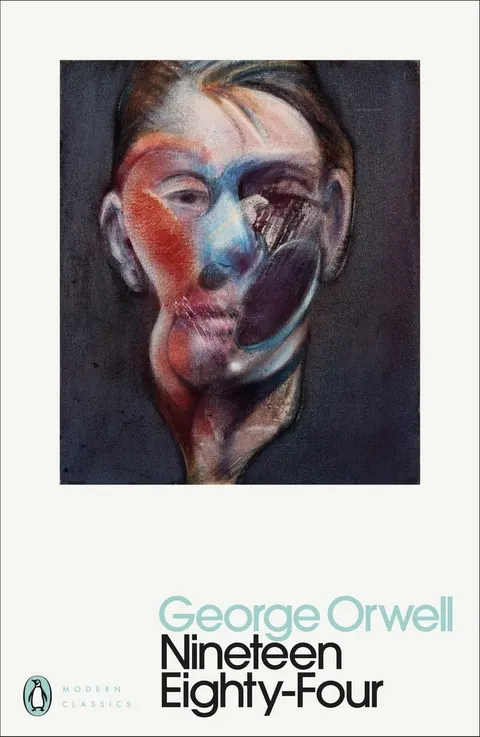
George Orwell's classic imagines a totalitarian state of constant surveillance, doublethink and rewritten history. It is the source of Big Brother and the book most later dystopias answer to, including this one.
Read more
It is bleak, but it explains a great deal of the language we still use to talk about control.
For: Readers who want the cornerstone of the genre.
While reading: Notice how the Party controls the past as carefully as the present.
Next: Finish with The Handmaid's Tale, which tells a similar story from inside a single life.
Margaret Atwood's 1985 novel is set in the Republic of Gilead, a totalitarian state that has overthrown the United States, and is told by a woman called Offred. Its single narrator will feel familiar after following Katniss, but its world is quieter and more claustrophobic.
Read more
It is a fitting last step, the most adult of the group and the one with the most to say about control over people's bodies and choices.
For: Readers ready for a slower, more intimate dystopia.
While reading: Pay attention to what Offred is no longer allowed to do, and how she keeps hold of who she was.
Next: If you want more, the related list of books like Nineteen Eighty-Four continues the thread.
Dua Lipa, Emma Watson and 3 more
Reading path
If you have just finished The Hunger Games, read Catching Fire and Mockingjay first, back to back. The story is built to be read as a whole, and stopping halfway leaves too much unresolved.
After that, choose by mood. If you want more pace, go to Divergent and then The Giver. If you want to see where the genre came from, start the classics with Fahrenheit 451, the shortest and most direct of them, then Brave New World and Nineteen Eighty-Four. Lord of the Flies can come at any point, and The Handmaid's Tale makes a strong ending.
Read more
Watching the films first does not ruin the reading. The novels have room for detail and for Katniss's thoughts that a film can only suggest, which is reason enough to pick them up even if you already know the plot.