Books like Dune: the sequels and the science fiction beyond
Where to go after Dune: Herbert's five sequels, then Asimov, Heinlein, Card and Cixin Liu, with a suggested reading order.
0/4 books read0%
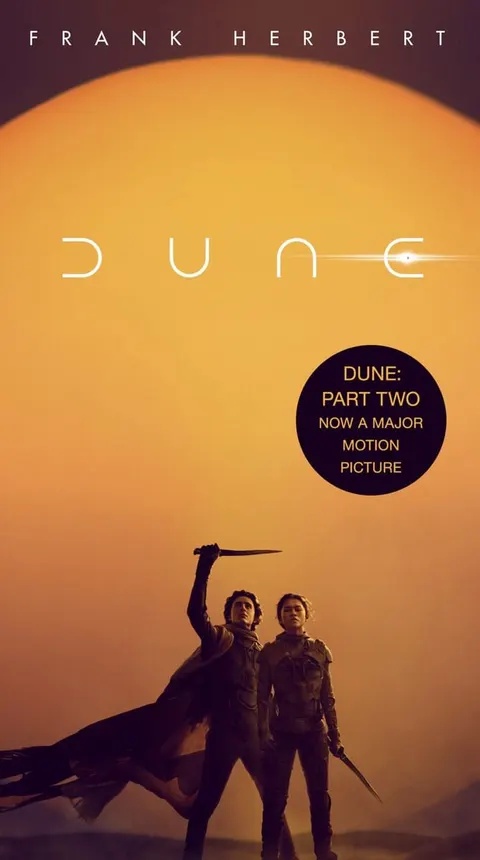
Finishing Dune leaves a particular kind of restlessness. The book is a single story, but it feels like the first room of a much larger house. Frank Herbert's novel follows Paul Atreides on the desert planet Arrakis, the only source of the most valuable substance in the universe, and it has long been regarded as a landmark of ecological and political science fiction. When the last page is turned, most readers want one of two things: more of the same world, or other books that think on the same scale.
Read more
The good news is that both wishes can be met. Herbert wrote five sequels, and each one takes the story somewhere stranger than the last. Beyond them lies a wider tradition of science fiction that treats empires, ideas and whole civilisations as characters in their own right. The books below are grouped to reflect those two paths, so you can choose the one that matches your mood.
A word on expectations. The Dune sequels are not a simple continuation. As they are usually described, the second book is darker and more reflective, the third is bold and strange, and the fourth is philosophical and challenging. They reward patience more than speed, and readers who arrive hoping for more desert adventure may be surprised by how thoughtful they become.
The second group of books makes no attempt to imitate Herbert. Instead, each one shares something with Dune: a long view of history, a gifted young person facing an enormous burden, an encounter with something alien, or a society changed by an outsider. Nine books are enough to cover the ground without turning this into a catalogue, and a reading order at the end will help you decide where to begin. None of them needs to be rushed; science fiction on this scale is best read slowly, with time between volumes to let the ideas settle and to notice how each author builds a world from a handful of large questions about power, belief and survival.
Who it is for: Readers who have finished Dune and want either more of Herbert's universe or other large-scale science fiction with the same ambition.
Herbert's own continuation of the story, in publication order. Together these five novels span roughly twenty years of writing, from 1969 to 1985, and they change shape as they go. If you loved the first book, this is the most direct route, but it asks for more reflection than action. Take them one at a time and let each settle before opening the next.
Group 2: Empires and long histories
Two novels that share Dune's habit of thinking across large spans of time and society. Both come from the middle of the twentieth century, and they show how much of the genre grew from the same soil. They are good choices if what you loved most was the sense of history as a force.
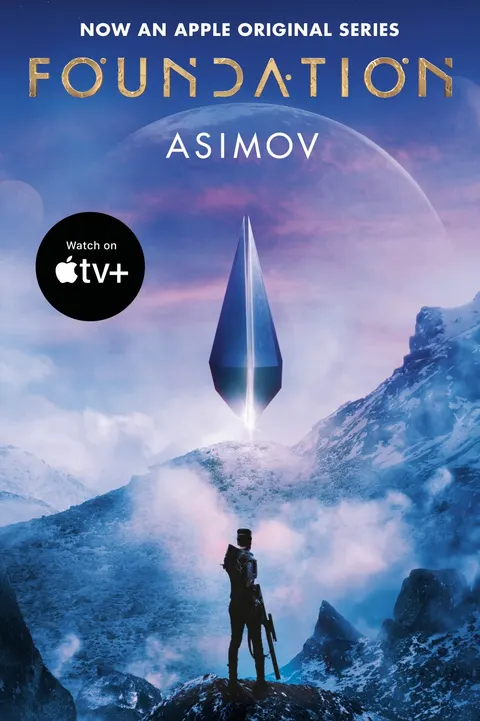
The first novel of Isaac Asimov's Foundation series, which began as short stories and novellas. Published in 1951, it is a natural companion to Dune for readers who enjoy fiction about civilisations rather than individuals.
Read more
The structure, which grew out of shorter pieces, means the book moves in distinct episodes, and readers used to Herbert's single sweeping arc may find the rhythm different but rewarding.
For: Readers who want big-picture science fiction in a more classical, episodic form.
While reading: Think of it as a collection of connected episodes rather than one continuous narrative.
Next: Both Andrej Karpathy and Elon Musk have it on their shelves, as they do Dune, so it pairs well as a second series.
Robert A. Heinlein's 1961 novel about Valentine Michael Smith, a man born on Mars and raised by Martians, who comes to Earth and slowly transforms the people around him. Like Dune, it places an outsider at the centre of a society and watches what happens as that society reacts.
Read more
Bill Gates and Grimes have it on their shelves, and Grimes also has Dune on hers.
For: Readers drawn to stories of an outsider arriving in a world that does not yet understand him.
While reading: Approach it as a novel of ideas about how a newcomer can change the people around him.
Next: Try The Three-Body Problem for a contemporary take on contact with something unfamiliar.
Grimes, Bill Gates
Group 3: Gifted young people and alien contact
Two more recent or more action-driven novels that echo Dune's concerns in different ways. One follows a talented child under enormous pressure, the other follows scientists confronting an alien civilisation. Both are widely read and make good entry points for readers who want something faster than Herbert's later volumes.
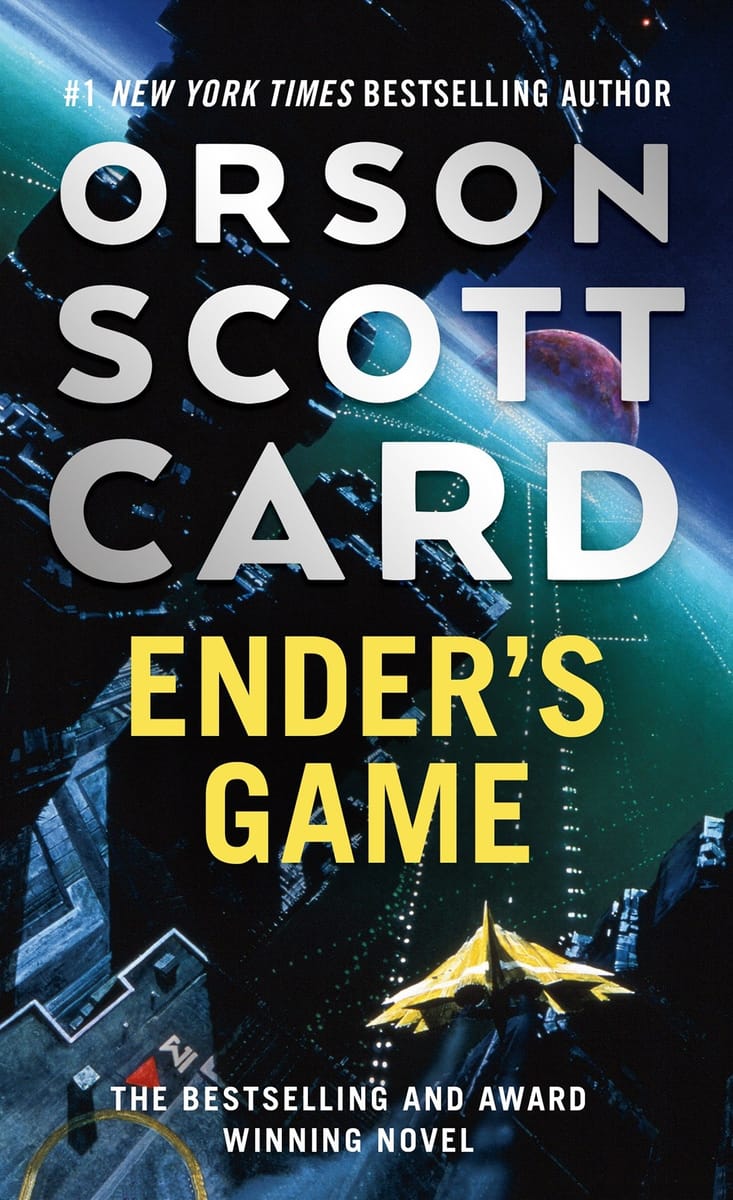
Orson Scott Card's 1985 novel about Ender Wiggin, a gifted child sent to a military academy in space to prepare for an alien invasion. Like Paul Atreides, Ender is young, exceptional and burdened by what others expect of him.
Read more
It is a more compact, faster book than Dune, which makes it a useful palate cleanser between heavier volumes. Andrej Karpathy and Mark Zuckerberg have it on their shelves.
For: Readers who responded to Dune's picture of a young person carrying a world's expectations.
While reading: It moves quickly, so it works well when you want a lighter, faster read.
Next: Move on to The Three-Body Problem for a different kind of conflict with an alien civilisation.
Cixin Liu's science fiction novel begins during China's Cultural Revolution and follows scientists who make contact with an alien civilisation. It is the first book of the Remembrance of Earth's Past trilogy, read here in Ken Liu's translation.
Read more
Naval Ravikant, Andrej Karpathy, Mark Zuckerberg, Bryan Johnson and Rosamund Pike are among those who have it on their shelves. For Dune readers, it offers a comparable sense of scale and idea-driven plotting.
For: Readers who like science fiction built on scientific ideas and civilisation-scale stakes.
While reading: It is the first of a trilogy, so you can decide after the opening whether to continue.
Next: If you enjoy it, the rest of the trilogy follows the same wide canvas.
Mark Zuckerberg, Bryan Johnson and 3 more
Reading path
If you have only just closed Dune, begin with Dune Messiah, since it is short and the first book is still in your head. Its darker tone is a useful preview of how the series changes. If you enjoy it, continue with Children of Dune. Together the first three books form a natural arc and a good place to pause.
Before committing to God Emperor of Dune, consider taking a break with one of the other titles. Ender's Game is a good reset because it is quicker and more contained, and it shares the figure of a gifted child under pressure. Foundation is a fine alternative if you would rather stay with the theme of history and empire. After the break, return to God Emperor of Dune, then Heretics and Chapterhouse, which are best read close together.
Read more
If you are not sure you want the full sequence, a shorter route works too: Dune, Dune Messiah, then The Three-Body Problem and Stranger in a Strange Land. That path keeps you in the territory of large ideas without the commitment of six Herbert novels. Whichever route you take, there is no wrong order for the non-Herbert titles; they stand on their own. Leave a few weeks between volumes if you can, because Herbert's later books tend to improve when you have had time to think about the ones before them, and the other authors here are just as happy to be picked up and put down again at your own pace.