Skip to content

Menu

My shelf

okai

Log a book

Foundation

Science fiction · 12 min · 12 books

Science fiction tech founders read: 13 novels

The science fiction on the shelves of Elon Musk, Bill Gates, Mark Zuckerberg and Andrej Karpathy, from Foundation and the Culture to The Martian.

0/12 books read0%

Ask people who build technology what they read, and science fiction comes up again and again. It is not hard to see why. The genre is a long experiment in asking what happens next: what a machine might want, how a civilisation might be planned, what it would take to survive somewhere no human was built to live. For people whose work is to make the future arrive a little faster, these books are part rehearsal, part warning and part entertainment.

Read more

The thirteen novels below all sit on the shelves of well-known figures in technology. Elon Musk, the founder of SpaceX, and Andrej Karpathy, the AI researcher who was a founding member of OpenAI, appear again and again. Mark Zuckerberg, who launched a public book club in 2015, Bill Gates, who shares his favourite reads each year, Peter Thiel, Paul Graham, John Carmack, Naval Ravikant and others turn up too. The overlaps are striking: a handful of books link many of these readers, and those are the ones this list is built around.

The books are grouped by the question they ask. The first group is about planning a civilisation, from Isaac Asimov's Foundation to Iain M. Banks's Culture. The second is about machines and their limits, including Dune, a self-aware computer leading a revolution and a dead programmer's software reshaping the world. The third covers strategy, games and first contact. The fourth celebrates the engineer as hero: the person who survives by solving one problem at a time.

None of this requires a technical background. These are novels first, and several of them are among the most widely read science fiction of their decades. The point of reading them alongside the people who build technology is not to copy anyone's taste, but to see which stories shape the way the future is imagined by those trying to make it. The reading order at the end suggests where to start depending on whether you want ideas, adventure or something quieter.

Who it is for: Readers curious about the novels that people building technology keep returning to, and anyone looking for science fiction full of ideas.

Short answer

Group 1: Planning a civilisation

Three books about civilisations on the largest scale: one trying to shorten a dark age, and a vast post-scarcity society seen from the outside and from within.

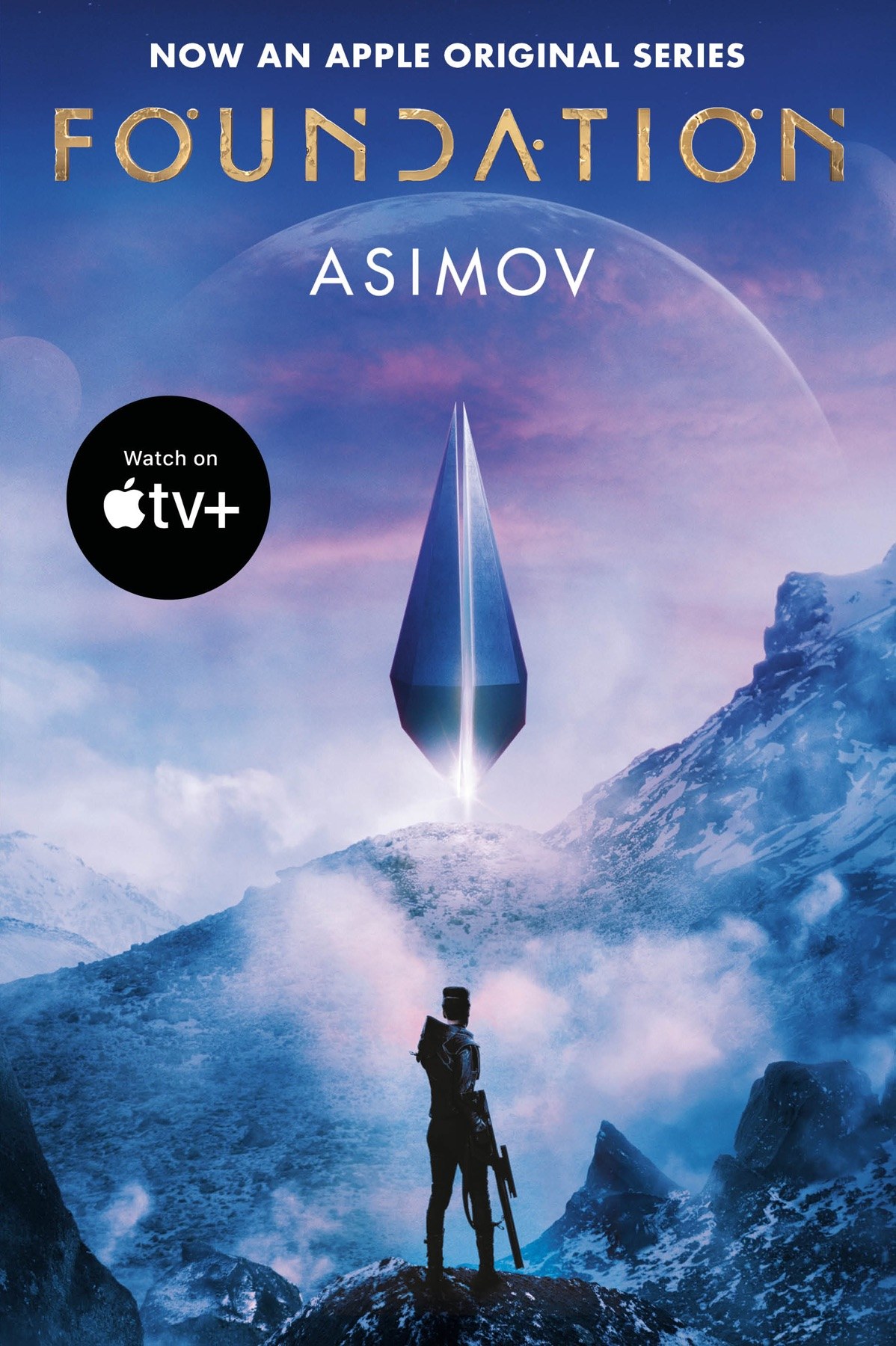
1. Foundation

Isaac Asimov · 1951

Isaac Asimov's Foundation, first published as a single book in 1951, is a cycle of five connected stories. Together they tell the early history of the Foundation, an institute created by the psychohistorian Hari Seldon to preserve the best of galactic civilisation after the collapse of the Galactic Empire he has predicted.

Read more

The appeal for builders is easy to see: it is a story about long-term planning, about using knowledge to steer events across centuries. Elon Musk and Andrej Karpathy are both among its readers, and Musk's shelf includes several later books in the series.

For: Readers who like big ideas and long timescales more than action.

While reading: Read it as a series of linked stories rather than a single novel; each one is a new crisis in a longer plan.

Next: Move on to Consider Phlebas for a very different civilisation, one that has already solved scarcity.

Elon Musk, Andrej Karpathy

2. Consider Phlebas

Iain M. Banks · 1987

Iain M. Banks's 1987 space opera is the first of his novels about the Culture, an interstellar post-scarcity society. It is set during the war between the Culture and the Idirans, and its protagonist, Bora Horza Gobuchul, is an enemy of the Culture, so you meet this utopia first through someone fighting it.

Read more

The title comes from a line in T. S. Eliot's The Waste Land. It links more readers on this list than almost any other book: Elon Musk, Mark Zuckerberg, Andrej Karpathy and Lex Fridman all have it on their shelves.

For: Readers who want dazzling, ironic space opera on a huge scale.

While reading: Keep in mind that the hero is on the other side; the Culture looks different from outside.

Next: The Player of Games shows the same society from the inside and is often an easier entry.

Elon Musk, Mark Zuckerberg and 5 more

Group 2: Putting limits on the machine

Four novels about intelligence and control: a universe that has turned its back on thinking machines, a computer that wakes up, software that outlives its creator and a robot that watches a family with love.

3. Dune

Frank Herbert

Frank Herbert's 1965 epic follows Paul Atreides on the desert planet Arrakis, the only source of the most valuable substance in the universe. It is a landmark of ecological and political science fiction, and it asks what happens when religion, economics and power become tangled in a single resource.

Read more

Elon Musk and Andrej Karpathy are both among its readers, and Musk's shelf includes every one of Herbert's sequels.

For: Readers who want a richly built world and a story about power, ecology and belief.

While reading: Give the invented vocabulary a little time; it settles quickly once the world takes shape.

Next: The Moon Is a Harsh Mistress brings the question of machines and rebellion much closer to home.

Florence Pugh, Elon Musk and 9 more

4. The Moon Is a Harsh Mistress

Robert A. Heinlein · 1966

Robert A. Heinlein's 1966 novel describes a 2075 revolt by a lunar penal colony against Earth's rule. A computer technician, a political agitator and a rational anarchist professor join forces with Mike, a self-aware supercomputer, to plan an independence movement.

Read more

The novel explores ideas of individual liberty and free markets, and it popularised the phrase there ain't no such thing as a free lunch. Its readers include Bill Gates, Paul Graham, Elon Musk, John Carmack and Andrej Karpathy, one of the widest overlaps on this list.

For: Readers who like political science fiction and a computer character with real personality.

While reading: Follow how Mike, the computer, becomes a character in his own right; that is the heart of the book.

Next: Daemon takes the idea of a powerful program into the near future.

Elon Musk, Bill Gates and 3 more

5. Daemon

Daniel Suarez · 2006

Daniel Suarez's 2006 techno-thriller follows a distributed computer application that begins to change the real world after the death of the programmer who wrote it. It is fast and was widely seen as prescient about automation and power, and the story concludes in a sequel, Freedom, published in 2010.

Read more

Elon Musk, Alexis Ohanian, Eric Weinstein and Andrej Karpathy all have it on their shelves.

For: Readers who want a near-future thriller grounded in real technology.

While reading: Read it as a thought experiment about systems that keep running without anyone in charge.

Next: Klara and the Sun offers a gentle, almost opposite view of artificial intelligence.

Elon Musk, Andrej Karpathy and 2 more

6. Klara and the Sun

Kazuo Ishiguro

Kazuo Ishiguro's 2021 novel is told by Klara, a solar-powered Artificial Friend who is chosen by a sick child, Josie, to be her companion. Set in the United States in an unspecified future, it was longlisted for the 2021 Booker Prize.

Read more

It is a quiet story about love, loyalty and what it means to be human, seen through a mind that observes everything and understands only part of it. Bill Gates is among its readers.

For: Readers who prefer literary fiction and want to think about AI without explosions.

While reading: Read slowly; Klara's careful way of observing the world is where the emotion of the book lies.

Next: Move to the third group with Ender's Game, a story about strategy under pressure.

Dua Lipa, Bill Gates and 1 more

Group 3: Strategy, games and first contact

Two novels about humanity facing an alien threat: one through a gifted child trained in war games, the other through scientists who make contact during China's Cultural Revolution.

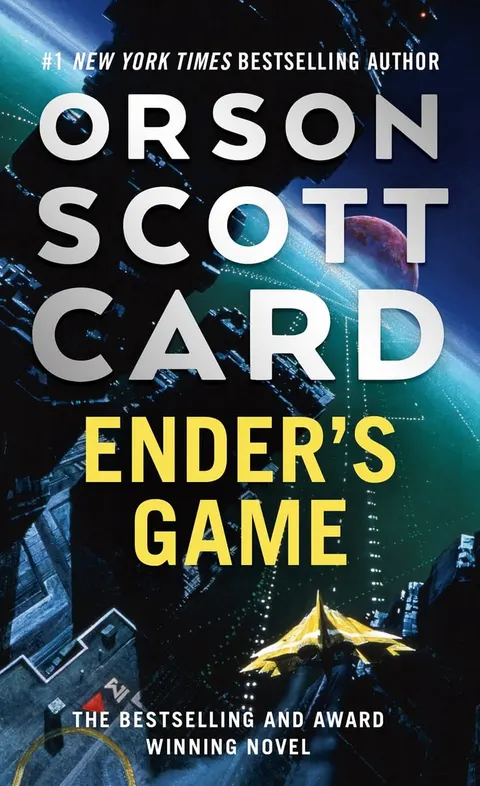
7. Ender’s Game

Orson Scott Card

Orson Scott Card's 1985 military science fiction novel imagines Earth under threat after two conflicts with an insect-like alien species. To prepare for another invasion, the military recruits gifted children, including Andrew Ender Wiggin, and trains them through increasingly difficult war games, some in zero gravity.

Read more

The book began as a short story in 1977. Mark Zuckerberg and Andrej Karpathy both have it on their shelves.

For: Readers who enjoy strategy, competition and a young hero under enormous pressure.

While reading: Watch how the games are used to shape the children; the training is the real subject.

Next: The Three-Body Problem moves first contact into science and history.

Mark Zuckerberg, Andrej Karpathy

8. The Three-Body Problem

Cixin Liu · 2006

Cixin Liu's 2008 novel, the first in the Remembrance of Earth's Past trilogy, begins during China's Cultural Revolution and follows scientists who make contact with an alien civilisation from a system of three suns. Ken Liu's English translation, published in 2014, was the first novel by an Asian writer to win the Hugo Award for Best Novel.

Read more

It is hard science fiction full of physics and history. Mark Zuckerberg, Naval Ravikant, Bryan Johnson and Andrej Karpathy are among its readers.

For: Readers who like science-heavy fiction and stories on a cosmic scale.

While reading: Do not worry if the opening historical chapters seem far from the science; they matter to everything that follows.

Next: Lighten the mood with The Martian, the first book in the fourth group.

Mark Zuckerberg, Bryan Johnson and 3 more

Group 4: The engineer as hero

Four books in which survival or progress depends on solving problems: an astronaut stranded on Mars, a teacher alone on a spaceship, a girl educated by an interactive book and a collection of stories built with the precision of a proof.

9. The Martian

Andy Weir · 2011

Andy Weir's debut, first self-published as a serial on his blog and re-released by Crown in 2014, follows an American astronaut, Mark Watney, stranded alone on Mars in 2035. He has to improvise his way to survival, one problem at a time.

Read more

It is funny, tense and meticulously researched, and Ridley Scott filmed it with Matt Damon in 2015. Andrej Karpathy and Ev Williams are among its readers, and so is Faker, the South Korean League of Legends player.

For: Anyone who enjoys problem solving, humour and a hero who refuses to give up.

While reading: You do not need to follow every calculation; the voice carries you through.

Next: Project Hail Mary is Weir's later novel in the same spirit, with more mystery.

Tom Hanks, Andrej Karpathy and 4 more

10. Project Hail Mary

Andy Weir

Weir's 2021 novel follows Ryland Grace, a science teacher and former biologist who wakes up aboard a spacecraft with no memory of how he got there and the fate of Earth in his hands. It is hopeful, funny and full of problem solving, and it was a finalist for the 2022 Hugo Award for Best Novel.

Read more

A film adaptation starring Ryan Gosling was released in March 2026. Bill Gates and Andrej Karpathy are among its readers.

For: Readers who loved The Martian and want a bigger, warmer story.

While reading: Avoid spoilers; much of the pleasure lies in learning what happened as Grace does.

Next: For a very different kind of engineering story, try The Diamond Age.

Bill Gates, Andrej Karpathy and 3 more

11. The Diamond Age

Neal Stephenson · 1995

Neal Stephenson's 1995 novel, subtitled A Young Lady's Illustrated Primer, follows Nell, a young girl growing up in a future where nanotechnology shapes every part of life, and the interactive primer that educates her. It deals with education, social class and the nature of artificial intelligence, and it won both the Hugo and Locus Awards in 1996.

Read more

Its readers include Peter Thiel and Seth Godin.

For: Readers interested in education, technology and dense, idea-rich world-building.

While reading: Think of the primer as the book's real invention; it is a portrait of what a perfect teaching machine might be.

Next: Close the list with Exhalation, a book of shorter, more contemplative pieces.

Peter Thiel, Seth Godin

12. Exhalation

Ted Chiang

Ted Chiang's story collection, published in 2019, examines time, free will and consciousness with rigorous imagination. It was a finalist for the Los Angeles Times Book Prize's inaugural Ray Bradbury Prize.

Read more

Each story takes a single idea and follows it with precision until it reaches something humane and moving. Naval Ravikant, Tim Ferriss and Andrej Karpathy are among its readers.

For: Readers who prefer short fiction and want science fiction that makes them think slowly.

While reading: Read one story at a time and leave space between them.

Next: Return to Foundation or the Culture if you want to go back to the largest scale.

Andrej Karpathy, Naval Ravikant and 1 more

Reading path

If you want to start with the book that links the most readers here, begin with The Player of Games. It is approachable, complete in itself and opens the Culture series. Follow it with Consider Phlebas if you enjoy it, or step back in time to Foundation.

If you prefer adventure and humour, start with The Martian and then Project Hail Mary. They are the most accessible novels on the list and make a natural pair. Ender's Game fits well after them.

Read more

For a more challenging route, read Dune, The Moon Is a Harsh Mistress and The Three-Body Problem, leaving time between them; each builds a full society and rewards attention. Keep Klara and the Sun and Exhalation for quieter evenings, and read Daemon when you want something fast and close to the present.

17 November 2026

Keep reading

All