Books like Sapiens: big-history and big-idea nonfiction
Ten books for readers who loved Sapiens: sweeping history, data on human progress, and science on evolution and the cosmos.
0/10 books read0%
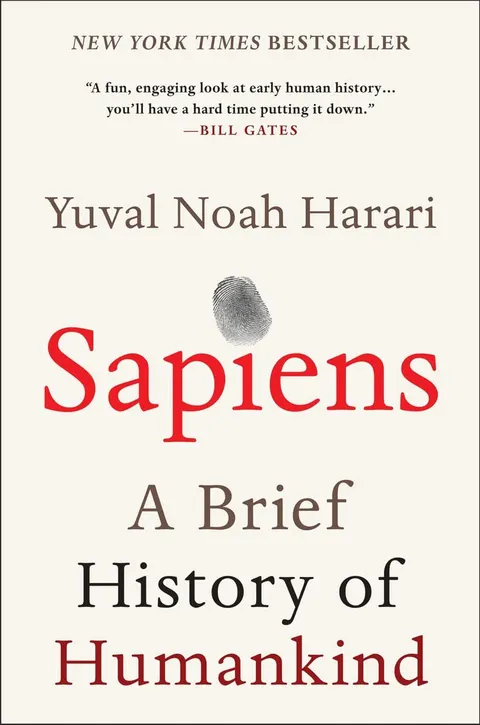
Sapiens has a particular appeal. Yuval Noah Harari traces the history of our species from the Stone Age to the present, and the result is a sweeping, provocative account of cognition, culture and power. It does not stay in one century or one continent. It asks how a single species ended up with cities, money, religions and nations, and it does so in a voice that makes the whole span feel like a single story.
Read more
If you enjoyed that scale, you are probably looking for books that share it. The good news is that there is a rich tradition of what is sometimes called big-history writing. Some of these books ask why certain societies came to dominate others. Some argue about whether human life is getting better. Some go further back, to the genes and the physics beneath all of it. What they have in common is a willingness to step back and look at the largest patterns.
The ten books below are grouped into three clusters. The first looks at human history and why the world looks the way it does. The second takes up the argument about progress, with writers who use data to make the case that things have improved, and who invite you to test that claim for yourself. The third moves to science and to the present day, with a classic on evolution, one of the best-known books on cosmology, and Harari's own turn from the past to the present.
These are demanding books in some cases, but none is written only for specialists. Each aims at a general reader who is curious and willing to follow an argument over several hundred pages. Several are also debated, which is part of the pleasure: you will not always agree with the author, and that disagreement is often where the best conversations begin. Read them with a pencil nearby.
Who it is for: Readers who finished Sapiens and want more wide-angle nonfiction on human history, progress, evolution and the big questions.
Three books about the shape of human history, each with a distinct thesis. One credits geography, one revises what we know about the Americas before Columbus, and one explains how the West became psychologically unusual. Together they show how many different questions a single long view of the past can pose, and how differently each author chooses to answer them.
Diamond argues that geography and environment explain why some societies came to dominate others. It is a sweeping, debated work of history, and the debate is part of what makes it worth reading.
Read more
Joe Rogan, Charlie Munger, Mark Manson, Simon Sinek and Margaret Atwood have it on their shelves. For Sapiens readers it is perhaps the closest relative, because it too treats the whole of human history as a subject for one argument.
For: Readers who want another large, single-thesis account of human history.
While reading: Treat the central claim as an argument to weigh rather than a settled answer, since the book is widely debated.
Next: 1491 offers a more focused look at one part of the world.
Charles C. Mann argues that the Americas before Columbus were more populous and sophisticated than usually thought. It changes the starting point of a story many readers think they already know.
Read more
John Leguizamo and Margaret Atwood have it on their shelves. Where Sapiens covers the whole species, 1491 shows what a long view looks like when applied to a single place.
For: Readers who like having a familiar picture of the past corrected.
While reading: Read it with an open mind about what you think you know of the Americas.
Next: The WEIRDest People in the World returns to the question of how societies differ.
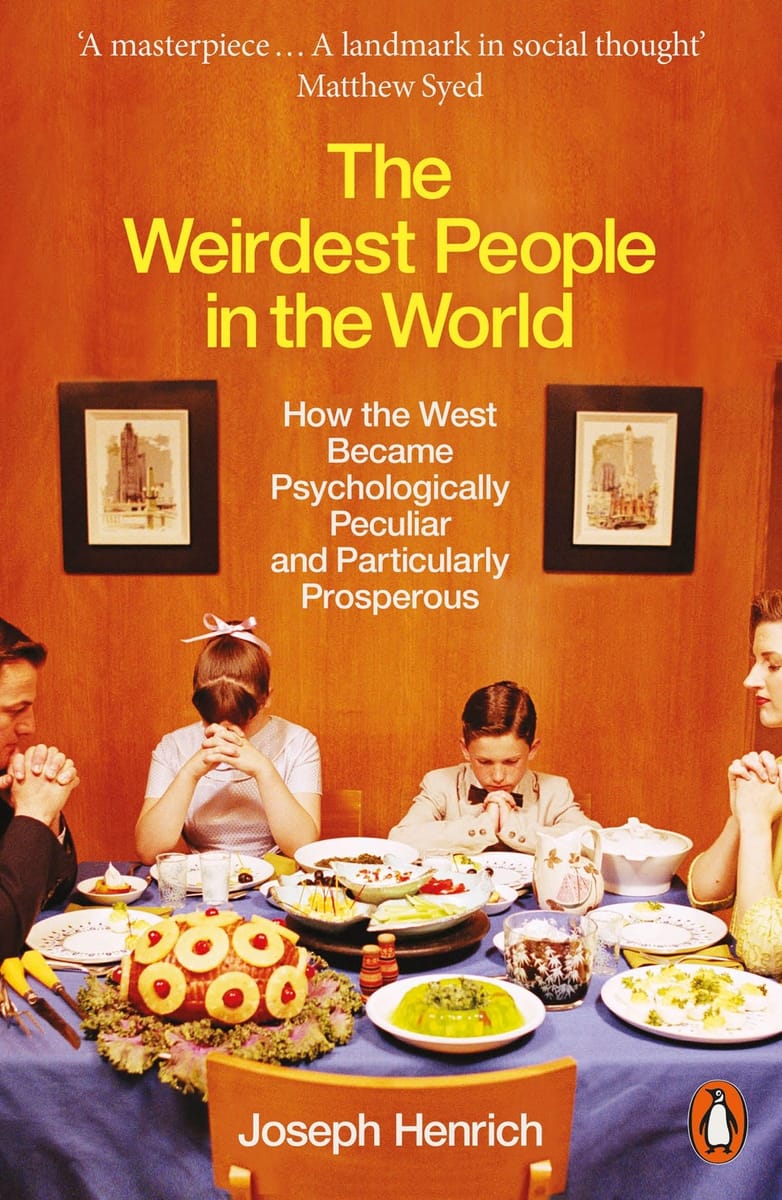
Harvard professor Joseph Henrich's 2020 book uses cultural evolution to explain how the West became psychologically peculiar and unusually prosperous. It combines history with psychology, and so appeals to readers who enjoyed the parts of Sapiens about culture and cognition.
Read more
Marc Andreessen, Ezra Klein and Dani Rodrik have it on their shelves.
For: Readers interested in how culture and psychology shape societies over long periods.
While reading: Expect a book that draws on several disciplines; read it as an argument, not a survey.
Next: Move to the progress books for a different angle on the present.
Marc Andreessen, Ezra Klein and 1 more
Group 2: The argument about progress
Four books that ask whether human life has improved, and in each case answer by pointing to evidence. They are optimistic in different ways, and they make a good group for readers who finished Sapiens wondering how to judge the long arc of history. Read together, they build a case worth testing against your own intuitions.
Steven Pinker argues, with extensive data, that violence has declined over the course of human history. The scale is large and the argument is built on numbers, which makes it a natural next step for readers who enjoyed Harari's long view.
Read more
Mark Zuckerberg, Mark Manson, Lex Fridman and Eric Schmidt have it on their shelves.
For: Readers who want a data-driven account of a very long trend.
While reading: It is long and detailed; read it in sections and take your time with the evidence.
Next: Enlightenment Now broadens the same approach to other areas of life.
Pinker marshals data to argue that reason, science and humanism have improved human life. It is an optimistic, data-driven case for progress, and a useful companion to Sapiens for readers who want to see the argument that the human story has been a hopeful one.
Read more
Sam Harris, Richard Dawkins and Yuval Noah Harari have it on their shelves.
For: Readers who want a confident case for progress, presented with evidence.
While reading: Keep an eye on the data and decide how persuasive it is for each claim.
Next: Factfulness approaches the same question in a more practical way.
By Hans Rosling, physician, professor of international health and co-founder of the Gapminder Foundation. It is a book about how we see the world and the habits of thought that lead us astray.
Read more
Melinda Gates, Malala Yousafzai and Faker have it on their shelves. It suits readers who enjoy having their assumptions tested.
For: Readers who want to check their assumptions about the world against the evidence.
While reading: Test yourself on the questions as you go; the point is to notice your own habits.
Next: The Rational Optimist gives a historical account of why prosperity has grown.
Matt Ridley argues that trade and the exchange of ideas have driven human prosperity and will continue to, despite pessimists. It is a history of human progress told through exchange and cooperation, which connects to Sapiens's interest in how large groups of people work together.
Read more
Marc Andreessen, Naval Ravikant, Mark Zuckerberg and Rupert Murdoch have it on their shelves.
For: Readers who want a historical account of how prosperity grew.
While reading: Notice how the book connects trade to ideas; that link is its central thread.
Next: The Selfish Gene steps back to the biology beneath the story.
Mark Zuckerberg, Rupert Murdoch and 2 more
Group 3: Evolution, the cosmos and the present
Three books that go underneath or beyond the human story. One is a landmark of popular science on evolution, one is among the best-known books on cosmology, and one is Harari's own follow-up, which turns from the past to the present. They are a good way to extend the curiosity Sapiens starts.
Richard Dawkins's 1976 popular science book setting out the gene-centred view of evolution. It is a classic for readers who want to understand what lies beneath the human story Sapiens tells.
Read more
Charlie Munger, Mark Manson and Faker have it on their shelves.
For: Readers who want the biological foundations behind questions of human behaviour.
While reading: It is popular science, so it is written for non-specialists, but it rewards close reading.
Next: A Brief History of Time moves from biology to the universe.
Stephen Hawking's 1988 book on cosmology, From the Big Bang to Black Holes. It brings the same sweeping ambition as Sapiens to the largest scale there is.
Read more
Richard Branson, James Clear and Malala Yousafzai have it on their shelves.
For: Readers who want to follow curiosity from human history to the origin of the universe.
While reading: Go at your own pace; the ideas are big, and rereading a page is no failing.
Next: 21 Lessons for the 21st Century returns to the questions of the present.
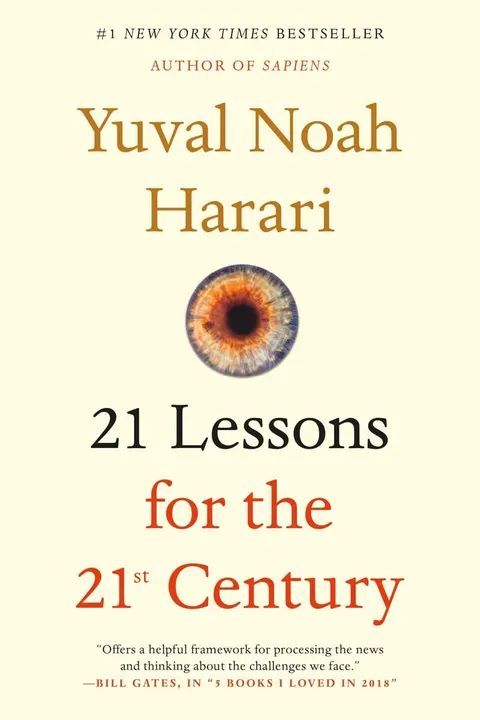
Harari turns from the past to the present, examining technology, politics, truth and meaning in an unsettled age. It is a clear-eyed set of essays on the questions facing us now, and the obvious companion for readers who want more from the same author.
Read more
Bill Gates, Joe Rogan, Jack Dorsey and Fareed Zakaria have it on their shelves.
For: Readers who want Harari's thinking applied to the present.
While reading: It is organised as essays, so you can read it in pieces.
Next: Return to any of the earlier groups to follow a thread that interested you.
Bill Gates, Joe Rogan and 2 more
Reading path
If you want the closest experience to Sapiens, begin with Guns, Germs, and Steel. It shares the scale and the single-argument approach, and it will give you a sense of whether you enjoy this kind of book beyond Harari. Follow it with 1491 if you want to see the same ambition applied to a more specific place, or The WEIRDest People in the World if you are more interested in culture and psychology.
Once you have a taste for history, the progress books make a natural second stage. Start with The Better Angels of Our Nature if you want the long, detailed argument, or Factfulness if you prefer something quicker and more practical. Enlightenment Now sits between the two and covers wider ground. The Rational Optimist is the most historical of the four and fits well after the other three, because it explains where the prosperity they describe came from.
Read more
Leave the science for when you want a change of scale. The Selfish Gene is the better choice if you were most interested in what makes humans behave as they do, while A Brief History of Time suits readers who finished Sapiens wondering about the universe itself. Finish with 21 Lessons for the 21st Century if you would like to hear more from Harari on the questions of the present. None of these books depends on the others, so skip freely. If you are unsure where to begin, choose the title whose subject you would most like to argue about, because a book you react to strongly tends to be one you finish, and finishing one often points you naturally to the next.