Books about money and investing: eleven to read in order
Eleven books on money, investing and risk, from The Psychology of Money to The Intelligent Investor, with a gentle reading order.
0/11 books read0%
Books about money tend to come in two kinds. Some promise a method, a formula or a shortcut. Others try to explain how money actually works and how people actually behave around it. The second kind is usually more useful, and it is the kind this list leans toward. Reading about money well is less about collecting tips than about building a settled way of thinking. The books that last tend to be the ones that help you ask better questions, and that is the standard used for the choices here.
Read more
The eleven books below cover a wide range. At the gentle end are books about how people think about money and what ordinary wealth looks like. In the middle are the classic works on investing, including Benjamin Graham's The Intelligent Investor, Fred Schwed's wry portrait of Wall Street, and two books connected to Warren Buffett and Charlie Munger. At the broad end are books about business stories, rare events and the principles of a hedge-fund founder, which place money inside a wider picture of risk and decision-making.
These are reading suggestions, not financial advice, and none of them can tell you what to do with your own savings. What they can do is sharpen your sense of the questions worth asking: how behaviour shapes outcomes, what a sensible investor does with uncertainty, and why so many confident predictions turn out wrong. A reader who has taken in those ideas is better placed to make decisions, whatever those decisions turn out to be.
You do not need to be an expert to read any of these. The books are written for general readers, and several are short, funny or built from stories. Begin with the one that sounds closest to your situation and use the reading order at the end to move on. It is worth reading at least one book from each group, because the three groups answer different questions. The first asks how people behave, the second asks how a careful investor thinks, and the third asks what we cannot know, and a reader who has met all three is well equipped to judge new advice when it arrives.
Who it is for: Readers who want to understand money, investing and risk through well-known books, and who would like a sensible order to read them in.
Four books about personal finance and attitudes to wealth. They cover behaviour, the stereotype of the flashy millionaire, the lessons of two contrasting fathers, and a simple approach to investing. They are the best starting points for readers new to the subject. None of them requires any mathematics or financial vocabulary, and each can be read in a few sittings. Together they also show how widely opinions differ even at the basic level, which is a useful lesson in itself.
Morgan Housel's 2020 book on how people think about money, and how behaviour and emotion shape financial decisions. It treats money as a matter of psychology rather than mathematics, which makes it a natural first book.
Read more
Ryan Holiday and Ali Abdaal have it on their shelves.
For: Readers who want to understand why people behave as they do around money.
While reading: Read it with your own habits in mind; the book is about behaviour, not technique.
Next: The Millionaire Next Door looks at how ordinary people build wealth.
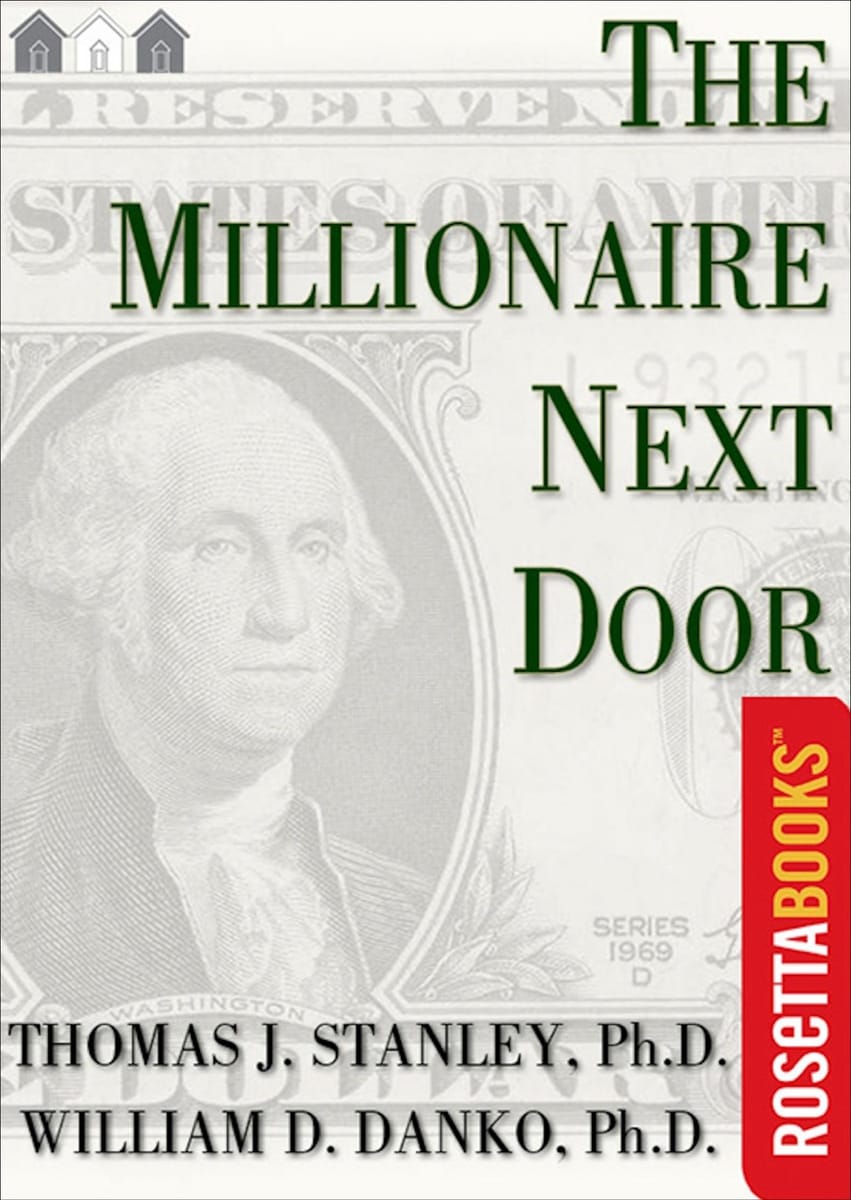
Stanley and Danko examine how ordinary, frugal Americans build wealth, and challenge the stereotype of the flashy millionaire. It reframes what wealth looks like in practice, and it is a useful corrective to the idea that being wealthy and appearing wealthy are the same thing.
Read more
Bernie Sanders has it on his shelf.
For: Readers who are curious about how real-life wealth is built.
While reading: Note the contrast between how wealth looks and how it is actually accumulated.
Next: Rich Dad Poor Dad presents a very different story of money lessons.
Robert Kiyosaki contrasts the money lessons of his two dads, his father and his friend's father, and argues for financial education. It is a popular, widely read book that is easy to approach.
Read more
Will Smith and David Perell have it on their shelves.
For: Readers who want a simple, story-led introduction to financial education.
While reading: Read it as one author's argument and compare it with the other books here.
Next: The Smartest Investment Book You'll Ever Read turns to the mechanics of investing.
Daniel Solin on how to invest your assets simply. Its focus is on simplicity, which sets it apart from the more elaborate approaches elsewhere on this list.
Read more
Tim Ferriss and Derek Sivers have it on their shelves.
For: Readers who want a plain, uncomplicated introduction to investing.
While reading: Keep it beside The Intelligent Investor and notice where they agree.
Next: The Intelligent Investor takes the subject much further.
Tim Ferriss, Derek Sivers
Group 2: The investing classics
Four books at the centre of the investing tradition. One is the foundational text of value investing, one is a short and humorous warning about Wall Street, and two draw on the thinking of Warren Buffett and Charlie Munger. Together they describe a patient, sceptical approach to markets. They are older and more demanding than the first group, but they are also the books that other writers on the subject most often refer back to, so reading them gives you the background to understand much of what has been written since.
Graham's classic on value investing teaches patience, discipline and a margin of safety. Warren Buffett has it on his shelf.
Read more
It is the central text of its tradition, and most other books on the list refer to its ideas. It is demanding but rewarding for readers who take it slowly. Many readers return to it every few years, and find that different chapters stand out as their own circumstances change.
For: Readers who want the founding book of value investing.
While reading: Give it time and read it in sections, as it repays rereading.
Next: Where Are the Customers' Yachts? offers a lighter view of the same world.
Schwed's witty classic of Wall Street skepticism asks where the customers' yachts are, since brokers' seem plentiful. Short, funny and still instructive.
Read more
Warren Buffett has it on his shelf.
For: Readers who want humour and scepticism alongside their investing education.
While reading: It is short and readable in a weekend; enjoy the tone.
Next: The Warren Buffett Way connects the classics to one investor's approach.
Lessons from Charles T. Munger, vice-chairman of Berkshire Hathaway, on investment strategy, philanthropy and living a rational and ethical life. Naval Ravikant, Warren Buffett and Shane Parrish have it on their shelves.
Read more
It moves beyond finance to a broader view of how to think well.
For: Readers who want investing wisdom that reaches into everyday reasoning.
While reading: Treat it as a collection to dip into rather than a single narrative.
Next: Business Adventures offers stories of corporate life.
Warren Buffett, Marc Andreessen and 3 more
Group 3: Business stories, risk and principles
Three books that place money in a larger picture. One collects true stories from Wall Street and corporate America, one examines rare and unpredictable events, and one lays out a hedge-fund founder's principles. They suit readers who already have the basics and want a wider view. None of them is a manual. Each is better read as a way of broadening how you think about money, risk and organisations, and each can be returned to later when your own experience gives its ideas more weight.
Twelve true stories from Wall Street and corporate America, first published in The New Yorker. Widely praised for their clear, lively storytelling.
Read more
Bill Gates, Michael Dell and Patrick Collison have it on their shelves.
For: Readers who learn best from stories rather than theory.
While reading: Each chapter stands alone, so read in any order. The stories give a human face to the abstractions found in the more technical books, which makes it a good break between heavier reading.
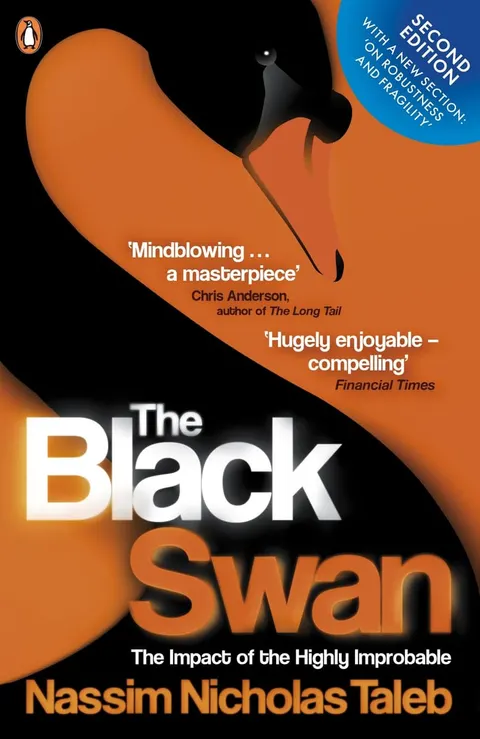
Next: The Black Swan examines the events that stories like these leave out.
Dalio shares the principles he used to build Bridgewater, one of the world's largest hedge funds. A frank guide to radical honesty and decision-making.
Read more
Lex Fridman, Bryan Johnson, Arianna Huffington, Mark Cuban and Kevin Systrom have it on their shelves.
For: Readers who want a systematic approach to decisions at work and in life.
While reading: Choose the principles that apply to you and ignore the rest.
Next: Return to The Psychology of Money to see how behaviour underlies all of it.
Bryan Johnson, Mark Cuban and 3 more
Reading path
For a first book, choose The Psychology of Money. It is about behaviour more than technique, and it prepares the ground for everything else. Follow it with The Millionaire Next Door, which gives a picture of how wealth is built in ordinary life. If you want a contrasting view, add Rich Dad Poor Dad and compare the two. You can stop after any of the first three if that is all you need; the later books are there for readers whose curiosity keeps growing.
When you are ready for investing itself, read The Smartest Investment Book You'll Ever Read for a simple introduction, then The Intelligent Investor for the foundations. Graham's book is the longest and most demanding on the list, so do not be discouraged if it takes a while. Where Are the Customers' Yachts? is the ideal companion, since it is short, funny and sceptical. After these, The Warren Buffett Way shows how one investor applied similar ideas.
Read more
Finish with the wider books. Poor Charlie's Almanack and Business Adventures are both good for browsing, while The Black Swan and Principles ask you to think harder about risk and decisions. Take the books at whatever pace suits you, and consider rereading the first one at the end. This order moves from behaviour to method to perspective, which mirrors how many readers come to the subject: first noticing their own habits, then learning how markets work, and finally learning how little can be predicted with certainty.