A calm route into Dostoevsky: begin with The Gambler, move to Crime and Punishment, then The Idiot, Demons and The Brothers Karamazov.
0/6 books read0%
Dostoevsky has a reputation that arrives before his books do. People hear that the novels are long, that the names are confusing, that everyone shouts and faints and argues about God at two in the morning. Some of that is true. What the reputation leaves out is how gripping he can be. His plots turn on murders, debts, inheritances and scandals, and his characters say the things most novelists only let them think.
Read more
He is regarded as one of the greatest novelists in Russian and world literature, and his work explores the troubled political, social and spiritual life of nineteenth-century Russia. The big novels came after he returned from ten years of exile in Siberia, and most of them first appeared in instalments in a journal called The Russian Messenger. That serial origin matters for a new reader: the books were written to make people come back next month, and they still pull you forward in the same way.
The order below is built around that. It starts with a short novel you can finish in a few evenings, so you learn his voice without a large commitment. Then comes the book most people mean when they say his name. After that, the three late novels, each larger and stranger than the last. A final step offers a book about Dostoevsky rather than by him, for anyone who wants to understand why he still matters to critics and philosophers.
One practical tip before you begin. Russian names change shape depending on who is speaking: a full name, a patronymic, a pet name. Many editions include a list of characters at the front. Keep a finger in it for the first fifty pages and the confusion fades quickly. Translations differ too, and it is worth reading a page from two or three before you buy, since a translation that suits your ear makes these books far easier to stay with.
Who it is for: Readers who want to try Dostoevsky but feel unsure which of the long Russian novels to open first, and in what order to read the rest.
Start small. A short novel shows you Dostoevsky's nervous, fast-talking style and his interest in compulsion and pride, without asking you to hold dozens of characters in your head. If you enjoy this, you will almost certainly enjoy the rest.
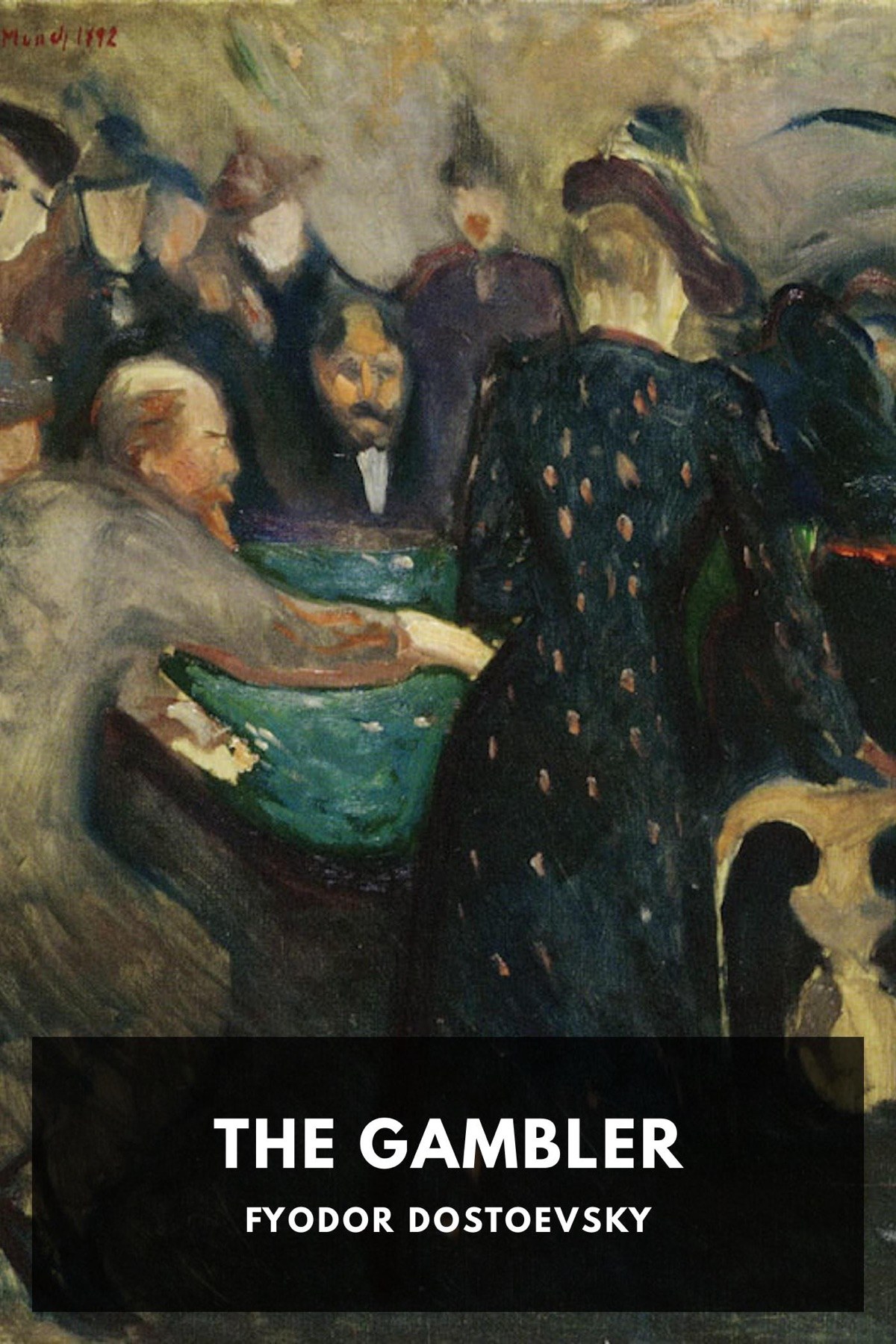
A young tutor working for a formerly wealthy Russian general is drawn into roulette at a casino in a German town the book calls Roulettenberg. The theme reflects Dostoevsky's own addiction to roulette, and he completed the novel in 1866 under a strict deadline to pay off gambling debts.
Read more
You can feel that urgency on the page. It is short, funny in a bitter way, and full of the self-sabotage that runs through all his later work. Orhan Pamuk includes it among the books he has read, alongside several of the longer novels further down this list.
For: Anyone who wants a taste of Dostoevsky before committing to a long novel.
While reading: Pay attention to how the narrator explains himself; his reasoning sounds sensible right up until it does not.
Next: Go straight to Crime and Punishment, written in the same year.
Orhan Pamuk
Step 2: The essential novel
This is the book that made his name abroad and the one most readers start with. It has the shape of a thriller and the depth of a philosophical novel, which is why it works so well as a first long Dostoevsky.
A destitute former student in St Petersburg murders a pawnbroker and is then tormented by guilt as a detective closes in. The crime happens early, so the suspense is not about who did it but about what it does to the man who did.
Read more
The novel asks whether any end can justify a crime, and it lets its hero argue the case with real intelligence before the world answers him. It was first published in twelve monthly instalments in 1866 and is considered the first great novel of his mature period. Timothée Chalamet and Esther Perel both have it on their reading lists.
For: Readers who like psychological suspense and do not mind long conversations.
While reading: Watch the conversations with the investigator closely; they work like a chess game played in polite language.
Next: If the moral argument gripped you, The Brothers Karamazov is the fullest version of it. If the character study did, go to The Idiot.
Timothée Chalamet, Benedict Cumberbatch and 4 more
Step 3: The great late novels
These three, together with Crime and Punishment, are usually counted as the four great works he wrote after Siberia. Each is longer and more crowded than the last. Read them in this order with a short break between each, and you will see his ideas sharpen and widen over a decade of writing.
First published serially in The Russian Messenger in 1868 and 1869, this novel puts a gentle, trusting man into a society of money, vanity and wounded pride, and watches what happens. It is the most tender of the big books and, for some readers, the most painful.
Read more
Where Crime and Punishment follows a man who decides he is above ordinary rules, this one follows a man who seems to stand outside them for the opposite reason. Lex Fridman lists it among the books he has read, as does Orhan Pamuk.
For: Readers who connected with the characters more than the plot in Crime and Punishment.
While reading: Do not rush the long party scenes; much of the drama happens through who speaks, who is silent and who leaves the room.
Next: Take a break with something lighter before Demons, which is darker and more political.
A provincial Russian town is thrown into turmoil by a circle of revolutionaries gathered around the magnetic, unreadable Nikolai Stavrogin. First published in 1871 and 1872, it is the most political of his novels, a study of how ideas move through a group of people and turn into something none of them fully controls.
Read more
It opens almost as a comedy of small-town gossip before the mood changes. The catalogue edition is the Pevear and Volokhonsky translation. Pamuk names it among his books too.
For: Readers interested in politics, radicalism and how groups go wrong.
While reading: Let the slow, satirical opening do its work; the comedy is setting you up for what follows.
His sixteenth and final novel centres on three brothers and the murder of their father, and it wrestles with faith, doubt, free will and guilt. Dostoevsky spent nearly two years writing it; it ran as a serial from January 1879 to November 1880, and he died less than four months after it was published.
Read more
It is widely acclaimed as one of the supreme achievements in world literature. Each brother carries a different answer to the same questions, which is why readers so often argue about which of them they are. Sally Rooney and Hillary Clinton both have it on their reading lists.
For: Readers who have finished at least one long Dostoevsky and want the fullest expression of his ideas.
While reading: Give yourself time; read a section, then stop and think about it before going on.
Next: Turn to the book in Step 4 to see why critics keep returning to him.
Hillary Clinton, Orhan Pamuk and 3 more
Step 4: Understanding Dostoevsky
Once you have read a few of the novels, a good critical book can show you patterns you felt but could not name. This one is short and focused.
René Girard writes about Dostoevsky and the themes of despair, hope and love that run through his work. It is a book about him rather than a biography, so it is most rewarding after you have read two or three of the novels and can follow the argument with your own memories of the characters.
Read more
Read it as a conversation partner: you will not agree with every point, but it will send you back to the novels with new questions.
For: Readers who have finished the late novels and want a critic's view of the whole body of work.
While reading: Keep a note of which novels Girard draws on and reread the relevant scenes.
Next: Return to whichever novel the book made you want to reread.
Peter Thiel
Reading path
The simplest path is the one above, in order: The Gambler, Crime and Punishment, The Idiot, Demons, The Brothers Karamazov, then Girard. It moves from short to long and from personal to political, and it roughly follows the order in which Dostoevsky wrote the books, so you see his ideas develop.
If you only want one Dostoevsky, read Crime and Punishment. It is the most compact of the four great novels, it has the clearest plot, and it contains most of what makes him distinctive. If you only want two, add The Brothers Karamazov, since the two books make a natural pair: one about a single man testing the limits of morality, the other about a whole family arguing over where those limits come from.
Read more
Readers who prefer character to argument can swap the middle of the route around and read The Idiot straight after The Gambler, keeping Crime and Punishment for later. Readers who come to Dostoevsky through an interest in politics may want to read Demons sooner. There is no wrong order among the long novels, as long as you start with something you can finish.
Pace matters more than order. These are books that were written to be read in instalments, so reading a few chapters a day, rather than trying to finish in a weekend, is closer to how they were first experienced. A gap of a few weeks between the big novels keeps each one distinct in your memory and stops the characters from blurring together.