Books like Crime and Punishment: guilt, conscience, crime
What to read after Crime and Punishment: more Dostoevsky, then Camus, Highsmith, Capote, Hawthorne and Kafka on guilt and judgement.
0/10 books read0%
Everyone who reads Crime and Punishment ends up, at some point, in Raskolnikov's room: cramped, airless, alone with an idea. Dostoevsky's 1866 novel follows a destitute former student in St Petersburg who murders a pawnbroker and is then tormented by guilt as a detective closes in. It is built like a crime story, but its real subject is a reckoning inside one man's head, and the question of whether any end can justify a crime.
Read more
What makes the book unique is not the murder but everything after it. The crime comes early; the hundreds of pages that follow are about fever, suspicion, pride and the slow pressure of conscience. So the readers who finish it usually want the same intensity again, not simply another crime novel.
The most honest answer is more Dostoevsky, since his other books keep circling the same questions of crime, faith, passion and pride. The first group stays with him. The rest of the list asks the same questions in other languages and other centuries, from a Puritan town in Massachusetts to a sunny coast in Italy and a farmhouse in Kansas. A reading order closes the list, and nothing here gives away an ending.
Who it is for: Readers who finished Crime and Punishment and want more novels that stay inside the mind of someone who has crossed a line, or who is being judged for it.
The great novels that followed Crime and Punishment, plus one short book written in the same period. For a full guide to his work, see the separate post on where to start with Dostoevsky.
Dostoevsky's last novel centres on the three Karamazov brothers and the murder of their father. It is wider, more philosophical and more many-voiced than Crime and Punishment: Raskolnikov's struggle inside one mind is spread here across a whole family, wrestling with faith, doubt, free will and guilt.
Read more
If you want one more Dostoevsky, most readers would point you here.
First published serially in The Russian Messenger in 1868 and 1869, The Idiot turns Crime and Punishment inside out. Its hero, Prince Myshkin, is a good and innocent man returning to St Petersburg society.
Read more
Raskolnikov commits a terrible act and has to live with it; Myshkin has done nothing wrong, yet the world of money, vanity and passion around him is no kinder. Reading the two back to back shows the two poles of Dostoevsky's imagination.
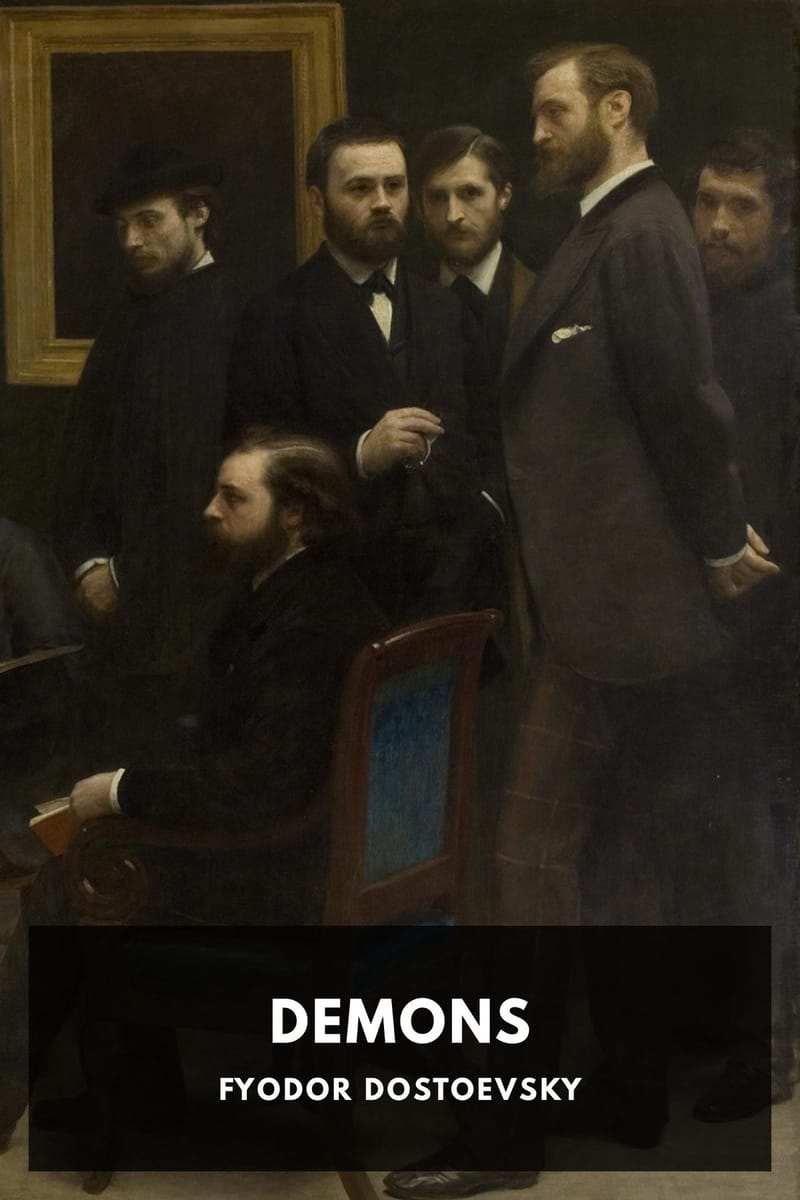
A provincial Russian town is thrown into turmoil by a circle of revolutionaries gathered around Nikolai Stavrogin. If Crime and Punishment is about one man who decides that his theory permits a crime, Demons shows what happens when a whole group thinks that way.
Read more
It is darker and more political, and it reads strikingly well today. This edition is the Pevear and Volokhonsky translation.
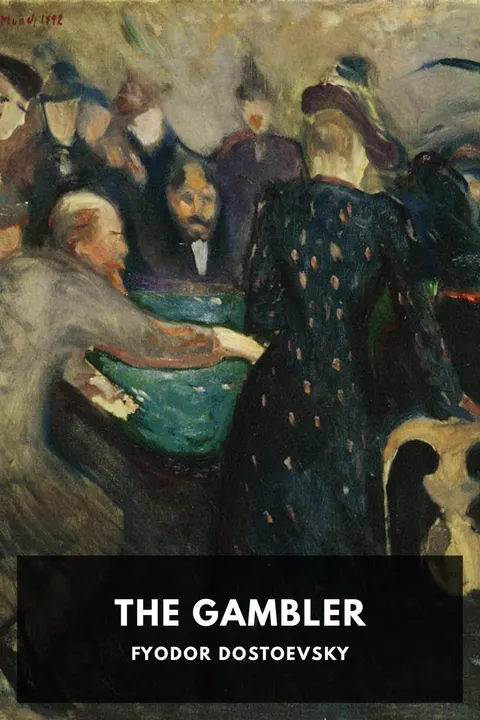
A short novel of a Russian tutor drawn into roulette at the casino of Roulettenberg, completed in 1866. Dostoevsky wrote it around the same time as Crime and Punishment, dictating it to a stenographer, Anna Grigoryevna, in order to meet a publisher's deadline; he later married her.
Read more
Instead of an idea, the obsession here is gambling and a painful love, and it is the quickest way to hear Dostoevsky's feverish voice again.
For:
Orhan Pamuk
Group 2: Crime and conscience in other hands
Novels that put a crime, or a sin, at the centre and then look closely at the person who carries it. Each one answers Dostoevsky's questions differently, and some reverse them completely.
Albert Camus's 1942 novel follows Meursault, a man who seems indifferent to his own mother's death and who later kills a man on a beach, through his trial. It is the mirror image of Crime and Punishment: where Raskolnikov is consumed by conscience, Meursault seems to feel almost none, and that is exactly what makes him unsettling.
Read more
It is short and cool where Dostoevsky is long and feverish. This is a newer American English translation.
Patricia Highsmith's 1955 thriller about Tom Ripley, a young man who slips into the life of a wealthy acquaintance in Italy. Raskolnikov falls apart after his crime; Ripley grows more comfortable with every lie.
Read more
Highsmith seats the reader right beside her criminal, and part of the book's power is the uneasy discovery that you are hoping he gets away with it. It is the best choice if you want suspense more than philosophy.
Truman Capote's 1966 non-fiction novel about the 1959 murder of the Clutter family in Holcomb, Kansas. Here the crime is real, and Capote spends much of the book with the two killers, trying to understand how they arrived at that night.
Read more
Readers who were gripped by Raskolnikov's state of mind before and after the murder will find a similar attention, applied to real people, and it is a far more disturbing experience for it.
Nathaniel Hawthorne's 1850 novel of Hester Prynne in Puritan Massachusetts. There is no murder here, but there is a sin, a public punishment and a secret Hester refuses to give up.
Read more
Like Dostoevsky, Hawthorne is less interested in the act than in what guilt and shame do to people over time, and in the difference between what a community condemns and what a conscience can bear.
Kafka's novella opens with a salesman waking up transformed into an enormous insect. It is not a crime story, but it shares Crime and Punishment's claustrophobic rooms and its feeling of a person cut off from everyone around him, including his own family.
Read more
It is bleak, darkly comic and very short, a good book to read in one sitting between two longer novels on this list.
For:
PewDiePie, Lex Fridman and 2 more
Group 3: For readers who want to understand Dostoevsky
One work of criticism for readers who want to think about the novels rather than simply read more of them.
René Girard's book on Dostoevsky, and on the themes of despair, hope and love that run through his work. It is not a novel, and it is best kept until you have read at least two or three of the Dostoevsky books above.
Read more
Readers who found themselves arguing with Raskolnikov long after finishing the book will find a serious companion here.
For:
Peter Thiel
Reading path
If you want the same intensity straight away, read The Gambler first. It is short, written in the same period and carries the same feverish voice, and it makes a good bridge to the longer novels. Then choose between The Brothers Karamazov, if faith and family interest you most, and Demons, if it was Raskolnikov's dangerous theory that held you.
If you would rather step away from Dostoevsky, read The Stranger next. It is short and makes a striking contrast with Raskolnikov. After it, The Talented Mr. Ripley turns the same questions into a thriller, and In Cold Blood shows them in a real case.
Read more
The Scarlet Letter and The Metamorphosis are good choices when you want something with the same moral weight but a different atmosphere. Keep The Idiot and Resurrection from the Underground for later, once Dostoevsky has become a writer you want to know well.