Books like The Alchemist: fables of the inner journey
Nine books for readers who loved The Alchemist: Hesse, Saint-Exupéry, Richard Bach, Gibran, Yann Martel and more, with a reading order.
0/9 books read0%
The Alchemist is a small book that tends to arrive at the right moment. Paulo Coelho's fable follows Santiago, an Andalusian shepherd boy who travels toward Egypt in search of treasure and learns, along the way, to listen to his heart. It has become one of the best-selling books in the world, and a large part of its pull is how simple it feels. There is a journey, a handful of teachers, and a question that every reader brings in from their own life: what am I supposed to be doing?
Read more
When the last page is turned, the wish is usually for more of that feeling rather than more of the plot. The books below share that quality in different ways. Some are fables told in plain sentences. Some are spiritual texts that speak directly to the reader. A few are longer novels in which the journey is physical as well as inner. All of them can be read in a weekend or less, and most are the kind of book people end up giving away to a friend.
They are grouped into three paths: classic fables of the search, modern parables that keep Coelho's light touch, and books that drop the story altogether and speak to you directly.
Who it is for: Readers who finished The Alchemist wanting another short, quiet book about following a calling, listening to yourself and finding meaning on the road.
These are the books The Alchemist is most often shelved beside. Each is short, each follows a single seeker, and each treats the journey as a way of learning who you are.
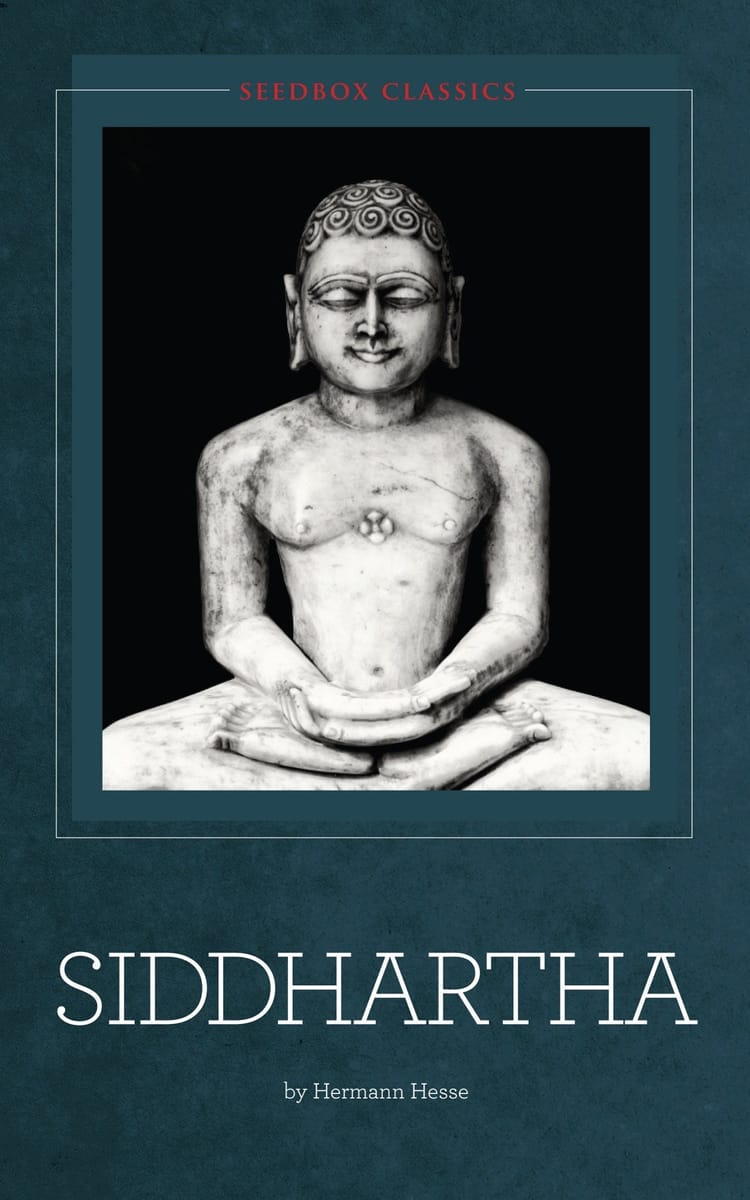
Hermann Hesse's spare novel follows a young man in ancient India who leaves comfort behind to search for enlightenment. If Santiago's story made you think about leaving the familiar to look for something, Siddhartha asks the same question with more weight and more patience.
Read more
It is a short, lyrical book, and its central idea will feel close to Coelho's: experience is the only real teacher, and no one can walk the road for you. Read it slowly, ideally in one or two sittings.
For: Readers who were moved by Santiago's decision to leave home and want a quieter, deeper version of that search.
While reading: Give it an unhurried evening or two; the short chapters work best read without interruption.
Next: Try Demian, another Hesse novel, or go to The Prophet for something you can read a page at a time.
A pilot stranded in the desert meets a small prince who has travelled from a distant asteroid. Saint-Exupéry's fable shares more with The Alchemist than its desert setting.
Read more
Both books are about love, loss and learning to see what is essential, and both are written so simply that children and adults read them differently. Many readers come back to it every few years and find that it has changed, which is usually a sign that they have.
For: Readers who loved the desert, the simplicity and the sense that a child can see more clearly than an adult.
While reading: Read it slowly and notice the small conversations; most of its ideas sit in a single line.
Next: Move on to Wind, Sand and Stars, Saint-Exupéry's memoir of flying, or to Jonathan Livingston Seagull.
Richard Bach's fable is about a gull who wants to fly for the joy of it rather than merely to find food, and who is cast out by his flock for it. It is the closest thing on this list to The Alchemist's message about following a calling when everyone around you thinks you are wasting your time.
Read more
It is very short and can be read in an evening, which makes it a good first step after Coelho.
For: Readers who want the most direct continuation of The Alchemist's message about following a calling.
While reading: Read it in one sitting; it is short enough that a break would interrupt its rhythm.
Next: Continue with Illusions, Bach's follow-up, if you want more of his voice.
Megan Fox, Blair Underwood and 3 more
Group 2: Modern parables
Novels that keep the tone of a fable but add more story. They suit readers who liked Santiago's adventure as much as its lessons.
Yann Martel's 2001 novel follows Pi Patel, an Indian boy from Pondicherry, and turns on questions of spirituality. It is longer and more inventive than The Alchemist, and it asks the reader to decide what kind of story they want to believe.
Read more
If Coelho's book left you thinking about faith and the meaning of the road, this one picks up the same thread inside a much wilder adventure.
For: Readers who want a longer, more inventive story about faith and survival.
While reading: Allow several days; it is the longest book here and the opening chapters set up what follows.
Next: Return to something short afterwards, such as The Prophet, to let it settle.
Illusions: The Adventures of a Reluctant Messiah came out in 1977 as Richard Bach's follow-up to Jonathan Livingston Seagull. It questions how we see reality, proposing that what we call reality is an illusion we create for learning and enjoyment.
Read more
It is playful where The Alchemist is earnest, and it works best for readers who liked the idea that the world quietly answers the person who is paying attention.
For: Readers who finished Jonathan Livingston Seagull and want Bach's ideas in a more playful form.
While reading: Read it after Jonathan Livingston Seagull so the connection between the two is clear.
Next: Go to The Four Agreements if you want a practical version of the same questions.
James Redfield's novel is built around a manuscript discovered in Peru that reveals nine insights into spiritual evolution. The structure will feel familiar: a traveller, a far-off land and lessons that arrive one at a time.
Read more
It is more of an adventure story than a literary novel, and it suits readers who enjoyed the sense of a quest more than the poetry of Coelho's prose.
For: Readers who enjoyed the quest structure of The Alchemist more than its prose.
While reading: Treat it as an adventure story with ideas attached; it moves quickly.
Next: Pick up The Five People You Meet in Heaven for another easy read in the same spirit.
Mitch Albom's novel follows a war veteran who learns the significance of his life after his death. Where The Alchemist looks forward, at a life still to be shaped, this book looks back at one already lived.
Read more
It shares the same warmth and the same plain style, and it is a natural choice for readers who want a story about meaning that is also gentle.
For: Readers who want a gentle story about looking back on a life and finding its meaning.
While reading: Read it in a weekend; it is warm and plain and does not need to be studied.
Next: Turn to The Prophet for reflections on love, work and death without a story around them.
Shah Rukh Khan
Group 3: Wisdom without a plot
For readers who underlined the sayings in The Alchemist more than the scenes. These books speak directly to the reader.
Kahlil Gibran's collection of poetic essays has a prophet bidding farewell to a city and speaking on love, work, joy and death. It has been a spiritual best-seller since 1923.
Read more
Each section is short enough to read on its own, which makes it a book to keep by the bed rather than finish in one go. The voice is close to that of Coelho's wise characters, without the journey around it.
For: Readers who underlined the sayings in The Alchemist and want more of that voice.
While reading: Read one section at a time, perhaps one a day, rather than straight through.
Next: Keep it on the shelf; it is a book to return to rather than finish.
Don Miguel Ruiz distils Toltec wisdom into four personal codes: be impeccable with your word, don't take things personally, don't make assumptions, always do your best. It is a short and popular guide to personal freedom.
Read more
If The Alchemist made you want to change something in how you live, this is the most practical book here, and it can be read in an afternoon.
For: Readers who want to turn The Alchemist's mood into a few concrete habits.
While reading: Read it in an afternoon, then come back to one agreement at a time.
Next: Try The Power of Now or The Untethered Soul for a longer look at the same inner work.
Kendall Jenner, Ellen DeGeneres and 6 more
Reading path
If you want to stay in the same mood, start with Jonathan Livingston Seagull. It is the shortest book here and the closest in message, so it keeps The Alchemist's feeling going without asking much of you. Follow it with The Little Prince, then Siddhartha, which is the deepest of the three classic fables and the one most likely to stay with you.
If you liked the adventure more than the lessons, go to Life of Pi next. It is the longest and most ambitious book on this list, and it rewards a reader who wants a real story. The Celestine Prophecy and The Five People You Meet in Heaven are lighter options in the same spirit, good for a holiday or a long train ride.
Read more
Keep The Prophet and The Four Agreements for later, or read them alongside the novels a few pages at a time. They work better as companions than as books to race through, and they tend to be the ones readers go back to years afterwards.