Books like Women Who Run with the Wolves: 13 picks
After Estés: myths retold, novels of women finding their voice, essays on love and the living world, and memoirs of setting out alone.
0/13 books read0%
Women Who Run with the Wolves came out in 1992 and spent 145 weeks on The New York Times best-seller list over three years, a record at the time. Its author, the American psychoanalyst Clarissa Pinkola Estés, built the book around an idea she called the Wild Woman: a store of instinctual knowledge every woman carries, including knowing when to stay, when to leave and how the cycles of life work. Modern life, she argues, teaches women to distrust that instinct in favour of the purely rational, and the cost shows up as lost joy, creativity and health.
Read more
What makes the book unusual is its method. Each chapter starts from a story. The first is La Loba, a wolf woman who gathers bones in the desert and sings them back to life. The second is Bluebeard, the tale of a forbidden key and a wife who escapes her husband with her sisters' help. Estés reads these tales the way a therapist reads a dream, slowly and symbol by symbol.
So the books that feel closest to it come from several shelves at once: myths and retellings, novels about women who find a voice the world tried to take from them, essays on love and nature, and memoirs of women who walked out of the life that was expected of them. The thirteen below are grouped that way.
Who it is for: Readers who loved Clarissa Pinkola Estés's book and want more stories, novels and essays about instinct, voice and a woman's inner life.
Estés teaches you to read old stories as maps of the inner life. These three books continue that habit, from a novel that gives an ancient sorceress her own voice to the classic study of myth that so much of this thinking grew from.
Madeline Miller retells the story of Circe, the sorceress of Homer's Odyssey, from her own point of view. A figure who appears in the old poem mostly as an obstacle for men becomes the centre of her own life.
Read more
It is the closest thing in fiction to what Estés does with fairy tales: taking a woman who was feared or misunderstood and listening to her properly. Elizabeth Olsen has it on her shelf.
For: Readers who loved the storytelling side of Estés and want a novel.
While reading: No knowledge of Homer is needed, though the Odyssey gains a new shade afterwards.
Next: Campbell's study shows the patterns these old stories share.
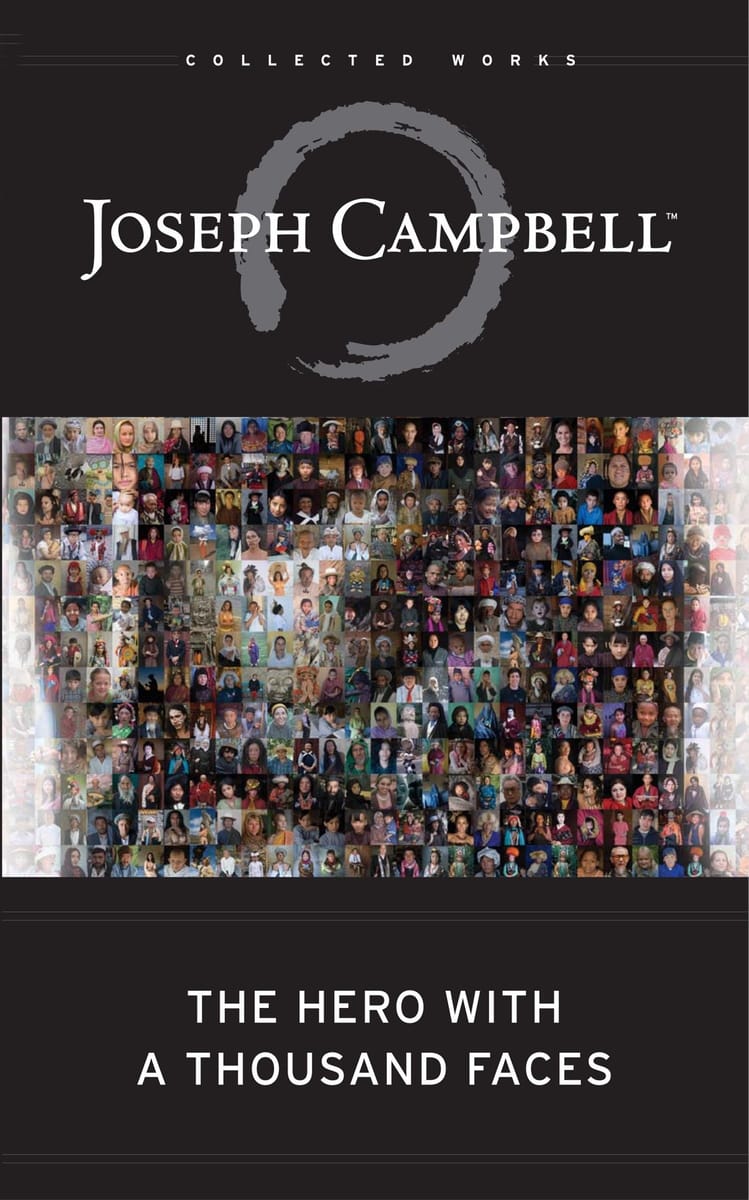
Joseph Campbell's study of the hero's journey, the pattern he found in myths from around the world. It is the classic text behind a whole way of reading stories as maps of psychological change.
Read more
Read beside Estés, it is also a useful contrast: his hero is mostly male, and much of her book can be read as the women's side of the same territory. Ray Dalio and Darren Aronofsky are among its readers.
For: Readers who want the theory of myth behind the tales.
While reading: Take it a chapter at a time; it is dense and comparative.
Next: Turn to Jane Eyre to see the same journey lived inside a novel.
Darren Aronofsky, Ray Dalio
Group 2: Novels of a woman's own voice
Fiction where a woman refuses the shape that others set for her. Two are classics of the English novel, two are central works of American literature, and one is a dystopia that has become a reference point.
Charlotte Brontë's novel follows an orphaned governess who finds independence and love at Thornfield Hall. It is a passionate, defiant story that still feels modern, and Jane's refusal to give up her own judgement for anyone is exactly the instinct Estés writes about.
Read more
Alice Walker and Shonda Rhimes both have it on their shelves.
For: Readers who want a classic with a heroine who knows her own mind.
While reading: Pay attention to the moments Jane chooses to leave; they carry the book.
Next: The Color Purple, by Alice Walker, is a natural next step.
Alice Walker's novel follows Celie, a Black woman in rural Georgia, through letters recording her suffering and eventual self-realization. It won the Pulitzer and is about resilience and voice.
Read more
The letter form matters: Celie writes herself into being, which is very close to Estés's idea of a woman recovering what was buried. Olivia Rodrigo and Chimamanda Ngozi Adichie are among its readers.
For: Readers who want a novel about finding a voice after long silence.
While reading: The early letters are hard; the book opens up as Celie does.
Next: Toni Morrison's Beloved goes deeper into memory and what it does to a woman.
Toni Morrison's novel of Sethe, a formerly enslaved woman haunted by her past, is a landmark of American literature. Like the tales Estés retells, it treats a ghost as something real that has to be faced rather than explained away.
Read more
It is demanding and unforgettable. Ocean Vuong and George Saunders have it on their shelves.
For: Readers ready for a difficult, powerful novel about memory and motherhood.
While reading: Let the story reveal itself slowly; Morrison withholds on purpose.
Next: For a modernist novel of inner voices, try Woolf's The Waves.
Virginia Woolf's 1931 novel is told in the soliloquies of six characters, Bernard, Susan, Rhoda, Neville, Jinny and Louis. There is little plot in the usual sense; the book follows inner life itself.
Read more
Readers who liked Estés's attention to what goes on beneath the surface will recognise the instinct, even in very different prose. Natalie Portman and Orhan Pamuk are among its readers.
For: Patient readers who enjoy language and interior worlds.
While reading: Read it aloud in short passages; the rhythm is the point.
Next: The Handmaid's Tale brings the theme into the political world.
Margaret Atwood's 1985 dystopia is set in the Republic of Gilead, a totalitarian state that has overthrown the United States, and is told by a woman called Offred. If Estés describes how a woman's instinct can be worn down by culture, Atwood imagines a state built to do it on purpose.
Read more
Elisabeth Moss and Emma Watson have it on their shelves.
For: Readers who want a novel about control, memory and private resistance.
While reading: Notice how much Offred holds onto through small acts of memory.
Next: bell hooks's All About Love turns from fiction to argument.
Dua Lipa, Emma Watson and 3 more
Group 3: Love, nature and the inner life
Three essay books that share Estés's warmth and her belief that a good life depends on reconnecting with something larger: love practised daily, the living world, and quiet time alone.
bell hooks's 1999 book on love in modern society runs to thirteen chapters, each on one aspect of love, and mixes cultural analysis with her own journey. It shares Estés's conviction that private feeling and the wider culture are tied together.
Read more
Emma Watson and Trevor Noah have it on their shelves.
For: Readers who want clear, humane thinking about love and self-worth.
While reading: Each chapter stands alone, so it reads well a little at a time.
Next: Braiding Sweetgrass widens the circle to the natural world.
The Potawatomi botanist Robin Wall Kimmerer brings Indigenous knowledge and Western science together in essays on the teachings of plants. Estés writes of the wolf as a teacher; Kimmerer does the same with plants, and her prose has the same mix of story, knowledge and tenderness.
Read more
Lucy Dacus and Camila Cabello are among its readers.
For: Readers drawn to the nature side of the Wild Woman idea.
While reading: Read an essay, then go outside. The book asks for it.
Next: Gift from the Sea is a smaller, quieter companion.
Anne Morrow Lindbergh's reflections on a woman's life were written on the seashore during a brief vacation, where shells become symbols. Like Estés, she reads small natural objects as mirrors of the inner life, and the book is short enough to finish in an evening.
Read more
Ryan Holiday has it on his shelf.
For: Readers who want a short, reflective book to keep and reread.
While reading: Each chapter is built around one shell; read one at a time.
Next: Move on to the memoirs, starting with Untamed.
Ryan Holiday
Group 4: Memoirs of breaking away
Three nonfiction books about women's real lives: one memoir about refusing the expected script, one about a long walk, and one reported account of desire. They show the Wild Woman idea at work outside of myth.
Glennon Doyle's memoir is about what it means to be a woman today. It was a Reese's Book Club pick and has sold over three million copies.
Read more
Its title says a lot about why so many readers pair it with Estés: both books are about the cost of being tamed and the work of finding your way back. Reese Witherspoon and Camila Cabello have it on their shelves.
For: Readers who want a direct, contemporary voice on the same theme.
While reading: It is written in short chapters, easy to read in pieces.
Next: Wild shows the same impulse as a physical journey.
Cheryl Strayed's 2012 memoir tells of her 1,100-mile hike on the Pacific Crest Trail in 1995 as a journey of self-discovery. It became a No. 1 New York Times bestseller and was later filmed with Reese Witherspoon.
Read more
It is the most literal version of running with the wolves on this list: a woman walking into the wild to recover herself. Emma Watson has it on her shelf.
For: Readers who want a story of healing through effort and solitude.
While reading: Let the trail set the pace; the book moves between the hike and the past.
Next: Three Women turns to desire, told through real lives.
Lisa Taddeo spent years reporting on three women and their intimate lives. The result is a frank, intense work of nonfiction about desire.
Read more
Estés writes about instinct in symbolic terms; Taddeo shows it in ordinary, specific lives, with all the confusion that involves. Harry Styles and Mark Manson are among its readers.
For: Readers interested in honest, reported writing about women's desire.
While reading: It is intimate and sometimes uncomfortable; give each story time.
Next: Return to Estés and reread a chapter; it will read differently now.
Harry Styles, Haley Lu Richardson and 1 more
Reading path
Start with Circe if you want to stay inside story, or with Jane Eyre if you prefer a classic. Both are approachable and both carry the Wild Woman's refusal to be made smaller.
For an essay to set beside Estés, choose All About Love or Gift from the Sea; the second takes an evening. Braiding Sweetgrass is the one to read slowly over weeks.
Read more
Keep Beloved and The Waves for when you have time and attention to spare. Then end with one of the memoirs, Untamed or Wild, to see the ideas walk out of the page into a life.