Nobel Prize winners: where to start with 15 laureates
One way into each of 15 Nobel laureates in literature, from Hesse and Hemingway to Ishiguro, Ernaux and Han Kang, with a reading order.
0/15 books read0%
The Nobel Prize in Literature has a reputation problem. The name alone makes many readers expect dense, difficult books meant for seminar rooms. Some laureates do write that way, but a surprising number of them are best known for short, direct, even gripping stories. A fisherman alone with a marlin. A young man in ancient India leaving home. A man on a beach in Algeria. A boarding school in the English countryside that seems ordinary until it does not.
Read more
The prize is given for a whole body of work, not a single title, which leaves the reader with a practical question: where do you start with each of these writers? The Swedish Academy sometimes points the way itself. When Ernest Hemingway won in 1954, the citation praised his mastery of the art of narrative and named The Old Man and the Sea. When Thomas Mann won in 1929, the citation singled out Buddenbrooks. Most of the time, though, readers have to find their own door.
This list offers one door for each of fifteen laureates, arranged by how much time and patience the book asks of you. It begins with short books that can be read in a sitting or two, moves on to the great family sagas, then to contemporary writers who won in the last twenty-five years, and ends with three books that grew out of the wars and dictatorships of the twentieth century. Each entry gives the year the author won, a short account of the book and a note on who it suits.
Several of these books also turn up on the shelves of well-known readers, from BTS leader RM to Pedro Pascal and Winston Churchill, who was himself awarded the Nobel Prize in Literature. Where that is the case, it is mentioned, not as an endorsement but as a reminder that these are living books, read for pleasure far outside the classroom.
Who it is for: Readers who want to get to know the writers behind the Nobel Prize in Literature without starting with their hardest book.
Four laureates whose most famous books are short enough to finish in a weekend. If the Nobel label has kept you away, start here. Each of these books is a complete experience in under two hundred pages, and each gives a clear sense of the writer's voice, so you will know quickly whether you want more.
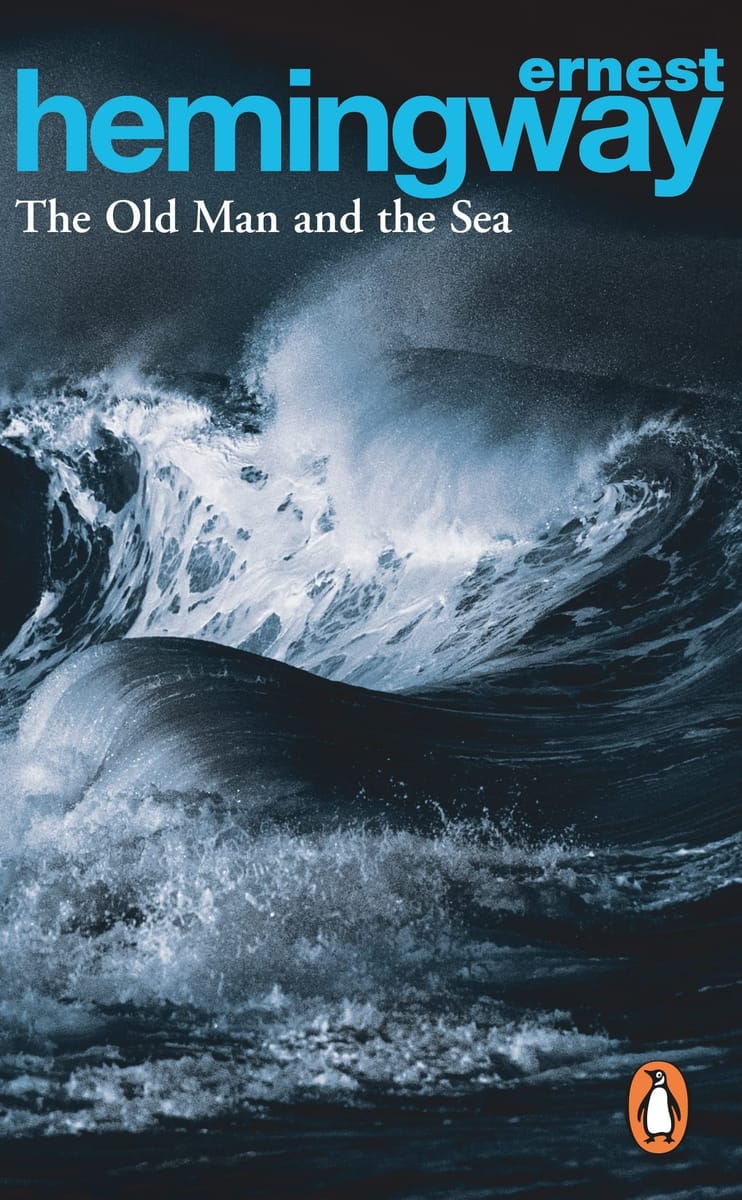
Ernest Hemingway won the Nobel Prize in 1954, and the Academy's citation mentioned this book by name as the latest proof of his mastery of narrative. It is a novella about an aging Cuban fisherman and his long struggle with a giant marlin, told in the plain, spare sentences Hemingway is famous for.
Read more
Very little happens in terms of events, yet the book is about endurance and dignity in a way that stays with readers for years. It is the cleanest possible introduction to his style. PewDiePie, Lex Fridman and Cillian Murphy are among the readers who list it.
For: Anyone who wants to see what Hemingway's famous simplicity looks like on the page.
While reading: Read it slowly, ideally in one or two sittings. The repetition is deliberate and builds a rhythm.
Next: Move to For Whom the Bell Tolls for Hemingway at full length, or to The Stranger for another short, spare book.
Albert Camus won in 1957, cited for writing that illuminates the problems of the human conscience. The Stranger, first published in French in 1942, is set in French Algeria and follows Meursault, a man in Algiers who seems unmoved by his own mother's death and who becomes caught up in a neighbour's violent dispute that leads to a fatal confrontation on a beach.
Read more
The flat, first-person voice is the whole point: the book unsettles because its narrator refuses to feel what everyone expects him to feel. This edition is a newer American English translation. The novelist Emma Cline lists it.
For: Readers curious about existentialism who would rather meet it in a story than in an essay.
While reading: Pay attention to how the voice changes, or does not change, between the first and second parts.
Next: If the questions it raises interest you, Disgrace by J. M. Coetzee treats a very different outsider with the same coolness.
Hermann Hesse won in 1946 for writing that, in the Academy's words, exemplifies classical humanitarian ideals. Siddhartha is his most widely read book: a spare novel about a young man in ancient India who leaves comfort behind to search for enlightenment, and who learns that experience is the only real teacher.
Read more
It is short, lyrical and almost fable-like, and it has kept finding new readers for a century. Its fans range from Emma Watson and Harry Styles to Naval Ravikant, Phil Jackson and Wim Hof, which says something about how widely it travels.
For: Readers at a turning point, or anyone who likes quiet books about the search for meaning.
While reading: Do not hurry the river chapters near the end. They are the heart of the book.
Next: Demian is Hesse's earlier novel of a young person trying to become who they are.
Annie Ernaux won in 2022, praised for the courage and clinical acuity with which she uncovers the roots of personal memory. Simple Passion shows that approach at its most concentrated.
Read more
It is a short, unsparing account of an all-consuming affair with a married man, written without decoration and without self-pity. Ernaux records what desire actually does to a person's days, and the result is closer to a report than a romance. It can be read in an evening. The singer-songwriter Olivia Rodrigo lists it.
For: Readers who like autobiographical writing that is honest to the point of discomfort.
While reading: Notice how little Ernaux explains. The effect comes from what she chooses to record.
Next: The Years is her larger book, a hybrid memoir that turns one life into a portrait of a whole period.
Olivia Rodrigo
Group 2: Family sagas and long novels
Four laureates best known for big, absorbing novels that follow families or communities across many years. These take longer, but they are not difficult in the way people fear. They are long because they are full of people, and once you know the characters, they read quickly.
Gabriel García Márquez won in 1982 for novels and stories in which the fantastic and the realistic are combined, which is as good a one-line description of this book as any. It is the saga of the Buendía family across seven generations in the fictional town of Macondo, and it became a landmark of magical realism, where the miraculous is reported in the same calm voice as the everyday.
Read more
Dua Lipa, Oprah Winfrey and Alexandria Ocasio-Cortez are among its readers.
For: Readers who enjoy large casts, family histories and a touch of the impossible.
While reading: Keep a simple family tree beside you. Names repeat across generations, and that is part of the design.
Next: Love in the Time of Cholera is a gentler, more linear way to stay with García Márquez.
John Steinbeck won in 1962, cited for realistic and imaginative writing that combines sympathetic humour and keen social perception. East of Eden is his family saga set in California's Salinas Valley, loosely echoing the story of Cain and Abel across generations.
Read more
It is a big book about inheritance, rivalry and whether people are free to choose who they become. It has found a new generation of readers among actors in particular: Pedro Pascal and Jacob Elordi both list it.
For: Readers who like long American novels with strong characters and moral weight.
While reading: The biblical echo is part of the structure. Knowing the Cain and Abel story beforehand helps.
Next: For another American family saga by a laureate, try Beloved, which is shorter but more demanding.
Toni Morrison won in 1993 for novels of visionary force and poetic import that give life to an essential aspect of American reality. Beloved is her best-known novel.
Read more
It follows Sethe, a formerly enslaved woman haunted by the child she killed to save from slavery. It is not an easy book, in subject or in structure, but it is one of the landmarks of American literature. Emma Watson, Shonda Rhimes, George Saunders and Ocean Vuong are among its readers.
For: Readers ready for a serious, demanding novel about history and memory.
While reading: The story is not told in order. Let the pieces come as they come; they do fall into place.
Next: Sula is a shorter Morrison novel, about the friendship of two Black women in a small Ohio town.
Thomas Mann won in 1929, principally, the citation said, for Buddenbrooks, his 1901 novel. The Magic Mountain came later and is the other long novel readers most often reach for.
Read more
A young engineer, Hans Castorp, visits a high-altitude sanatorium in the years before 1914 and stays far longer than he planned, meeting figures who confront him with politics, philosophy, romance, illness and death. It is long and slow on purpose; time itself is one of its subjects. Orhan Pamuk and Pedro Pascal both list it.
For: Patient readers who enjoy novels of ideas and long conversations.
While reading: Give it a hundred pages before deciding. The sanatorium's slow rhythm is the point.
Next: Buddenbrooks, the novel the Academy named, follows the decline of a merchant family over four generations.
Orhan Pamuk, Pedro Pascal
Group 3: Laureates of this century
Four writers who won within the last twenty-five years. Their books are contemporary in setting or feel, and they show how wide the prize has become: South Africa, Turkey, England and South Korea. If you want to know what the Nobel rewards now, start here.
Kazuo Ishiguro won in 2017, cited for novels of great emotional force that uncover the abyss beneath our illusory sense of connection with the world. Never Let Me Go, from 2005, is narrated by Kathy H., a carer in an alternative version of 1990s England, who looks back on her childhood at an isolated boarding school called Hailsham and on her friends Ruth and Tommy.
Read more
Their lives are shaped by things their guardians keep from them, and it is best to know no more than that. It was shortlisted for the Man Booker Prize and named the best novel of 2005 by Time magazine. Domhnall Gleeson lists it.
For: Readers who like quiet, emotional novels with something unsettling underneath.
While reading: Avoid reviews and film trailers before reading. The book reveals itself gradually.
Next: Klara and the Sun, Ishiguro's later novel about an Artificial Friend, asks similar questions about love and being human.
J. M. Coetzee won in 2003; the Academy described him as a writer who, in innumerable guises, portrays the surprising involvement of the outsider. Disgrace is his best-known novel and a Booker Prize winner.
Read more
A South African professor loses his post after an affair with a student and retreats to his daughter's farm, where he faces violence and a country that is changing around him. It is short, precise and morally uncomfortable in a way that rewards discussion. The actor Callum Turner lists it.
For: Readers who want a compact, hard-hitting contemporary novel.
While reading: Coetzee rarely tells you what to think about his narrator. Keep asking yourself whether you trust him.
Next: Go back to The Stranger to compare two very different men who refuse to explain themselves.
Orhan Pamuk won in 2006, cited as a writer who, in the quest for the melancholic soul of his native city, has discovered new symbols. Snow, published in Turkish in 2002 and in English in 2004, leaves Istanbul for the snowbound town of Kars in eastern Turkey.
Read more
Ka, an exiled poet returning from Germany, reunites with his former love İpek while political and religious tensions rise around them. It is a novel of ideas wrapped in a love story and a political thriller. Christopher Hitchens lists it.
For: Readers interested in politics, faith and the pull between East and West.
While reading: The town, cut off by snow, works almost like a stage. Read it as a closed world.
Next: From here, try another laureate writing about a nation under strain: Human Acts by Han Kang.
Han Kang won in 2024 for intense poetic prose that confronts historical traumas and exposes the fragility of human life. Human Acts, published in Korean in 2014 and later in English, is set in Gwangju, South Korea, around the May 1980 uprising.
Read more
It centres on the death of a teenage boy, Dong-ho, and each chapter is narrated by someone connected to him, from the 1980s to the present. It is a painful book and also a tender one. RM, the leader of BTS, lists it.
For: Readers ready for a serious book about political violence and memory.
While reading: Each chapter shifts voice and time. Take a pause between them.
Next: One Day in the Life of Ivan Denisovich is another laureate's account of what a state can do to a single person.
RM
Group 4: Witnesses to the twentieth century
Three laureates whose best-known books grew out of the Soviet camps, the Russian Revolution and the question of what people become without rules. Two of them have a reader in common: Winston Churchill, who received the Nobel Prize in Literature himself.
Aleksandr Solzhenitsyn won in 1970 for the ethical force with which he pursued the traditions of Russian literature. This short novel describes a single day in a Soviet labour camp as lived by the prisoner Ivan Denisovich Shukhov.
Read more
It was published in the USSR in 1962 and made its author famous. Because it covers one day only, it is the most accessible way into Solzhenitsyn's work, and its ordinary details, bread, cold, work, are what make it hard to forget. Christopher Hitchens and Winston Churchill both list it.
For: Readers who want to understand the Soviet camps through one ordinary life.
While reading: Notice how much of the day is about small victories. That is where the book's dignity lies.
Next: The Gulag Archipelago is his much larger non-fiction account, for those who want the full history.
Winston Churchill, Christopher Hitchens and 1 more
Boris Pasternak won in 1958, cited for his achievement in contemporary lyrical poetry and in the great Russian epic tradition. Doctor Zhivago is that epic: the story of a physician and poet caught up in the Russian Revolution and civil war, and of his love for Lara.
Read more
The novel was first published abroad, not in the Soviet Union. It is long and sweeping, but its centre is personal, a man trying to keep his inner life intact while history tears through everything. Winston Churchill lists it.
For: Readers who love long historical novels with a love story at the centre.
While reading: Russian names have several forms. A short list of characters will save you confusion.
Next: If you want more Russian epics, the guide to Russian literature is the next step.
William Golding won in 1983 for novels that combine realistic narrative with the diversity and universality of myth. Lord of the Flies, his first and most famous, follows a group of schoolboys stranded on an island who descend into savagery.
Read more
It reads like an adventure story at first and slowly turns into something much darker, a fable about what holds people together and what happens when it fails. It is widely taught in schools, but it is worth rereading as an adult. The author Douglas Murray lists it.
For: Readers who like fables with sharp edges, and anyone who last read it at school.
While reading: Watch what happens to the objects the boys rely on. They carry much of the meaning.
Next: Go back to Group 1 for another short book by a laureate, or on to Never Let Me Go for a very different school story.
Douglas Murray
Reading path
If you have never read a Nobel laureate on purpose, begin with The Old Man and the Sea. It is short, its language is simple, and the Academy itself pointed to it. Follow it with The Stranger, which is just as short but asks much more of you emotionally.
From there, choose by mood. If you want to be absorbed for weeks, go to One Hundred Years of Solitude or East of Eden. If you want something contemporary, Never Let Me Go is the most approachable of the recent laureates, and Disgrace the most compact.
Read more
Leave The Magic Mountain, Beloved and Doctor Zhivago for when you have time to give them. None of them is unreadable, but each one rewards attention, and they are better read slowly than abandoned halfway. Human Acts and One Day in the Life of Ivan Denisovich are short, but they are heavy; read them when you are ready for that weight.
A good habit is to alternate: one short laureate, then one long one. After a few months you will have a feel for fifteen very different writers, and a clear idea of which of them you want to follow further.