Books like Outliers: 12 on success, talent and luck
After Gladwell's Outliers: more Gladwell, the science of judgement and chance, and the books that argue about talent, practice and habit.
0/12 books read0%
Malcolm Gladwell published Outliers: The Story of Success in 2008, and it went straight to number one on The New York Times best-seller list, where it stayed for eleven weeks. Its claim is simple to state and hard to forget: extraordinary success owes as much to opportunity, timing, family and culture as to talent and hard work. Elite Canadian hockey players are disproportionately born early in the year because age cut-offs favour older children. The Beatles played so many shows in Hamburg in the early 1960s that they piled up thousands of hours of practice. Bill Gates had rare access to a computer as a teenager in 1968.
Read more
The book also gave the world the 10,000-Hour Rule, the idea that roughly that much practice sits behind world-class skill. It is the part most people remember and the part most argued over. The researchers whose work Gladwell drew on dispute how he used it, Paul McCartney said it was not a cast-iron theory, and a 2014 meta-analysis found that deliberate practice explained a sizeable share of performance in games and music but far less in professions. Critics such as Steven Pinker have also faulted the book for leaning on chosen anecdotes.
That debate is a good way to pick what to read next. Some books below continue in Gladwell's storytelling style. Others look harder at how we judge, decide and get lucky. The last group argues directly with Outliers about talent, practice and habit. Together they make a fuller picture than any one of them alone.
Who it is for: Readers who enjoyed Outliers and want more books that explain success, talent and decision-making through stories and research.
Group 1: More Gladwell and the social science around him
Two more Gladwell books and the classic on persuasion that sits right next to them on the shelf. Start here if what you loved was the mix of story and surprising research.
Gladwell's 2000 debut explains how ideas and behaviours spread like epidemics until they reach a tipping point, the threshold where little things make a big difference. It sets out three rules, the Law of the Few, the Stickiness Factor and the Power of Context, and three kinds of people who spread trends: connectors, mavens and salesmen.
Read more
If Outliers is about what makes individuals succeed, this is about what makes ideas take off. Joe Rogan has both books on his shelf.
For: Readers who want Gladwell's first book and the vocabulary it gave marketing.
While reading: Treat the examples as illustrations; some of its claims, like the one about New York crime, have been challenged.
Next: Talking to Strangers is Gladwell at his most serious.
Gladwell examines why we misjudge people we do not know, drawing on Timothy Levine's idea that people default to truth. Published in 2019, it opens and closes with the arrest and death of Sandra Bland and moves through cases including Neville Chamberlain's meetings with Hitler and Bernie Madoff's fraud.
Read more
It shares Outliers' instinct to look past the individual to the situation around them. Melinda Gates and Fareed Zakaria have it on their shelves.
For: Readers who want Gladwell applied to trust and miscommunication.
While reading: It deals with hard subjects; read it in a few longer sittings.
Next: Influence explains the mechanics of persuasion more systematically.
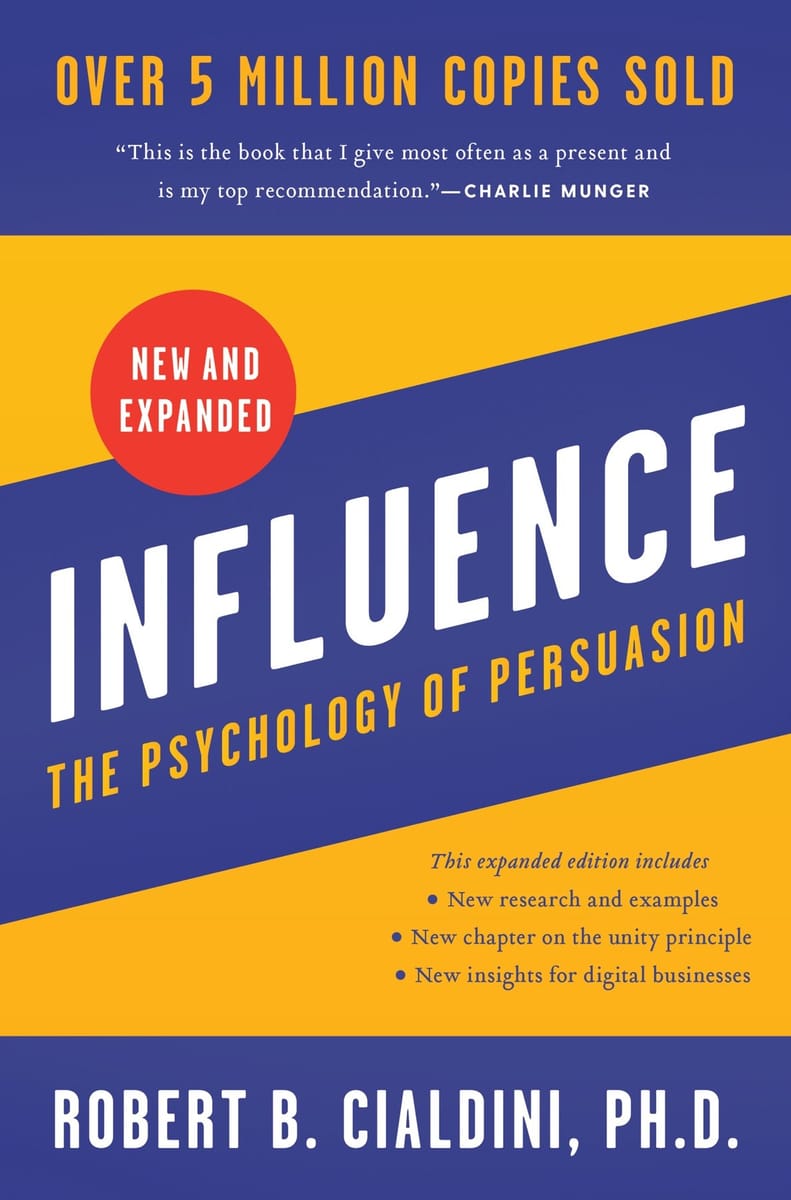
Robert Cialdini lays out the principles of social influence, from reciprocity to social proof, based on years of research. It is a practical guide to how persuasion works and how to resist it.
Read more
Where Gladwell tells stories, Cialdini names the levers, which makes it a useful partner. Charlie Munger, who also has Outliers on his shelf, is among its readers, as are James Clear and Derek Sivers.
For: Readers who want a framework they can use, not only stories.
While reading: Look for each principle in your own week; it sticks better that way.
Next: Thinking, Fast and Slow goes to the roots of judgement.
Charlie Munger, Alexis Ohanian and 3 more
Group 2: Judgement, luck and uncertainty
Outliers argues that luck and circumstance matter more than we admit. These three books take that seriously and ask how we should think and decide in a world full of chance.
Daniel Kahneman, a Nobel-winning psychologist, explains the two systems that drive our thinking: one fast and intuitive, one slow and deliberate. It is a tour of the biases that quietly shape our judgements, including the ones that make us credit success to talent alone.
Read more
It is longer and more rigorous than Gladwell. Marc Andreessen and Mark Manson are among its readers.
For: Readers who want the research rather than the anecdote.
While reading: Read it in parts; each section is a full idea.
Next: The Black Swan pushes further into the role of chance.
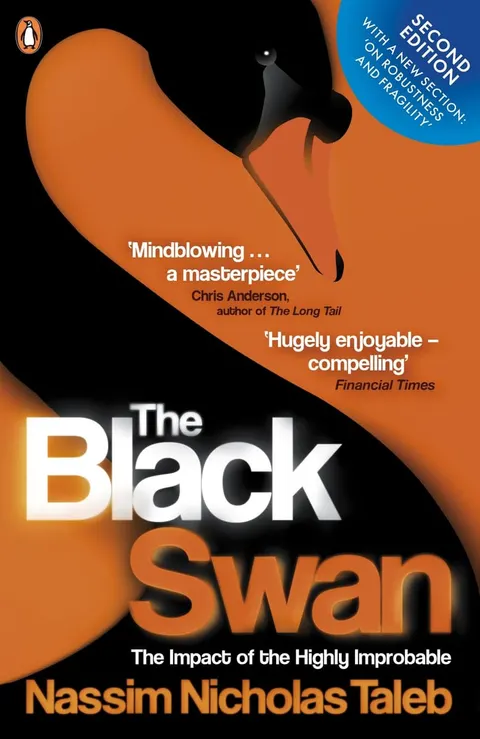
Nassim Nicholas Taleb examines how rare, unpredictable events shape history and markets. It is a provocative challenge to conventional forecasting.
Read more
Read after Outliers, it adds a warning: stories of success explained after the fact can hide how much was down to luck. Naval Ravikant and Jeff Bezos have it on their shelves.
For: Readers who like a combative author and big questions about randomness.
While reading: Taleb digresses on purpose; follow the argument, not every aside.
Next: Thinking in Bets turns the same insight into a practical habit.
Annie Duke, a former poker player, shows how to make better decisions under uncertainty. It is a practical, readable book, and it draws a line Outliers only hints at: a good outcome is not proof of a good decision.
Read more
Marc Andreessen, Seth Godin and Derek Sivers are among its readers.
For: Readers who want something they can apply this week.
While reading: It is short and conversational; a weekend is enough.
Next: Range argues with the 10,000-Hour Rule directly.
Marc Andreessen, Mark Manson and 2 more
Group 3: Talent, practice and habit
Books that take up the questions Outliers made famous: is talent born or built, does early practice matter, and how do the daily routines behind expertise actually form?
David Epstein argues against early specialisation: in most fields, generalists who range widely do better than those who focus early. It is the most direct counterweight to the 10,000-Hour Rule as most people understand it, and it is written with the same love of examples that makes Gladwell enjoyable.
Read more
Bill Gates has it on his shelf.
For: Readers who came away from Outliers sceptical about practice hours.
While reading: Read it straight after Outliers; the contrast is the reward.
Next: The Talent Code takes the other side, seriously.
The journalist Daniel Coyle spent years investigating where skill comes from, across sports, language, mathematics and science. He concludes that biology, and myelin in particular, are central to producing skill, and turns that into a program for developing your own.
Read more
It is the natural book for readers who found the practice chapters of Outliers the most exciting. Peter Attia has it on his shelf.
For: Readers who want to know how practice works, not only that it matters.
While reading: Keep a skill of your own in mind as you read.
Next: Mindset looks at the beliefs that keep people practising.
Carol Dweck contrasts the fixed and growth mindsets and shows how beliefs about ability shape success. It is a highly influential psychology book.
Read more
Gladwell looks at outside circumstances; Dweck looks at what people believe about themselves, which makes it a good complement. Bill Gates and Satya Nadella are among its readers.
For: Parents, teachers and anyone who wants to think about how ability grows.
While reading: The idea is simple; the examples are where it becomes useful.
Next: The Power of Habit explains how daily routines form.
Charles Duhigg explains how habits form and how they can be changed, drawing on neuroscience and case studies. It is accessible and practical, and its case-study style will feel familiar to Gladwell readers.
Read more
Tim Ferriss and Ray Dalio have it on their shelves.
For: Readers who want to turn ideas about success into routines.
While reading: Pick one habit to study while you read.
Next: The One Thing is the short, focused follow-up.
Richard Feynman's memoir collects his stories, from safecracking at Los Alamos to Nobel Prize work. It is witty and full of curiosity, and it shows something statistics cannot: what it actually looks like when a brilliant person follows their interests wherever they lead.
Read more
Tim Ferriss, Larry Page and James Clear have it on their shelves.
For: Readers who want a lighter, funnier book about a remarkable mind.
While reading: Dip in and out; the stories stand alone.
Next: Go back to Outliers and see whose name you would now add to it.
Larry Page, Peter Attia and 2 more
Reading path
If you want more of the same voice, read The Tipping Point next and keep Talking to Strangers for later. Add Influence when you want something more systematic.
If Outliers left you with questions about luck, go to Thinking in Bets first, since it is short, then The Black Swan and Thinking, Fast and Slow.
Read more
If the 10,000-Hour Rule was what caught you, read Range and The Talent Code one after the other. They pull in different directions, and that is what makes them worth reading together. Finish with Feynman for pure pleasure.