Where to start with Malcolm Gladwell: a reading order
Which Gladwell book to read first: Outliers and The Tipping Point, then Blink, David and Goliath and Talking to Strangers, plus two books to read beside him.
0/7 books read0%
Malcolm Gladwell, a British-Canadian writer born in 1963 in Fareham, England, has been a staff writer at The New Yorker since 1996. Since 2016 he has also hosted the podcast Revisionist History. His books take a familiar question, such as why some people succeed or why an idea suddenly catches on, and answer it with a chain of surprising stories drawn from psychology, sociology and history.
Read more
That style has made him one of the most widely read nonfiction writers of his generation, and also one of the most criticised. Reviewers and scientists, Steven Pinker among them, have argued that he simplifies complex research and picks the anecdotes that fit. Gladwell himself later acknowledged he had overstated the link between broken-windows policing and New York's falling crime rate. The fair way to read him is as a brilliant explainer and question-raiser rather than the last word on any subject.
His books, in order, are The Tipping Point (2000), Blink (2005), Outliers (2008), What the Dog Saw (2009), David and Goliath (2013), Talking to Strangers (2019), The Bomber Mafia (2021) and Revenge of the Tipping Point (2024). The five below are the core, and they are arranged here not by date but by how easy they are to enter. Each one can be read on its own; none depends on another.
A note on length. Gladwell's books are short by nonfiction standards and built from self-contained chapters, so it is realistic to read the whole core in a couple of months without feeling buried. The steps below simply put the most rewarding first.
Who it is for: Readers who have heard Gladwell's ideas quoted everywhere and want to know which of his books to open first, and in what order.
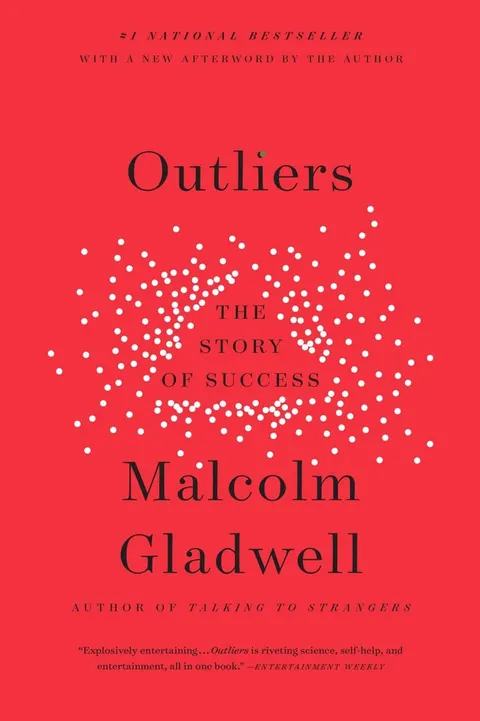
Outliers (2008) argues that extraordinary success owes as much to timing, culture and opportunity as to talent. Gladwell moves from Canadian hockey players, who are disproportionately born early in the year because of age cut-offs, to the Beatles' long Hamburg residencies and to Bill Gates's early access to a computer.
Read more
It debuted at number one on The New York Times best-seller list and introduced the 10,000-Hour Rule to a mass audience. That rule is also its most disputed idea, so read the practice chapters with some scepticism. Charlie Munger, Jay-Z and Will Smith have it on their shelves.
For: First-time Gladwell readers and anyone curious about why some people pull ahead.
While reading: Each chapter is a self-contained case; notice how each one builds the same argument from a new angle.
Next: The Tipping Point shows the same method applied to ideas instead of people.
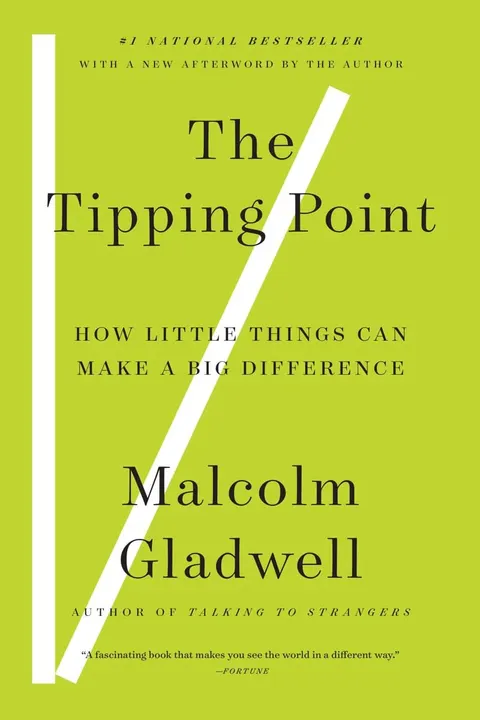
Gladwell's 2000 debut explains how ideas and behaviours spread like epidemics until they reach a tipping point, the threshold where little things make a big difference. He offers three rules, the Law of the Few, the Stickiness Factor and the Power of Context, and three types of people who carry trends: connectors, mavens and salesmen.
Read more
The sudden revival of Hush Puppies shoes in the mid-1990s is one of his best-known examples. Later research, including a 2003 small-world study by Duncan Watts, has questioned how much special people really drive trends. In 2024 he returned to the subject in Revenge of the Tipping Point. Joe Rogan and Mike Shinoda have it on their shelves.
For: Readers interested in marketing, culture and how things go viral.
While reading: Read it as the book that shaped how a generation talks about trends, and keep its critics in mind.
Next: Move on to Blink, his book about decisions made in seconds.
Joe Rogan, Mike Shinoda
Step 2: Fast judgements
Gladwell's book about the mind in its quickest mode. It is short and lively, and it pairs well with a more rigorous psychology book later.
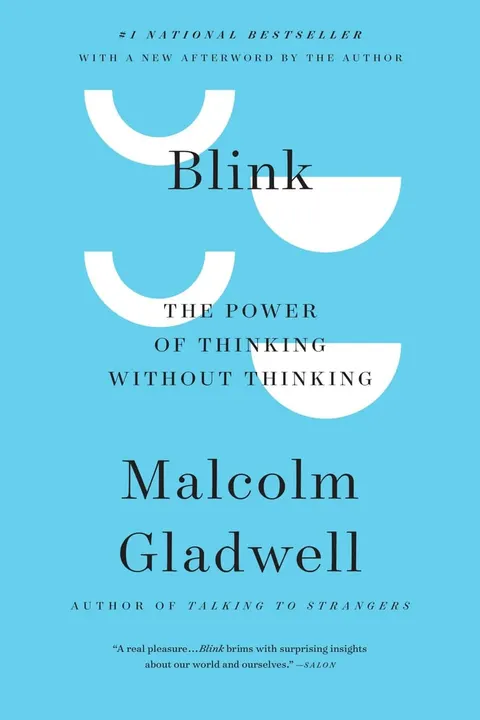
Blink (2005) is about the adaptive unconscious and what Gladwell calls thin-slicing: reaching a conclusion from a tiny amount of information. He opens with a statue bought by the J. Paul Getty Museum that several experts doubted at first sight, then turns to the psychologist John Gottman, who could predict whether couples would stay together from a short sample of their conversation, and to Paul Ekman's work on facial expressions.
Read more
Gladwell argues that experts' snap judgements can beat lengthy analysis, but he also shows how unconscious bias can distort them, sometimes with harmful results. Critics including Daniel Kahneman have questioned the strength of the evidence. Mike Shinoda has it on his shelf.
For: Readers who want a quick, intriguing book about intuition and first impressions.
While reading: Keep two questions apart: when quick judgements work, and when they fail. Gladwell covers both.
Next: Step 3 turns to society: underdogs and strangers.
Mike Shinoda
Step 3: Bigger social questions
His later books are more ambitious and more divisive. They tackle power, disadvantage and trust, and they reward readers who argue back.
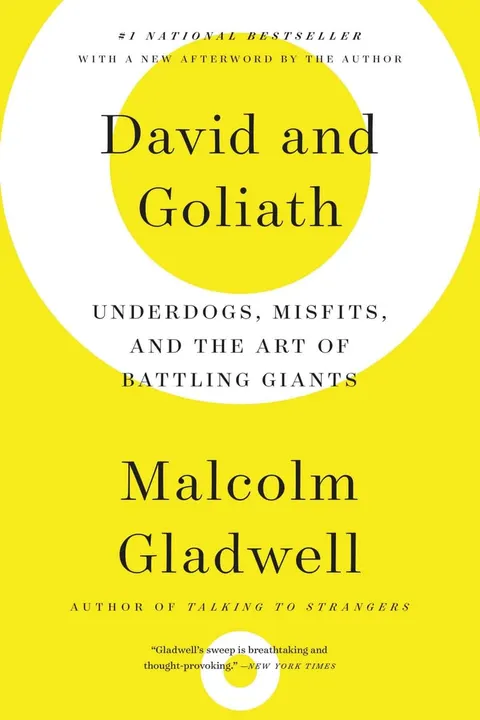
David and Goliath (2013), subtitled Underdogs, Misfits, and the Art of Battling Giants, grew partly out of a 2009 New Yorker article on how David beats Goliath. Its theme is that an apparent disadvantage can turn into an advantage.
Read more
Gladwell introduces the idea of a desirable difficulty through the lawyer David Boies, whose career he argues may have benefited from dyslexia, and tells the story of Vivek Ranadivé coaching a girls' basketball team in Redwood City. Reviews were mostly negative, yet it still reached number four on the best-seller list, and some critics found it his most enjoyable book. Shah Rukh Khan and Trevor Noah have it on their shelves.
For: Readers who like stories of unlikely winners and counterintuitive arguments.
While reading: Enjoy the stories, but test each conclusion: is the disadvantage really what made the difference?
Next: Talking to Strangers is his most serious book; read it next.
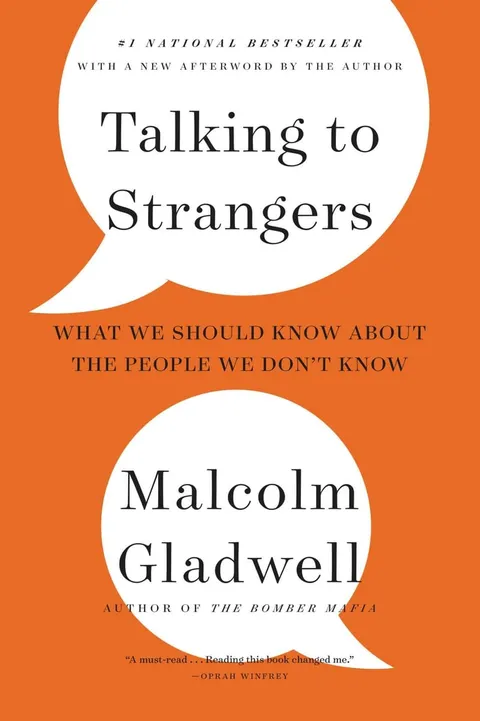
Talking to Strangers (2019) asks why we misjudge people we do not know. Gladwell builds on Timothy Levine's idea that humans default to truth, assuming honesty unless the evidence becomes overwhelming.
Read more
The book opens and closes with the arrest and death of Sandra Bland, and along the way it covers Neville Chamberlain's meetings with Hitler, the Cuban spy Ana Montes and Bernie Madoff's fraud. Some critics felt it lacked a clear central lesson; others praised it as a fascinating study. Melinda Gates, Fareed Zakaria and Eliud Kipchoge are among its readers.
For: Readers ready for heavier subjects and a book that leaves them uneasy.
While reading: It covers difficult cases, including abuse scandals; take breaks between chapters.
Next: Step 4 suggests two books that put Gladwell's ideas on firmer ground.
Eliud Kipchoge, Melinda Gates and 2 more
Step 4: Read beside Gladwell
Two books by researchers whose work covers the same ground with more rigour. They are the best answer to Gladwell's critics and a natural next step once you have read his core.
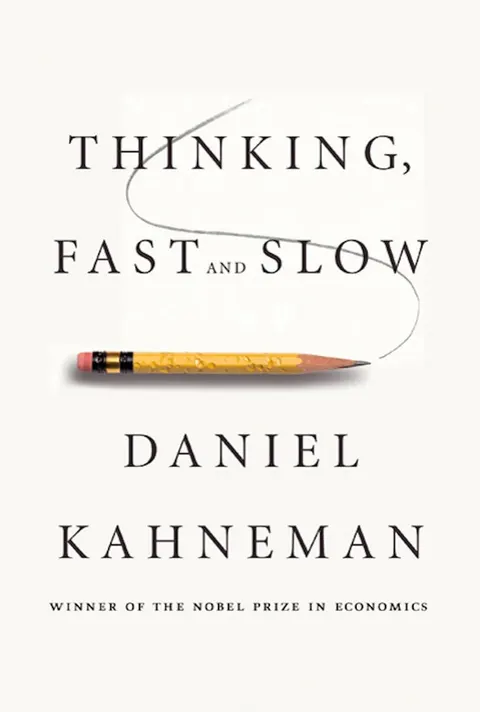
Daniel Kahneman, a Nobel-winning psychologist, explains the two systems that drive our thinking: one fast and intuitive, one slow and deliberate. It is the ideal follow-up to Blink, since Kahneman is one of the scholars who questioned that book's evidence, and his account of when intuition can be trusted is far more careful.
Read more
Marc Andreessen and Mark Manson are among its readers.
For: Readers who enjoyed Blink and want the research behind the subject.
While reading: It is long; read it a part at a time over a few weeks.
Next: Influence is the companion to The Tipping Point.
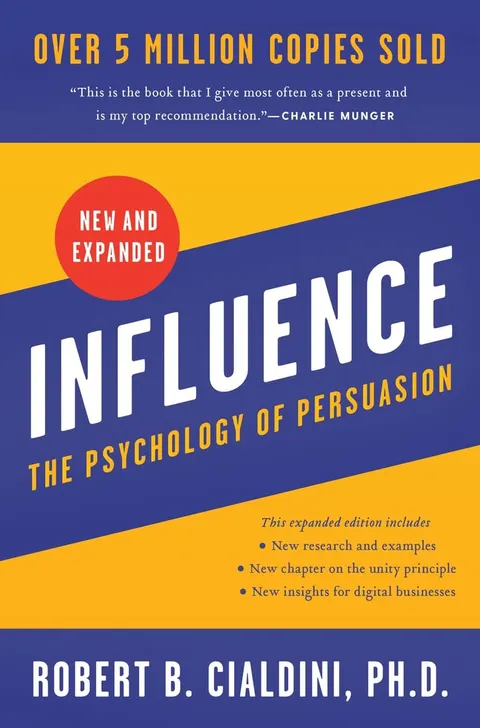
Robert Cialdini lays out the principles of social influence, from reciprocity to social proof, based on years of research. Where The Tipping Point tells stories about how behaviour spreads, Influence names the mechanisms, which makes it the most useful single book to read after Gladwell.
Read more
Charlie Munger and James Clear have it on their shelves.
For: Readers who want practical tools rather than more stories.
While reading: Watch for each principle in adverts and conversations around you.
Next: Return to any Gladwell chapter and see which levers he is describing.
Charlie Munger, Alexis Ohanian and 3 more
Reading path
The short route: Outliers, then The Tipping Point. They are his most fluent books and they show his method clearly. If you stop there, you will know why people quote him.
The full route: Outliers, The Tipping Point, Blink, David and Goliath, Talking to Strangers. The order moves from his lightest, most influential work to his heaviest. Leave a week or two between books so the stories do not blur together.
Read more
Whichever route you take, read Thinking, Fast and Slow or Influence afterwards. Gladwell is at his best as an opener of questions, and these two books help you answer them.

 Dwayne Johnson, Will Smith and 5 more