Skip to content

Menu

My shelf

okai

Log a book

George Orwell

Classics · 9 min · 7 books

Where to start with George Orwell: novels to essays

Read Animal Farm and Nineteen Eighty-Four first, then Orwell's reporting from Paris, Wigan and Spain, and finally his essays and diaries.

0/7 books read0%

Most people meet George Orwell through two books, usually at school. Animal Farm and Nineteen Eighty-Four are so famous that their phrases have entered everyday language, and it is easy to assume that is all there is. In fact the novels are only a part of what he wrote. Journalism, essays and reporting make up most of his output, and many readers who come back to him as adults find that the nonfiction is where he is most himself.

Read more

The order below starts where nearly everyone starts, with the two famous books, and then follows him back into the experiences that shaped them. You will see him washing dishes in Paris, living among the unemployed in the north of England and fighting in the Spanish Civil War. Those books explain where the political clarity of the two novels came from: he had seen poverty, propaganda and betrayal at close range before he wrote about them.

The last step is the quietest and in some ways the richest. His essays show a writer thinking aloud about politics, language, literature and ordinary English life, and his diaries show the same mind at work day to day, from his early years as a writer to his final notes. Read together, they turn a famous name into a person.

Orwell is one of the clearest prose writers in English, so none of these books is hard going. The challenge is only in choosing, and in noticing how the same concerns, honesty, power and the lives of people without power, run through everything he wrote, fiction and nonfiction alike.

Who it is for: Readers who know Orwell from Animal Farm or Nineteen Eighty-Four and want to see the rest of his work: the reporting, the memoirs, the essays and the private notebooks.

Short answer

Step 1: The two famous novels

Begin with the short fable, then the long dystopia. Read in this order, they show how Orwell's warning about power grew from a sharp satire into a full imagined world.

1. Animal Farm

George Orwell · 1945

Published in England on 17 August 1945, Animal Farm is a satirical, allegorical beast fable that draws on the Russian Revolution of 1917 and the Stalinist era. The mistreated animals of Manor Farm overthrow their human master, Mr.

Read more

Jones, and try to build a better society, only for the revolution to be betrayed under the rule of the pigs. It is short, around ninety pages, and can be read in an afternoon, but its simple surface hides a precise account of how ideals are turned against the people who hold them. Lex Fridman and David Perell both have it on their reading lists.

For: Everyone, including readers who have never read Orwell.

While reading: Watch how the farm's rules are changed, quietly and one word at a time.

Next: Go on to Nineteen Eighty-Four.

Lex Fridman

2. Nineteen Eighty-Four

George Orwell · 1949

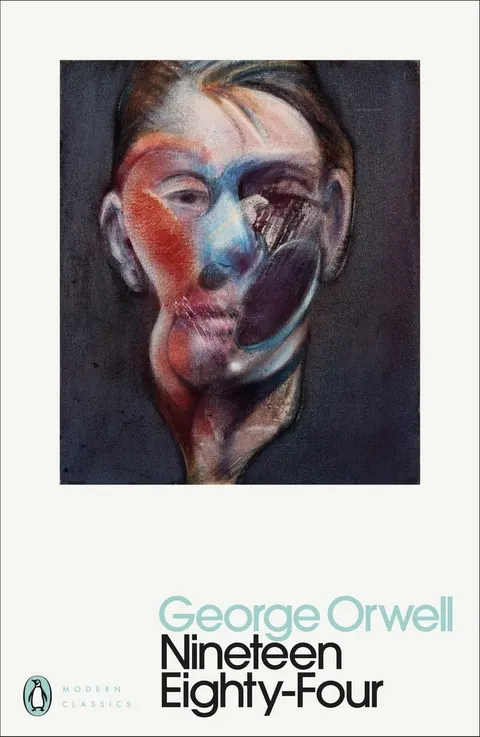
Published on 8 June 1949 by Secker & Warburg, this was Orwell's ninth and final completed book. It imagines a totalitarian state of constant surveillance, doublethink and rewritten history, and it gave the world Big Brother.

Read more

Its themes, totalitarianism, mass surveillance and the regimentation of people and behaviour, are the reason it keeps finding new readers in every generation. It is darker and slower than Animal Farm, and much of its power lies in the ordinary details of a life lived under constant observation. Yuval Noah Harari and Noam Chomsky both have it on their reading lists.

For: Readers who finished Animal Farm and want a fuller, more personal version of its warning.

While reading: Pay attention to the way language itself is controlled; it is one of the book's central ideas.

Next: Turn to Down and Out in Paris and London to see Orwell at the start of his career.

Callum Turner, Timothée Chalamet and 11 more

Step 2: What Orwell saw for himself

Three nonfiction books, in the order they were published. Each one records a period Orwell lived through, and together they show the experiences behind the novels: poverty, class and political violence.

3. Down and Out in Paris and London

George Orwell · 1933

Published in 1933, this was his first full-length book and the first to carry the name George Orwell. In two parts, it recounts the months he spent washing dishes in Paris kitchens and tramping through London's lodging houses.

Read more

It is sharp, funny and unsentimental about what poverty really looks like, and it exposes destitution in two of the richest cities in the world. Alice Walker has it on her reading list.

For: Readers who enjoy memoir and first-hand reporting.

While reading: Notice how often he finds comedy in hardship without making fun of the people living it.

Next: Continue to The Road to Wigan Pier.

Alice Walker

4. The Road to Wigan Pier

George Orwell

First published in 1937 as a Left Book Club selection, this book came from research into unemployment and social conditions in the industrial north of England. Its first part documents the bleak living conditions of the working class there.

Read more

Its second part is an essay about Orwell's own middle-class upbringing and the case for socialism, in which he also asks why so many people who would benefit from socialism are not socialists. The two halves make a lively, argumentative whole. Jordan Peterson has it on his reading list.

For: Readers interested in class, work and politics.

While reading: Read the second half as an argument with himself as much as with the reader.

Next: Go to Homage to Catalonia.

Jordan Peterson

5. Homage to Catalonia

George Orwell · 1938

Published on 25 April 1938, this is Orwell's account of fighting in the Spanish Civil War with the POUM militia, a small anti-Stalinist Marxist party he joined partly by chance. He describes life at the front, the street fighting in Barcelona in May 1937, and being shot through the throat by a sniper.

Read more

When the POUM was declared illegal he escaped to France. It is a firsthand account of idealism, betrayal and political infighting, and it makes clear where the suspicion of propaganda in his later novels came from. Marc Andreessen has it on his reading list.

For: Readers who want to understand the experiences behind Animal Farm and Nineteen Eighty-Four.

While reading: Do not worry about following every political faction; hold on to his own experience at the front and in Barcelona.

Next: Move on to the essays.

Ben Shapiro, Marc Andreessen

Step 3: Essays and diaries

The shorter and more personal writing. Both books can be read in any order and dipped into rather than read straight through.

6. Essays

George Orwell

Orwell produced journalism, essays and novels, but nonfiction criticism of culture and politics makes up most of his output, and he has been called perhaps the twentieth century's best chronicler of English culture. This collection draws on that body of work.

Read more

The essays range widely in subject, and they are the best place to see his plain, exact style at full stretch. Many readers find them more rewarding than any of the novels. Anthony Bourdain has it on his reading list.

For: Readers who enjoyed his nonfiction and want his thinking on politics, language and culture.

While reading: Read one essay at a time and let it sit; they are short but dense with ideas.

Next: Finish with the Diaries.

Anthony Bourdain

7. Diaries

George Orwell

Orwell's diaries from 1931 to 1949 are gathered here in one volume, from his early years as a writer to his last notes. They cover the period of every book on this list, so they work as a companion to everything above: you can watch the raw material of the reporting and the novels take shape in daily entries.

Read more

They are not a narrative and are best read slowly, a few pages at a time. Christopher Hitchens has it on his reading list.

For: Readers who have read several of his books and want to see the man behind them.

While reading: Look up the entries for the years when he was writing your favourite of his books.

Next: Return to Nineteen Eighty-Four; it reads differently once you know his life.

Christopher Hitchens

Reading path

The suggested order is Animal Farm, Nineteen Eighty-Four, Down and Out in Paris and London, The Road to Wigan Pier, Homage to Catalonia, then the Essays and the Diaries. It starts with what you probably already know, goes back to the experiences that shaped it, and ends with the private record of his thinking.

If you already read the two novels at school, start with Step 2. Down and Out in Paris and London is the most entertaining of his nonfiction and a good reintroduction. If you are short of time, read Animal Farm and Homage to Catalonia together: one is the fable, the other the experience behind it.

Read more

Readers who care most about his ideas on language and politics should move the Essays earlier, straight after Nineteen Eighty-Four. They show the same concerns in his own voice, without the frame of fiction, and they make the novel's ideas about controlled language even clearer.

None of these books needs to be rushed, and none is long except Nineteen Eighty-Four. A comfortable pace is one book every week or two, with the essays and diaries kept by the bed for occasional reading long after the rest are finished.

17 November 2026

Keep reading

All