Skip to content

Menu

My shelf

okai

Log a book

Carl Sagan

Nonfiction · 12 min · 13 books

Science books about the universe: 13 from Sagan to Rovelli

Thirteen books about the universe for curious non-scientists, from Cosmos and A Brief History of Time to Rovelli, Feynman and Project Hail Mary.

0/13 books read0%

Almost everyone has looked up at a night sky and felt a question they could not quite put into words. How big is all this? How did it start? What is time, and why does it only move one way? For most of history those questions belonged to religion and philosophy. Over the last century physics has begun to answer some of them, and a handful of gifted writers have made those answers available to anyone willing to read carefully.

Read more

The thirteen books below are arranged as a path. The first group gives you the wide view: Carl Sagan's Cosmos, Neil deGrasse Tyson's short essays and Bill Bryson's tour of nearly everything. The second goes deeper into the physics of space, time and the origin of the universe, with Stephen Hawking, Carlo Rovelli and Lawrence Krauss. The third looks at the people and the process behind the science: Einstein, Feynman, and Thomas Kuhn's famous account of how scientific revolutions happen.

The last group is fiction. That may seem out of place on a science list, but some of the best ways into big scientific ideas are stories. Carl Sagan himself wrote a novel about contact with an alien civilisation, Cixin Liu built a trilogy on a classic problem in orbital mechanics, and Andy Weir's Project Hail Mary is a novel made almost entirely of problem-solving. Each will send you back to the nonfiction with new questions.

None of these books requires mathematics. A few, especially A Brief History of Time and Reality Is Not What It Seems, ask for concentration, and it is perfectly normal to read a chapter twice. What they all share is a belief that the universe can be understood, and that understanding it is one of the great pleasures available to a human being.

Who it is for: Curious readers without a science background who want to understand space, time, the Big Bang and black holes, and the people who worked them out.

Short answer

Group 1: Start with the big view

Three books that cover huge ground in plain language. They are the best entry points because they give you a map of the whole subject before you go deeper. Any one of them is a fine first book.

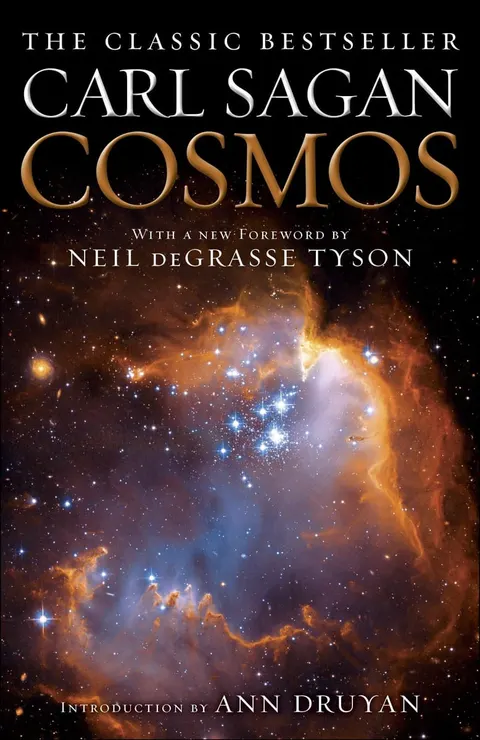
1. Cosmos

Carl Sagan · 1980

Carl Sagan wrote Cosmos in 1980 as a companion to his television series, and each of its thirteen illustrated chapters matches an episode. It ranges from the Big Bang and the nature of the universe to the history of science and civilisation, space exploration, the cell and DNA, and the dangers of nuclear war.

Read more

Sagan's aim was to explain complex ideas to anyone willing to learn, and it became the best-selling science book ever published at the time, winning a Hugo Award. It conveys wonder as well as fact.

For: Anyone, at any age, who wants to fall in love with science.

While reading: Some details are dated, since the book is from 1980. Read it for its way of seeing, not as the latest word.

Next: Astrophysics for People in a Hurry gives a quicker, more up-to-date tour.

Richard Branson, Bill Nye

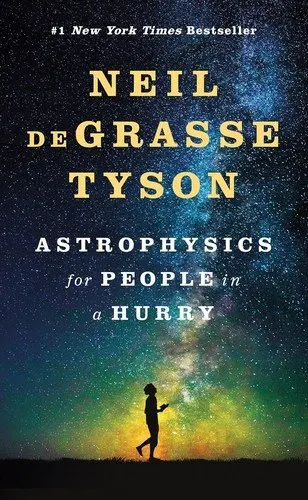
2. Astrophysics for People in a Hurry

Neil deGrasse Tyson · 2017

Neil deGrasse Tyson's 2017 book collects essays that first appeared in Natural History magazine between 1997 and 2007, each on a basic question about the universe. The chapters are short and can be read on their own, which makes it ideal for busy readers or anyone who has been intimidated by longer books.

Read more

It is the quickest way on this list to get a feel for modern astrophysics.

For: Readers who want a short, light introduction they can finish in a few evenings.

While reading: Read one essay at a time. They are designed to be self-contained.

Next: A Short History of Nearly Everything widens the lens to all of science.

Richard Dawkins

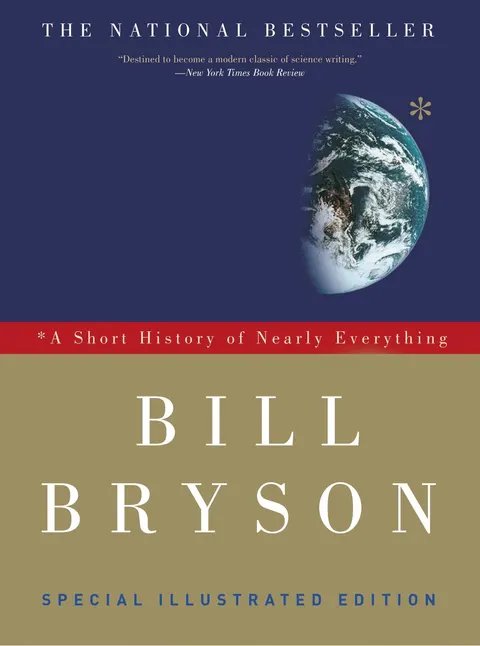
3. A Short History of Nearly Everything

Bill Bryson · 2003

Bill Bryson was known for travel writing when he turned to this popular science book. In accessible language he moves from the Big Bang to the discovery of quantum mechanics by way of evolution and geology, touching chemistry, palaeontology, astronomy and particle physics along the way.

Read more

It was one of the best-selling popular science books of 2005 in the United Kingdom. Bryson writes as a curious outsider, which makes him the perfect guide for other outsiders.

For: Readers who want the whole of science in one enjoyable book.

While reading: It is long but light. Dip in and out by chapter; the order matters less than in most science books.

Next: A Brief History of Time takes you deeper into the physics of the universe itself.

Shah Rukh Khan

Group 2: Space, time and the beginning

Four books that go to the heart of modern physics: relativity, quantum mechanics, the search for a theory that unites them, and the question of how a universe can begin. They ask more of the reader than Group 1, but none needs equations.

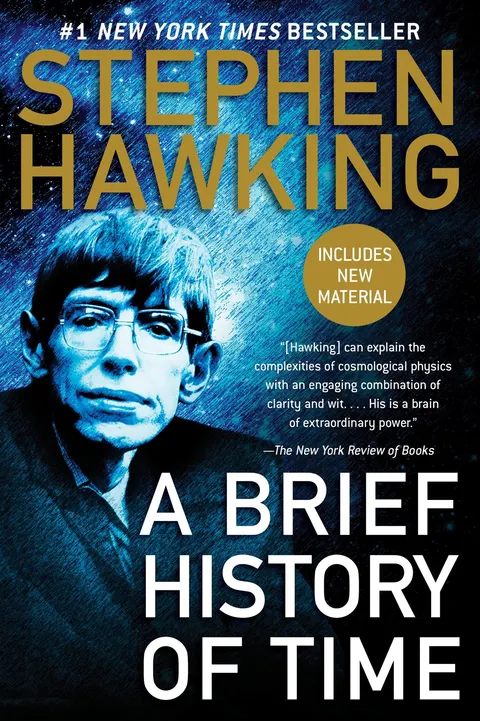
4. A Brief History of Time

Stephen Hawking · 1988

Stephen Hawking's 1988 book explains, in non-technical terms, the structure, origin, development and eventual fate of the universe. He covers space and time, the building blocks of matter such as quarks, the fundamental forces such as gravity, and the two great theories of modern physics, general relativity and quantum mechanics, before turning to the search for a unified theory.

Read more

It has sold more than twenty-five million copies in forty languages, and a shorter version, A Briefer History of Time, written with Leonard Mlodinow, followed in 2006.

For: Readers ready to work a little for a real understanding of cosmology.

While reading: Some chapters will need a second reading. That is normal; Hawking packs a great deal into a short book.

Next: Seven Brief Lessons on Physics covers much of the same ground more gently.

Richard Branson, Malala Yousafzai

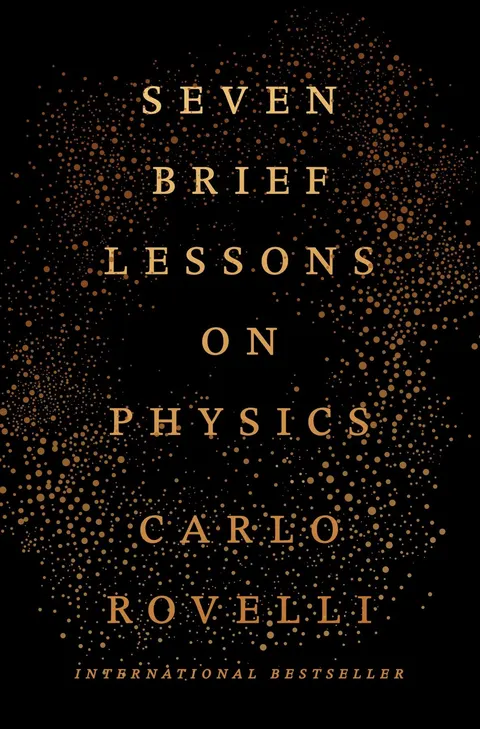
5. Seven Brief Lessons on Physics

Carlo Rovelli

Italian physicist Carlo Rovelli's short book was first published in Italian in 2014. It covers the great ideas of modern physics in seven short lessons, written with a lightness that is rare in the subject.

Read more

It has been translated into more than fifty languages and has sold more than a million copies. It can be read in an afternoon.

For: Readers who want the most elegant short introduction to modern physics.

While reading: Read it slowly despite its length. Each lesson rewards a pause.

Next: Reality Is Not What It Seems is Rovelli's longer, deeper book.

Naval Ravikant

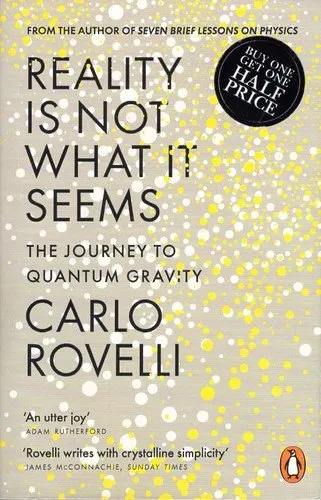
6. Reality Is Not What It Seems

Carlo Rovelli · 2014

Carlo Rovelli's illustrated book follows the journey toward quantum gravity, the attempt to reconcile Einstein's theory of gravity with quantum mechanics. It is the natural next step for readers who want to see where the ideas of Seven Brief Lessons lead.

Read more

It was written in Italian in 2014, before Seven Brief Lessons, and the English translation came out in 2016.

For: Readers who enjoyed Seven Brief Lessons and want more depth.

While reading: Use the illustrations. They do much of the explaining in the harder chapters.

Next: A Universe from Nothing takes on the boldest question of all.

Naval Ravikant

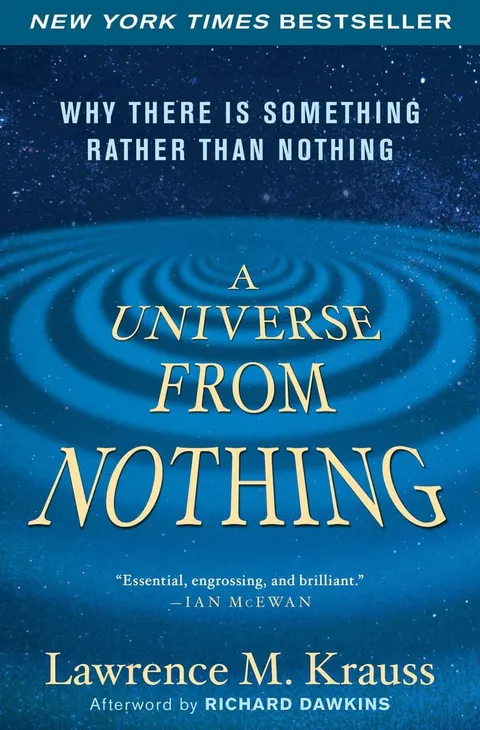
7. A Universe from Nothing

Lawrence M. Krauss · 2012

Physicist Lawrence Krauss explains how modern cosmology, including ideas about quantum fluctuations and quantum gravity, suggests that a universe could arise from 'nothing', and discusses what this means for the debate about the existence of God. It is a provocative book, and critics have argued that Krauss uses the word 'nothing' in a misleading way that does not answer the deepest questions.

Read more

That debate is part of what makes it worth reading.

For: Readers interested in where physics meets philosophy and religion.

While reading: Pay close attention to how Krauss defines 'nothing'. The argument stands or falls on it.

Next: Einstein: His Life and Universe tells the story of the man whose ideas underlie all of this.

Charlie Munger, Christopher Paolini

Group 3: The people and the process

Science is done by people, and it changes in fits and starts. These three books show the human side: a great biography, a mischievous memoir, and the most famous book ever written about how science actually advances.

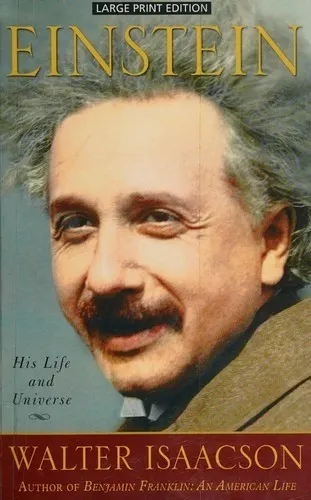
8. Einstein: His Life and Universe

Walter Isaacson

Walter Isaacson's 2007 biography follows Albert Einstein from his youth to his later life. It portrays him as an insolent, creative and fiercely independent figure, and suggests that if he had found an academic job as a young man, that independence might have been crushed.

Read more

The book was well received by general reviewers and by publications such as Physics Today. It explains the science clearly while keeping the man at the centre.

For: Readers who like biography and want to understand relativity through the person who created it.

While reading: Do not skip the science chapters. Isaacson explains them well, and they are the heart of the story.

Next: Surely You're Joking, Mr. Feynman! shows a very different physicist, in his own voice.

Mark Zuckerberg, Charlie Munger and 1 more

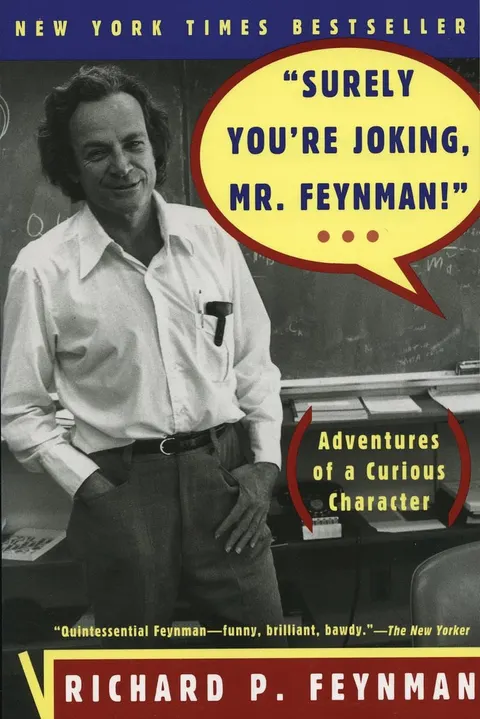
9. Surely You're Joking, Mr. Feynman!

Richard P. Feynman

This collection of reminiscences by the Nobel Prize-winning physicist Richard Feynman, published in 1985, is based on recorded conversations with his friend and drumming partner Ralph Leighton. The stories range from safecracking at Los Alamos to his Nobel-winning work.

Read more

It is witty and full of curiosity, and it shows that a great scientist can also be playful, irreverent and endlessly interested in everything.

For: Anyone who wants to laugh and to see what scientific curiosity looks like in daily life.

While reading: Read a few stories at a time. They are short and work best as a light companion to the heavier books.

Next: The Structure of Scientific Revolutions asks a serious question behind Feynman's stories: how does science really change?

Larry Page, Peter Attia and 2 more

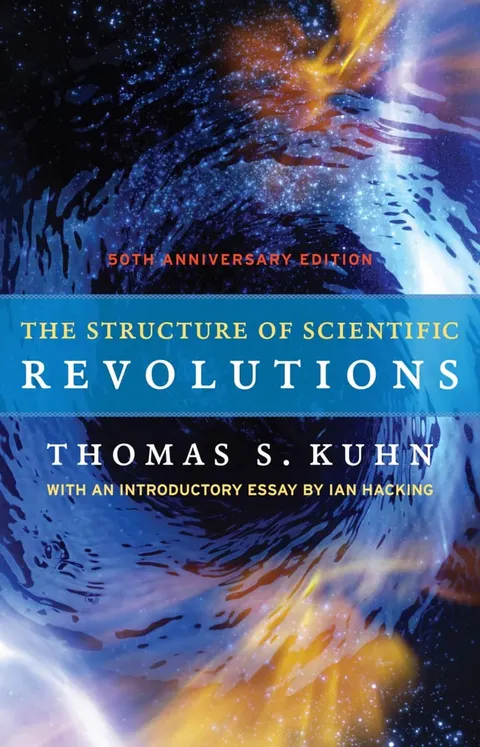
10. The Structure of Scientific Revolutions

Thomas S. Kuhn · 1962

Thomas Kuhn's 1962 book argued that science does not progress by steady accumulation of facts. Instead, long periods of 'normal science' are interrupted by revolutions, when anomalies pile up and a new paradigm replaces the old one.

Read more

His example of the Copernican Revolution shows that a new theory can win support before it makes better predictions, on the promise of simpler solutions to come. The book caused an uproar and gave the world the phrase 'paradigm shift'.

For: Readers who want to think about science itself, not only its results.

While reading: It is more academic than the other books here. Read the first chapters carefully; the core argument is set out early.

Next: Turn to the fiction in Group 4 for a change of pace.

Mark Zuckerberg, Paul Graham and 1 more

Group 4: The universe in fiction

Three novels built on real science. They are not substitutes for the nonfiction, but they make abstract ideas feel urgent and personal, and they are among the most enjoyable science fiction of their eras.

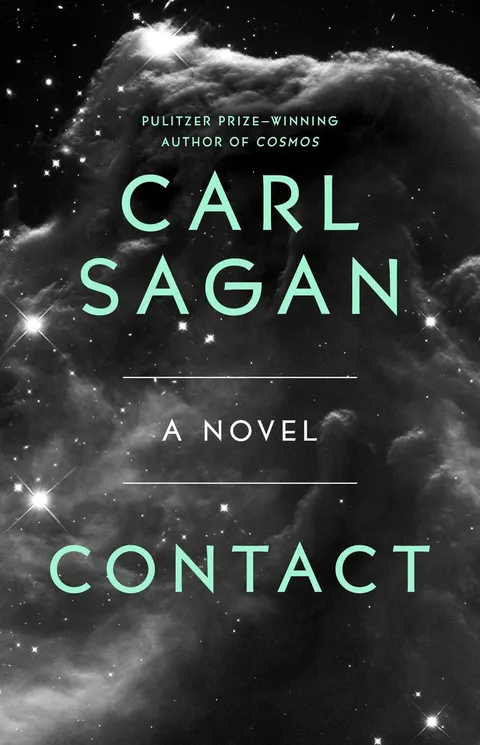
11. Contact

Carl Sagan · 1985

Carl Sagan's only novel, published in 1985, is about humanity's contact with a more technologically advanced extraterrestrial civilisation. It began as a screenplay that Sagan wrote with Ann Druyan in 1979; when the film stalled, he turned it into a novel.

Read more

It ranked seventh on Publishers Weekly's bestseller list for 1985, and was later filmed with Jodie Foster.

For: Readers who loved Cosmos and want to see Sagan's ideas in story form.

While reading: Watch how Sagan uses the plot to ask questions about science and faith.

Next: The Three-Body Problem imagines contact from a very different angle.

Andrej Karpathy

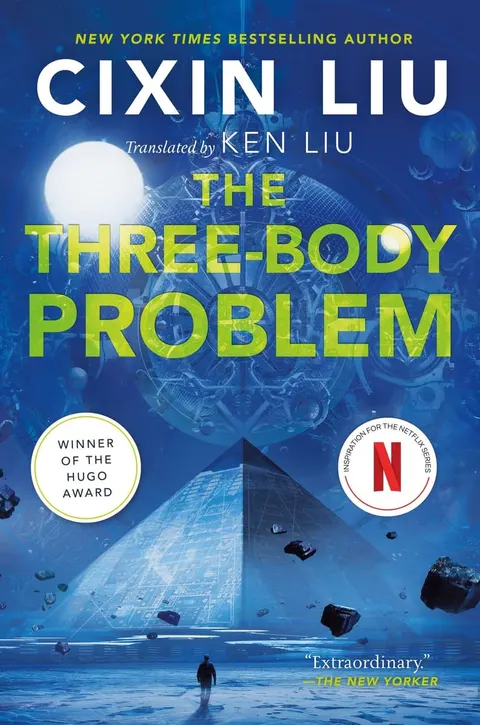
12. The Three-Body Problem

Cixin Liu · 2006

Cixin Liu's novel begins during China's Cultural Revolution and follows scientists whose work leads to contact with an alien civilisation from a system of three Sun-like stars, a real problem in orbital mechanics that gives the book its title. It is the first part of the Remembrance of Earth's Past trilogy.

Read more

Ken Liu's English translation, published in 2014, was the first novel by an Asian writer to win the Hugo Award for Best Novel.

For: Readers who like big ideas and hard science fiction.

While reading: The early chapters set in the Cultural Revolution are important. Be patient; the science fiction builds slowly.

Next: Project Hail Mary is lighter, funnier and full of hope.

Mark Zuckerberg, Bryan Johnson and 3 more

13. Project Hail Mary

Andy Weir

Andy Weir's 2021 novel follows Ryland Grace, a science teacher and former biologist, who wakes up alone on a spacecraft with no memory and slowly realises the fate of Earth depends on him. The book is hopeful, funny and built almost entirely out of problem-solving, with real science at every step.

Read more

It was a finalist for the Hugo Award, and a film adaptation starring Ryan Gosling was released in 2026.

For: Anyone who wants a fast, joyful science novel, including readers who think they do not like science fiction.

While reading: Know as little as possible before you start. Many of the best moments are surprises.

Next: Go back to Cosmos or Seven Brief Lessons. You will read them with new eyes.

Bill Gates, Andrej Karpathy and 3 more

Reading path

If you are starting from scratch, read Cosmos or Astrophysics for People in a Hurry first. Cosmos gives you wonder and breadth; Tyson gives you speed. Follow either with Seven Brief Lessons on Physics, which introduces the big ideas of modern physics in one afternoon.

From there, go to A Brief History of Time, then Reality Is Not What It Seems. These two are the core of the list, and they will give you a real grasp of relativity, quantum mechanics and the open questions between them. Read A Universe from Nothing afterwards, together with some of the criticism it has received.

Read more

Use the people books as rest stops. Surely You're Joking, Mr. Feynman! fits anywhere, and Einstein: His Life and Universe works well after Hawking, when the ideas are fresh. Save The Structure of Scientific Revolutions for when you have read several of the others; its argument means more once you have seen science change in action.

Slot the novels in whenever you need a break. Project Hail Mary is the easiest to love, The Three-Body Problem the most ambitious, and Contact the closest in spirit to Sagan's nonfiction. A Short History of Nearly Everything can be kept by the bed and read a chapter at a time throughout.

17 November 2026

Keep reading

All